
Home / Case Studies / 4 Wheel Parts & Off Road Warehouse
/ Case Study · Automobile
Multi-Brand Adobe Commerce Migration for Automobile Retail. Two Legacy Sites, One Commerce Platform.
/ The engagement
Unified Multi-Site Migration on Adobe Commerce
Migration of two legacy .NET storefronts onto a single Adobe Commerce backend with the Hyva theme, ERP and PIM integration, and an AI chatbot for order tracking — replacing two separately run platforms with one centrally managed operation.
/ About the client

4 Wheel Parts, founded in 1961, is one of North America's largest truck, Jeep, and off-road parts retailers, with dozens of retail and installation centers. It was acquired in 2024 by Off Road Warehouse, a San Diego-based off-road specialist with roots in desert racing.
Post-acquisition, both brands now operate under one parent company, sharing back-office and eCommerce infrastructure — the direct driver behind this unified Adobe Commerce project.
/ The approach
A build-once and replicate migration strategy.
Design & SRS Sign-Off
Finalized Figma designs and scope across web and mobile responsive views.
Data Ownership Mapping
Defined create/update ownership per data type across ERP, PIM, and Commerce.
Core Site & Integration Build
Built Website 1 end-to-end, then replicated it for the second brand.
UAT & Dual Go-Live
Validated both storefronts in UAT before launching both in parallel.
/ What stood in the way
Four operational hurdles between two disconnected legacy platforms and one unified commerce operation.
Select a challenge to see how it shaped the build.
Fragmented Fitment-Aware Shopping
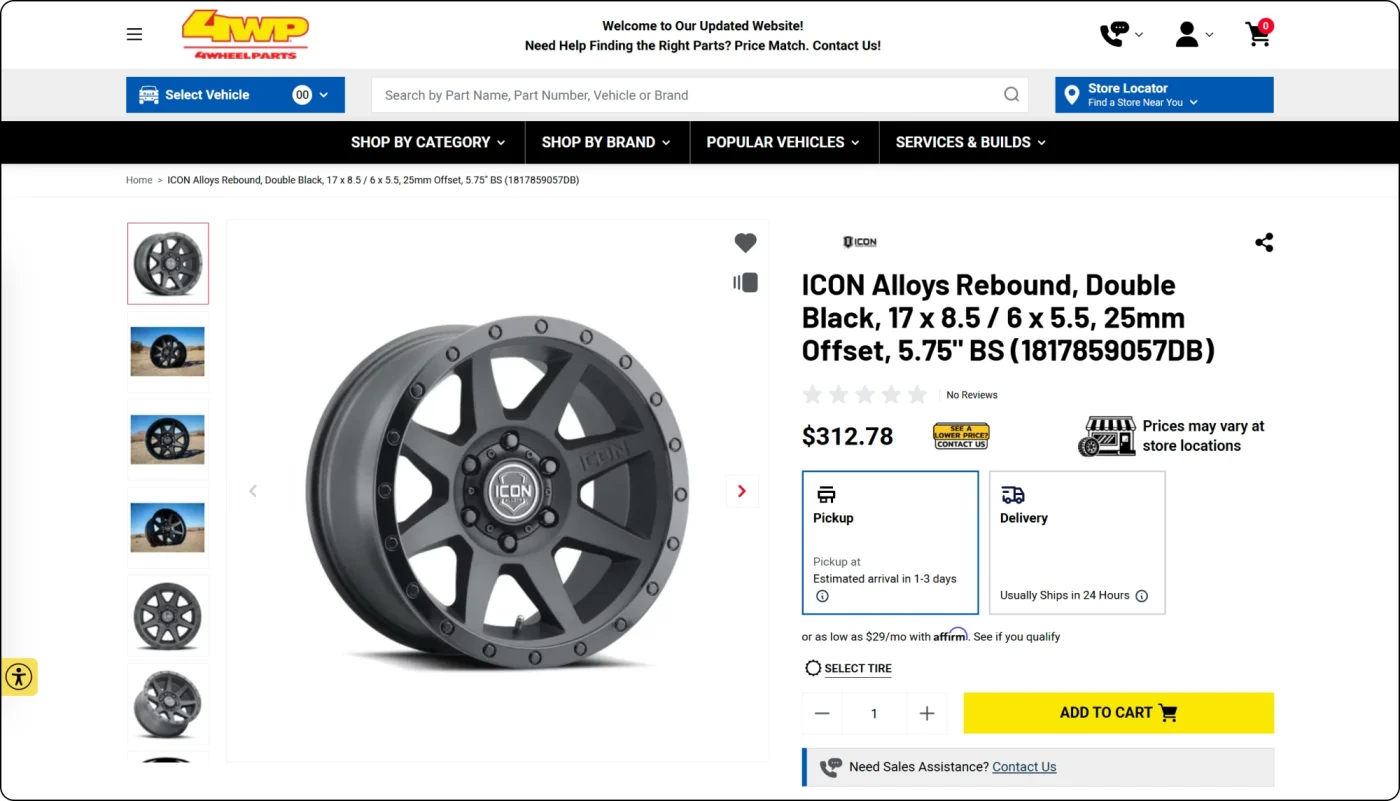
Customers shopping for truck and off-road parts need products that fit their specific vehicle, but the legacy sites had no persistent saved-vehicle experience or fitment logic across browse and product pages. Brainvire built a Year-Make-Model selector with a My Garage feature and fitment-aware highlighting across category, PLP, brand, and product pages, guiding customers toward compatible parts without restricting other purchases.
Disconnected Inventory & Order Systems
Inventory, pricing, and order data lived in separate ERP and PIM systems with no automated link to the new commerce platform, risking stale data and manual reconciliation. Brainvire integrated Adobe Commerce with the ERP for inventory, pricing, and order status, and the PIM for enriched product data, using a defined ownership matrix per data type to prevent conflicting updates.
Retail Footprint Disconnected from Online Demand
With 46+ physical retail and installation locations, the storefronts needed to actively drive customers into stores rather than operate as a purely online channel. Brainvire built a Store Pickup experience with real-time per-store inventory messaging, a Check Local Store button on the product page, and geolocation-based store selection at checkout.
Duplicated Engineering Across Two Brands
Building two full storefronts independently risked doubling design and development effort for what is fundamentally one shared backend need. Brainvire used a build-once, replicate approach — building the first brand's site end-to-end, then standing up the second on the same backend and theme with only brand-specific design and content changes.
/ Product screens
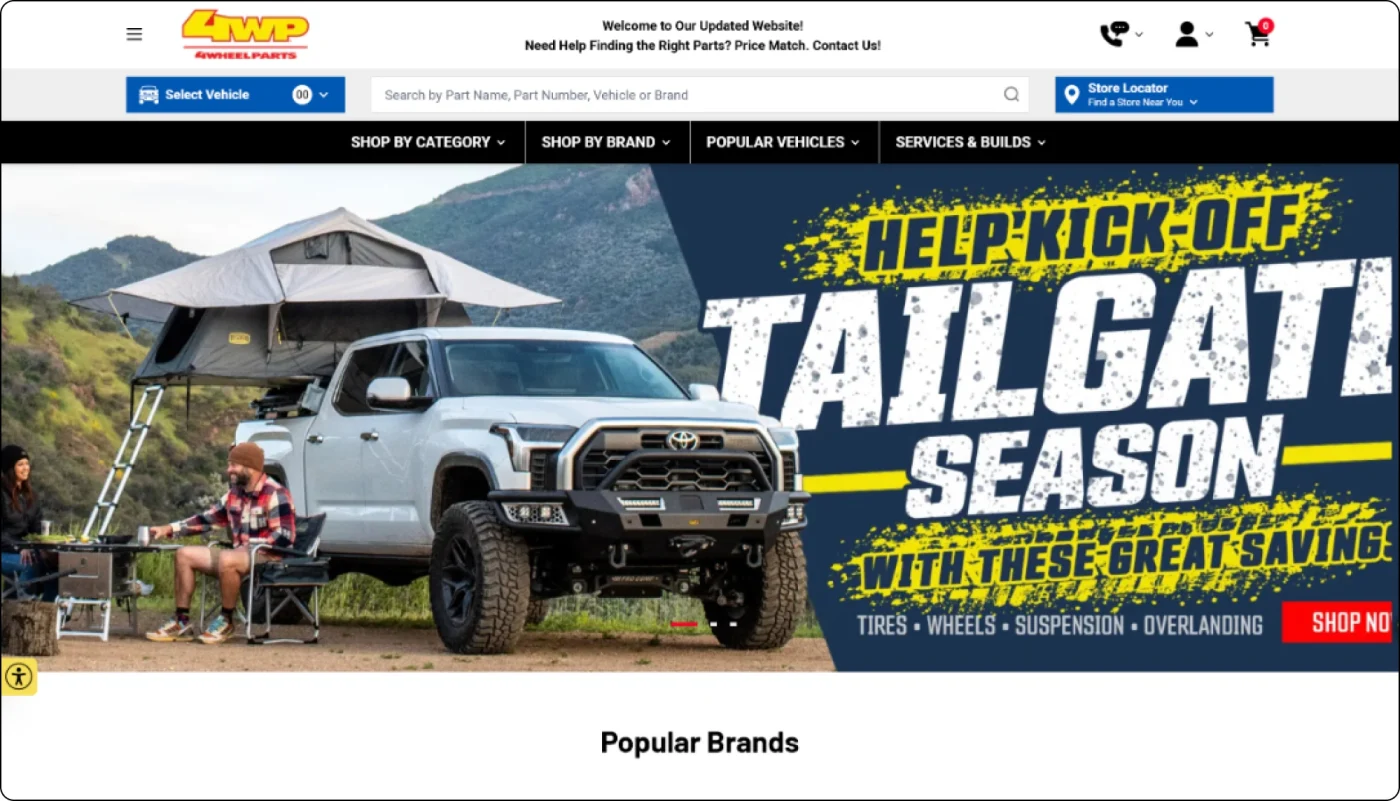
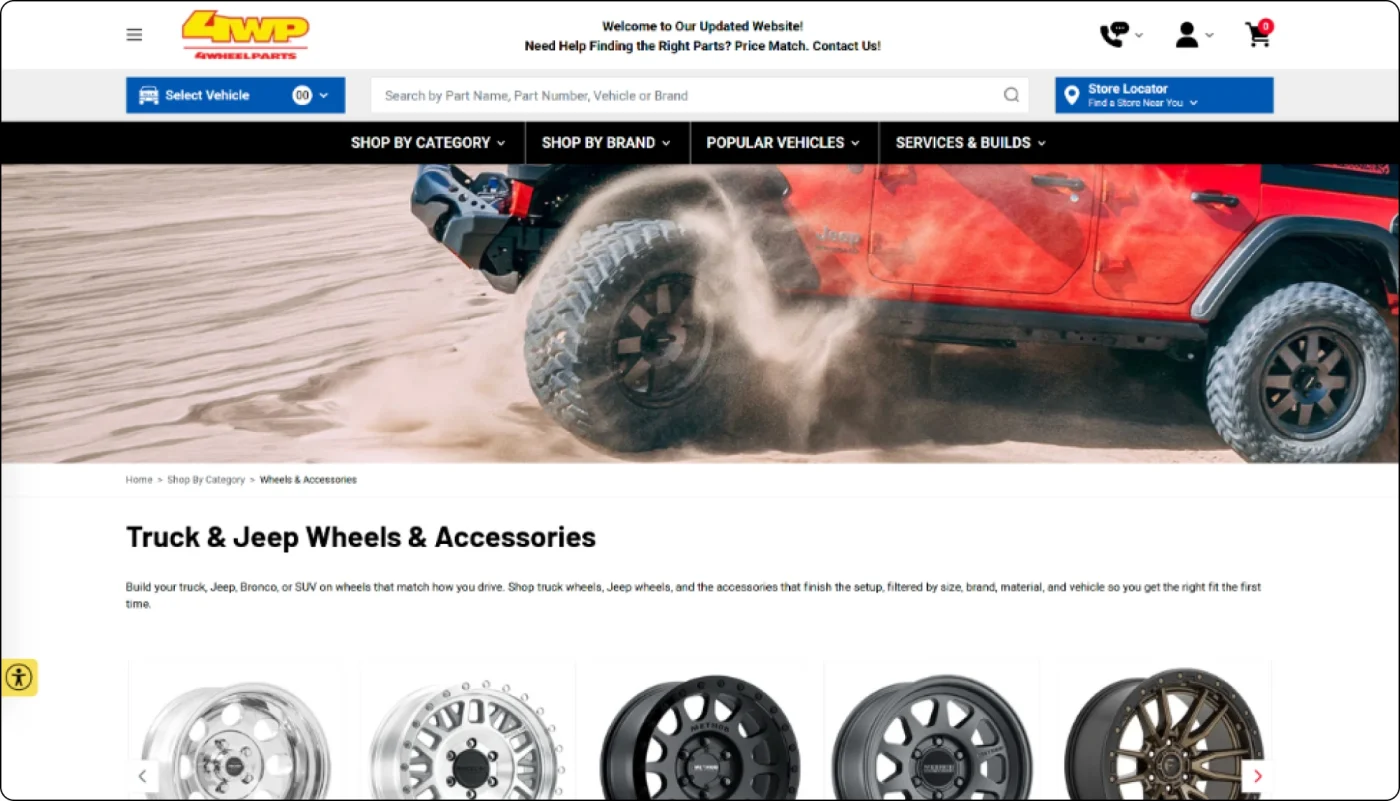
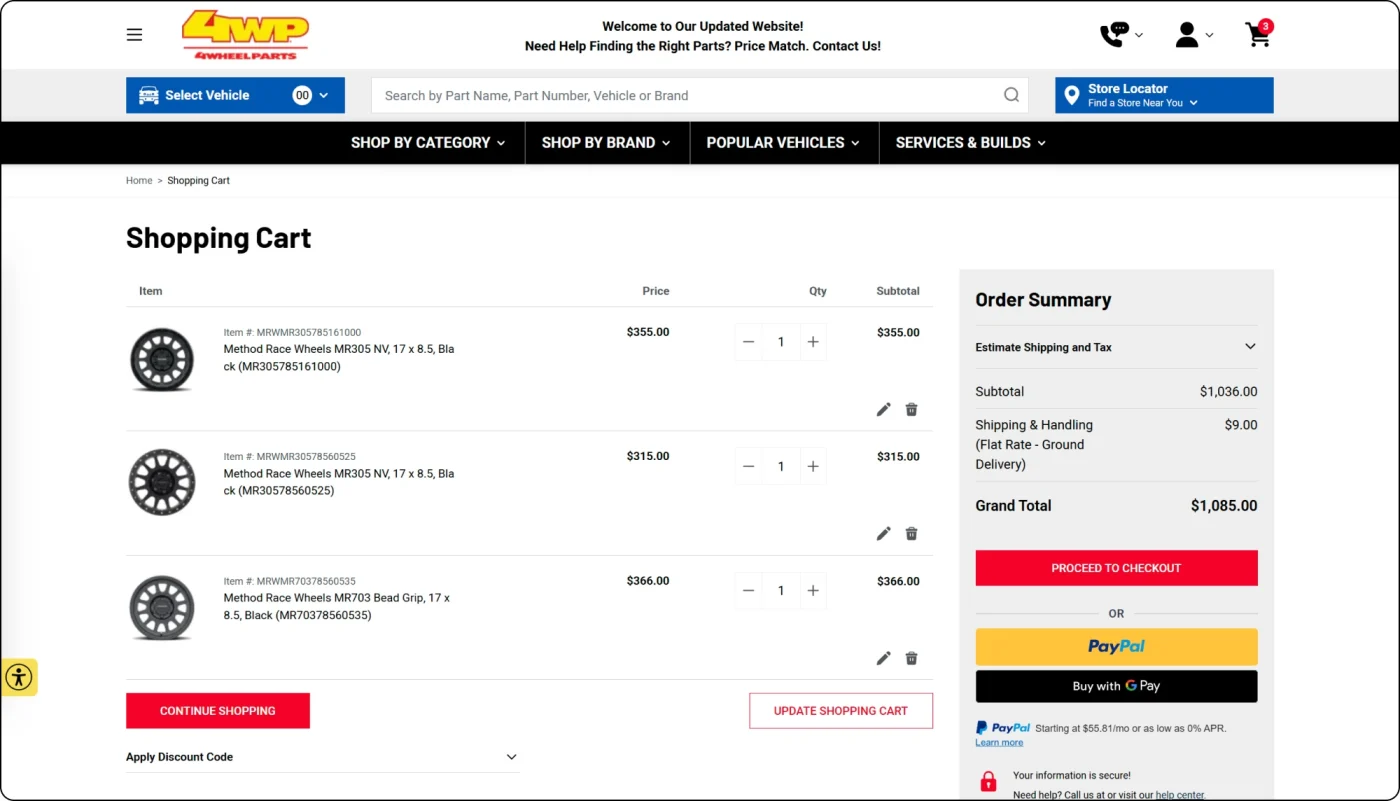
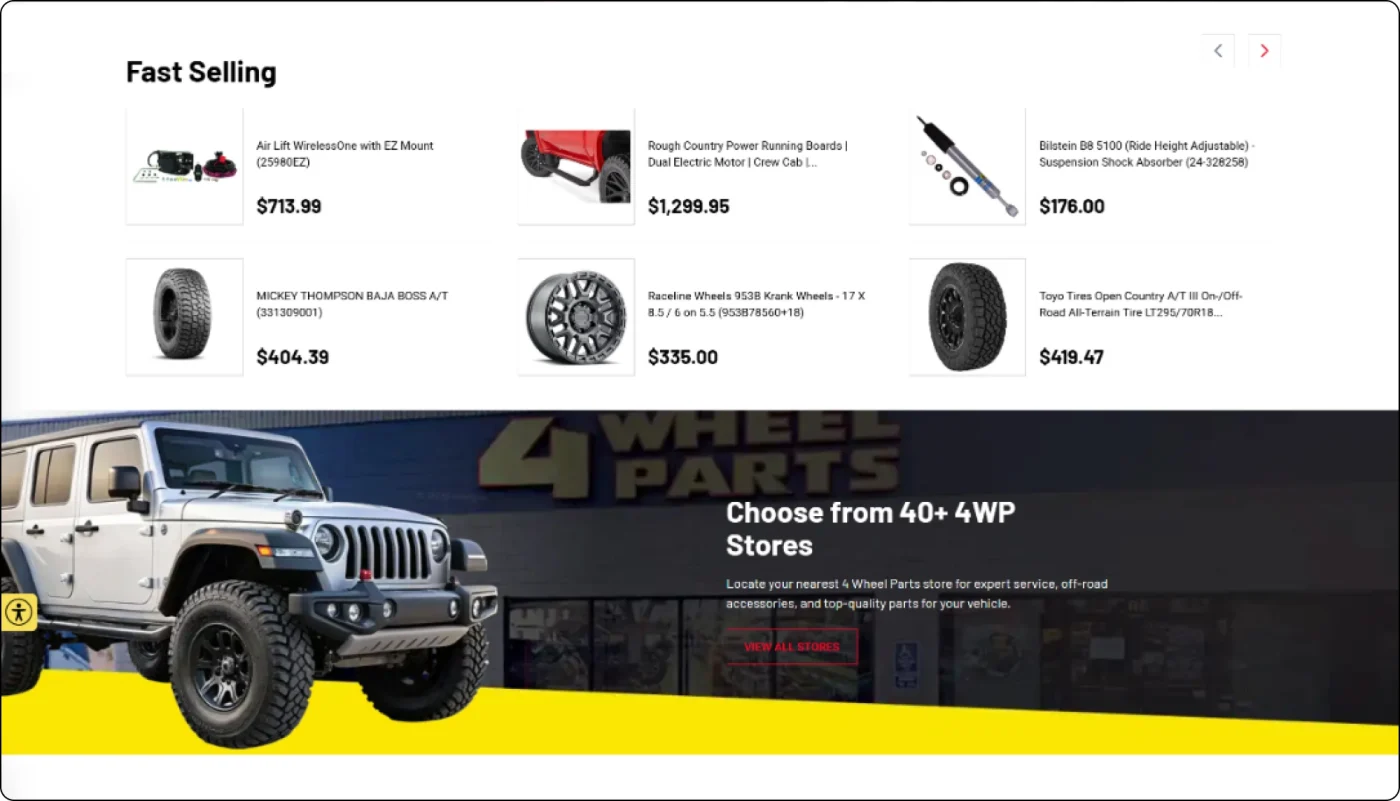
The unified storefront.
The vehicle-fitment shopping and Wheels & Tire bundle experience across both brands.
 /01
 /02
 /03
 /04
 /05
/ The results
What changed, in numbers.
/ Next step
Running multiple brands on disconnected legacy platforms?
Brainvire helps multi-brand retailers consolidate onto one modern commerce backend without duplicating engineering effort. A thirty-minute working session, no sales deck.
Book a Working Session →