AEM Sites Development
Reusable components and a clean authoring experience, so marketers publish pages in hours, not weeks — without waiting on developers.
AI-assisted authoring Americas' Fastest-Growing 2025
One page from a senior architect, within two business days. The single highest-payback AI move in your Odoo, Adobe or custom stack, and the two things to leave alone. Yours to keep.
One page from a senior architect in two business days: your highest-payback AI move, and what to leave alone.
/ Adobe Gold Solution Partner
AEM programs rarely stall on the software. They stall on a content model nobody owned, and customers notice. As an Adobe Gold Solution Partner, our Adobe Experience Manager services span strategy, build, migration to AEM as a Cloud Service, integration and managed growth. Our certified team has shipped experiences at enterprise scale for 14+ years.
/ AI on Adobe
AI is engineered into content creation, assets, localization and personalization — part of the platform, not an add-on.
Generative AI drafts on-brand pages and variations from a single brief, so teams ship experiences without waiting on production.
AI translates and localizes content and assets at scale, adapting copy and imagery per market automatically.
AI surfaces which content drives engagement and conversion, and flags what to fix, across every channel.
AI routes reviews, approvals and publishing, predicting bottlenecks before deadlines slip.
AI-powered AEM Assets auto-tags, crops and resizes creative at catalog scale for reuse across web, app and email.
Reusable components and templates roll out consistent brand experiences across sites and regions from one source.
Adobe Sensei and Target auto-personalize each visitor’s experience, learning continuously rather than by hand-built rules.
Intelligent on-site search tuned to your content model surfaces the right page for every visitor.


Trusted by enterprise brands worldwide












/ Proof, on the record
How enterprises run content and experience on platforms we build and maintain. Every figure below is a documented outcome from a real engagement.
46%Faster digital-asset retrievalAnalytics and engagement optimized on Adobe for a global security brand — faster pages, localized checkout across 18+ countries, and digital-asset retrieval rebuilt for speed.
Read the case →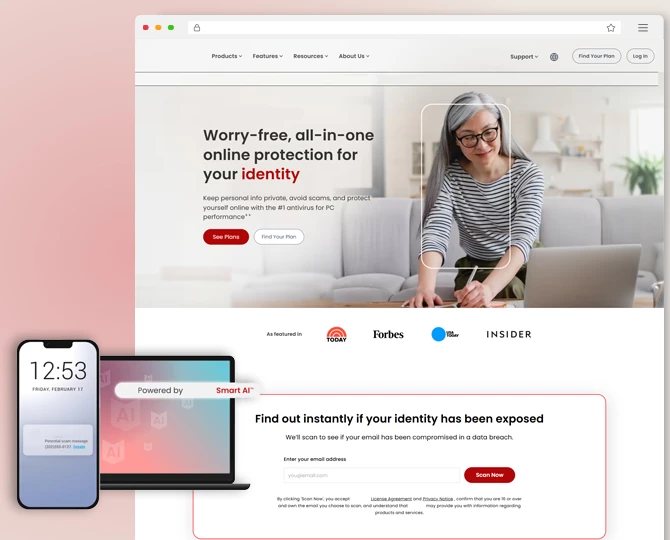
We re-architected the Adobe Experience Manager platform behind Texas’s largest energy provider, giving content teams simplified authoring, faster publishing, and a future-ready foundation that scales with a growing population.
Read the case →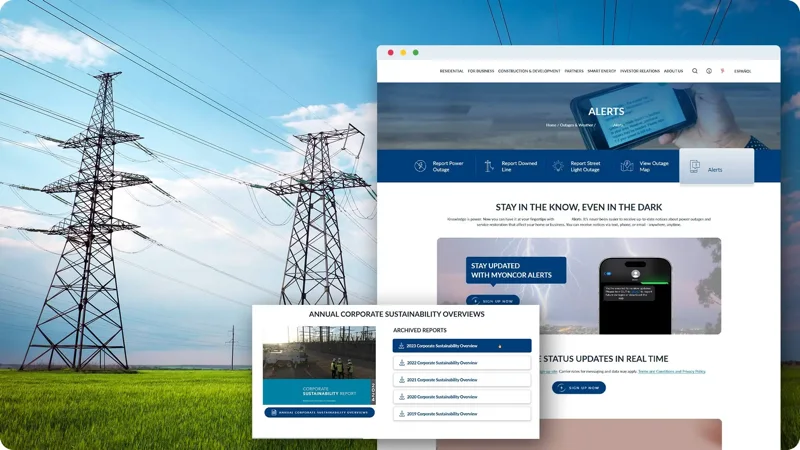
An education platform rebuilt content and commerce on Adobe. Better discovery, a cleaner path to purchase and structured course data improved discovery and the path to enrollment.
Read the case →
/ What we build
Every AEM practice area under one accountable team — Sites, Assets, edge delivery, migration and integration, with AI engineered into each rather than sold as an extra. One team covers the technical build and the customer experiences it has to create.
Reusable components and a clean authoring experience, so marketers publish pages in hours, not weeks — without waiting on developers.
AI-assisted authoringOne cloud library for every image, video and document, auto-tagged and ready to reuse — less time hunting for files and lower production costs.
AI auto-tagging & croppingA certified AEM setup tailored to your brand and team, upgrade-safe and governed, so you get value quickly and avoid costly rework later.
AI-assisted configurationAdobe Gold Solution PartnerPages served from a fast global edge with top Core Web Vitals out of the box — faster sites that rank better and keep visitors engaged.
AI performance tuningMove off Sitecore, Drupal, WordPress or a custom CMS onto AEM with your content and SEO rankings protected down to the URL, and less risk to traffic.
AI component mappingMonitoring, security, performance tuning and support after launch, so your platform keeps improving and your team spends less on upkeep.
AI-monitored operationsContent and commerce on one connected platform, so product stories turn into sales and your team manages both from one place.
AI content-to-cartMeasure every experience and personalize it automatically with Adobe Analytics and Target — higher engagement and conversion from the same traffic.
AI auto-personalizationConnect AEM to Adobe Campaign and Marketo so email, forms and lead capture reuse your content — faster campaigns, consistent messaging.
AI campaign insightsAdaptive digital forms and workflows that replace paper and PDFs — faster completion, fewer errors and lower processing costs.
AI form intelligenceCustom AEM connectors that plug your content platform into the tools around it — including search connectors built with SearchStax — so content stays in sync and site search just works.
AI-tuned search relevanceA review of your AEM setup, content and hosting that shows where to speed up pages and cut running costs, with a prioritized plan your team can act on.
AI-assisted audit/ How we deliver
Four phases from goal to launch, with a named owner and a working demo at every stage. Each step is something you can evaluate and sign off before the next one starts.
Your marketing, content and IT leads work with our AEM architect to audit content and design the information architecture. You sign off the content model and a fixed-price phase 1.
Author templates, editable components and the DAM taxonomy, tested with the people who actually run the content. Your authors approve the templates before the build.
Our AEM developers build Sites and Assets and wire up Commerce, Analytics, Target and your data, upgrade-safe. You accept each sprint demo on staging.
Ship on edge delivery with monitoring and a rollback path once you sign off go-live. A named owner then runs managed growth against your metrics.
/ The Adobe stack
The Adobe products we implement, integrate and operate around AEM — each with AI built into how it works.
The authoring and delivery core: reusable components, editable templates and a clean author experience that ships pages without engineering in the loop.
A cloud-native, intelligent DAM that stores, auto-tags and delivers creative at scale, so teams find and reuse the right asset instantly.
Document-based or Universal Editor authoring published to a global edge for near-instant load times and top Core Web Vitals out of the box.
Testing and auto-personalization that serves each visitor the layout and content most likely to convert, learning continuously.
Cross-channel measurement and journey analytics that turn content behavior into decisions, with AI surfacing what to act on.
Integrated commerce so content-rich, personalized storefronts run on the same experience platform, managed from one place.
/ Accelerators
Ready-made Adobe packages built on real projects, so you launch sooner with less risk.
Move every Sitecore page to AEM without losing search traffic. AI does the heavy lifting, so you launch sooner on a faster site.
Turn AEM into a store that sells. The main shopping pages come ready-built on Adobe Commerce, so you start selling sooner.
A ready-built Adobe store that stays fast on your busiest days. Marketing updates pages in AEM, with no developer needed.
/ Industries
Each vertical has dedicated teams, pre-built data models, and reference architectures shaped by the programs we've run there.
Omnichannel platforms with unified inventory, AI merchandising, and storefronts that learn from every order.
See Retail & eCommerce work →Dealer commerce, VIN & fitment catalogs, and service platforms connected to live inventory nationwide.
See Automotive work →HIPAA-conscious patient platforms, operational AI, and connected systems for providers and pharmacies.
See Healthcare work →Secure lending, payments, and decision-intelligence platforms built for audits, uptime, and scale.
See Finance & Fintech work →Carat, cut, and certification-aware commerce and ERP for jewelers, from catalog and inventory to hallmarking and omnichannel retail.
See Diamond & Jewelry work →Learning platforms, enrollment systems, and AI tutoring experiences for institutions and edtech firms.
See Education work →Content platforms, subscription commerce, and audience analytics that turn viewers into recurring revenue.
See Media work →PropTech platforms, CRM-ERP integration, and AI valuation models for developers and brokerages.
See Real Estate work →Route intelligence, warehouse automation, and end-to-end shipment visibility on one operational spine.
See Logistics work →/ In their words
Brainvire demonstrated reliability, a commitment to delivery, and helped us maintain momentum on critical roadmap items.
/ On the record

Brainvire configured our system with minimal customizations and delivered in a very short timeframe — saving us time and cost.


Brainvire has been invaluable, on budget and very responsive. They’d bend over backwards to help us in every way they can.

Brainvire has helped our business grow — it feels like a true partnership. Seven great years, and we’re looking forward to more.

We’ve worked with Brainvire for six years. They’re task-oriented and great at turning projects around in an expedited fashion.

Brainvire built a really good plan for my business, brought consistency, and took a lot off my hands. I can’t say enough good things.

Brainvire is a real partner — very different from other outsourcing companies. They’ve mastered communication and delivery.

The Brainvire team has lived up to every commitment. They gave us a part-naming convention that lets us configure our product line.

Brainvire’s response is always fast, and their delivery has been quick and elevating. I really recommend their services.
/ Recognition
 2025
The Americas' Fastest-Growing Companies
 2025
Fastest-growing private companies in America
 2024
North America's fastest-growing tech companies
 2024
Top B2B service provider, global rankings
/ Questions, answered
Adobe Experience Manager (AEM) is Adobe's content management system for building websites, mobile applications and forms. It pairs page authoring with digital asset management, so marketing assets and content live in one place. Teams use it to reach customers with consistent content at every stage of their journey.
Experience Manager Sites gives authors tools to create, manage and distribute content across every site and channel you run. Reusable components and templates keep pages consistent, and approval workflows keep publishing controlled, so operations run on one process instead of five.
AEM provides easy-to-use tools for distributing, managing, and producing content across your digital assets. Workflows for controlled materials, reusable content components, translation, and standard design systems enable worldwide collaboration.
With assets that are simple to locate and use, AEM is a cloud-native, intelligent DAM that boosts creative and content-creation productivity so you can enable highly customized client experiences with assurance.
Yes. We migrate to AEM from Sitecore, Drupal, WordPress and custom CMS platforms. Every URL is mapped and redirected, content is cleaned before it moves, and each batch is verified to ensure no data is lost on the way. Rankings and traffic are monitored through cutover.
Yes, through AEM's integration with Adobe Commerce. AEM carries the content and product stories, while Adobe Commerce runs the catalog, cart and checkout. Our experts start by working to understand your catalog and requirements, then build custom, scalable solutions on that pairing.
Yes. We tailor AEM through custom components, templates, workflows and integrations built to Adobe's patterns, so Cloud Service updates don't break them. Our AEM experts shape the experiences, authoring and approval rules around your brand, and build only what the standard product doesn't cover.
Every business is different. It depends on five things: the number of sites and languages, how much content has to migrate, the integrations, custom components and the support model after launch. Adobe licenses AEM itself; our cost moves with that scope. We quote a fixed-price phase 1 after discovery, so the budget is agreed with your team before the build. Under-budgeted content migration is a common overrun, so we size it in discovery.
Three things. The content model gets designed after the templates, so authors fight the platform; we model content first. Content migration is under-budgeted, so inventory and cleanup start in discovery. Authors meet AEM at launch, so training and knowledge transfer run during the build, and your team builds real pages in AEM before go-live.
Start with the work. Ask any Adobe Experience Manager partner to show AEM Sites and Assets builds their own team shipped, who stays on after launch, and how upgrades get handled. Then evaluate the technical depth on the parts you will live with daily: the content model, the integrations, and the release pipeline.
Not always. We're a good fit if you run many sites, languages or brands and want Sites and Assets on one platform, with Adobe Target, Analytics or Commerce around it. We're probably not the right call for one marketing site and a small team. A simpler CMS such as WordPress will cost far less to run, and we'd rather say so now.
AEM as a Cloud Service is the current offering in the Adobe Experience Manager product line. Adobe runs the environment and ships automated updates through a continuous delivery pipeline, so the platform stays current instead of sitting on a version you upgrade every few years.
Adobe describes AEM as a Cloud Service as giving you cloud-native agility. The environment scales on its own, so capacity stops being something you plan for ahead of a campaign and your team spends its time on content instead of infrastructure.
Adobe positions AEM as a Cloud Service around personalized, content-led experiences. AEM holds the content and the assets, Adobe Target decides which variation a visitor sees, and Adobe Analytics measures what the change did. Personalized customer experiences come out of that loop, not out of any single tool.
Adobe Experience Platform and its customer experience orchestration products own the customer data layer and the journey across channels. AEM is the content and asset layer that supplies the pages, assets and forms those journeys deliver. Enterprise programs usually run both, and the integration between them is where much of the value sits.
Both. Adobe Experience Manager pairs a content management system, AEM Sites, with a digital asset management system, AEM Assets, on one platform. That pairing is the reason content-heavy and image-heavy organizations tend to shortlist it.
Sites for web content, Assets for digital asset management and Dynamic Media, and Forms for adaptive forms and the workflows behind them. On Cloud Service, Edge Delivery Services is the publishing path. Adobe Target, Analytics, Campaign and Commerce connect to AEM rather than being part of it.
Yes. AEM Headless lets structured content held in Content Fragments be consumed by any app over HTTP using GraphQL. One source of truth can then feed websites, mobile apps and in-store screens without anyone duplicating content.
Adobe describes Edge Delivery Services as a content delivery framework that rethinks how websites are built and delivered, optimized for speed, simplicity and scalability. Authors work either in documents or in the Universal Editor, a what-you-see-is-what-you-get editor that edits content live and in context.
Yes. Adobe's adaptive forms are built to be engaging, responsive, dynamic and adaptive, so one form adapts to the device, browser and screen size the visitor arrives on. We build responsive forms and the workflow behind them, so a submission carries into the system that has to act on it.
AEM Assets as a Cloud Service is a cloud-native digital asset management solution with Dynamic Media included. Smart Tags apply Adobe's image recognition to your own taxonomy, AI generates title, description and keyword metadata, and Dynamic Media delivers web-optimized variations through a global CDN.
Discovery and information architecture, the content model and component library, integrations, content migration, then launch and run. Preparing the content before the build starts is the step teams under-budget most often, and it is usually the one that decides the timeline.
The CFO gets a fixed-price phase 1 and a clear split between Adobe licensing and build cost. The CIO and IT team get an upgrade-safe build on Cloud Service with a reviewed release pipeline. The CMO gets authors who publish pages without filing a ticket. The content ops lead gets one governed workflow for review, approval and publishing.
AEM developers and an architect, someone who owns the content model, a DevOps engineer for the pipeline, and the authors who will run the platform afterwards. Authoring expertise matters as much as engineering expertise: a clean content model nobody can use is still a failed build.
Multi-site management, translation workflows and a shared component library let one team roll out sites across regions. Brands operating around the world keep a single design system while local teams edit their own pages efficiently.
Permission groups and access control inside AEM, a reviewed release pipeline, dependency and patch management, and a clean separation between authoring and publishing. On Cloud Service, Adobe operates the platform layer; the application layer stays with your team and ours.
Governance is who can create, review, approve and publish, plus the taxonomy and templates that keep output consistent. Where personal data is involved, consent and privacy rules live in your data layer, and AEM serves experiences within the rules it is given.
Monitoring, releases, performance tuning, patching, troubleshooting and a named contact for escalations. The point of managed services is that the platform keeps improving after go-live rather than freezing at launch.
Yes. One AEM platform can carry a range of sites, from brand and regional sites to campaign and support sites, on a shared component library and an array of templates that local teams reuse rather than rebuild.
Three terms carry most of the meaning. Content Fragments are the structured content you reuse, Experience Fragments are assembled blocks you reuse as they are, and a Content Fragment Model describes the shape of a fragment. Understand those three and most AEM conversations get easier.
Yes. Through headless APIs, AEM can send the same content to mobile apps, kiosks and screens, and through Adobe Campaign or Marketo it feeds customer communications from the same source.
Yes, and staged usually beats big-bang. Move the highest-traffic templates onto AEM first, keep the legacy system serving the rest behind the same domain, then cut over section by section. That transforms the experience for visitors long before the last page moves.
Most of the innovation available today sits in generated content variations, auto-tagged assets, and search tuned to your own content model. The rest is discipline. Teams thrive on a platform when the people who publish every day can change a page with ease, without filing a ticket.
Book a working session from this page. In 30 minutes you talk through your current platform, your roadmap and where AI pays back first with a Brainvire AEM architect, and the result is summarized on one page.
CRM, ERP, commerce, search and any existing DAM, plus the Adobe products around it. Most of the value in an AEM program shows up at those seams, so integration design belongs in the first weeks of the work rather than the last.
Through training and knowledge transfer while the build is happening, not after it. The aim is an internal team that can model content, build a component and run a release without calling anyone. Ask any partner for that plan in writing before work starts.
We define roles and responsibilities and follow Adobe's recommended patterns rather than one-off invention. Risk management gives each risk a named owner, and you see something working at the end of each stage. Pre-built accelerators shorten the path where they genuinely fit.
AEM centralizes content management across digital channels, so web, app, email and in-store screens draw on the same source. It is built for large enterprises with complex multimedia and multi-language estates, where keeping that experience consistent is the hard part.
A real-time customer profile. Adobe Experience Platform activates that profile and supports data-driven decision making at scale, while AEM supplies the content variations the profile chooses between. Without the data layer, personalization is a set of rules somebody has to maintain by hand.
Industry experience close to yours and prior deployments you can ask about. Consulting on content-rich websites, migration work with a secure data transfer plan, development measured on performance and user experience, and support after launch should all sit in one firm's history rather than across three vendors.
/ Next step
A 30-minute working session with a Brainvire AEM architect: your platform, your roadmap and where AI pays back first, on one page. Bring the content you're most worried about moving.
Book a Working Session →Cookies on this site
Essential cookies are always on. They keep the site secure and make forms work.
We also use Google Analytics and Microsoft Clarity to see how the site is used. We only turn these on if you accept.