
Odoo questions, answered plainly
Short answers to the Odoo questions buyers actually ask, each one pointing at the page that answers it in full. Anything about how Odoo behaves is cited to Odoo’s own documentation. Anything about cost is answered by what drives it, because Odoo sets its own subscription and changes it.
The answer-first index to Brainvire’s Odoo section: the questions that span every page — editions, hosting, cost drivers, timelines, upgrades, data ownership and support — each answered in a sentence or two and routed to the page that goes deeper.
Not a price list, and not a replacement for Odoo’s own manual. Odoo S.A. publishes the authoritative documentation for every application and for the developer API; where an answer depends on how Odoo behaves, we link it rather than paraphrase it.
We publish no subscription figures anywhere on this site. Odoo sets them and changes them by country, plan tier and billing term, so any number republished elsewhere is stale somewhere. What we explain is the structure: which edition, which plan tier, how many internal users, and where it runs.
Send it with a line about what you run today. A senior architect replies within one business day, an NDA can be signed before we hear any detail, and nothing you send is shared or sold.
/ Before you trust an answer
Why do Odoo answers online contradict each other?
Because almost every Odoo answer is true of one edition, one version, one country or one project — and almost none of them say which. Four things change the answer before anyone has looked at your business.
Half the answers describe a different product
Odoo Community and Odoo Enterprise are licensed separately and do not carry the same applications. An answer that never names the edition may be describing something you do not have.
The answer was written two versions ago
Odoo ships a major version about once a year and publishes a separate documentation set for each one. Behavior that was true in an older release gets repeated for years as though nothing moved.
Tax and payroll answers stop at the border
Odoo installs country-specific fiscal localization modules based on each company’s country. An answer about tax, invoicing or payroll is only true of the country it was written for.
The timeline quoted was for a different project
A duration means nothing without the entity count, the app list, the volume of history and the integrations attached to it. Those four move a plan more than anything else does.


Trusted by enterprise Odoo teams worldwide






/ The order that saves time
Which Odoo questions should you answer first?
Four, in this order: whether Odoo fits the work, which edition and where it runs, what the project will take against your own data, and who owns the system afterwards. Evaluations drag when these are answered out of order, because every later answer changes the earlier one. The planning bands shown below belong to the third question, and they are Brainvire’s own estimates rather than figures published by Odoo.
First: does Odoo fit the work?
Odoo suits businesses whose problem is that several systems disagree with each other. If one deep system is what you need, say so now rather than in month four.
Second: which edition, and where does it run?
Edition and hosting decide what you can install, who upgrades you and what your own developers may run. Almost every cost question is downstream of this pair.
Third: size it against your own data
Entity count, app list, volume of history and integration surface. Until those four are on paper, a timeline is a guess wearing a number.
Fourth: name who owns it after go-live
Upgrades, defects and change requests do not stop at go-live. Name the owner during design, not during the first incident.
/ The index
Where is each Odoo topic answered in full?
Every topic below has a page behind it. The middle column is the short answer; the right column is where the reasoning, the sources and the exceptions live. Feature names follow the Odoo 18 documentation, and every Odoo claim on those pages is cited to it.
| Topic | The short answer | Where it is answered in full |
|---|---|---|
| What Odoo actually is | One suite of business applications on a single database, published by Odoo S.A. and sold in two editions. | Read What is Odoo |
| Cost and licensing | Edition, plan tier, internal user count and where it runs. We publish no figures; Odoo sets them on its own pricing page. | Read Odoo licensing explained |
| Community or Enterprise | Two separately licensed editions with different application sets: Community under LGPL version 3, Enterprise only with a valid subscription. | Read Community vs Enterprise |
| Where Odoo runs | Odoo Online, Odoo.sh or your own servers — and the hosting choice constrains what you may install on it. | Read Odoo hosting |
| Which applications | All applications are included on the paid plan tiers. What changes per application is configuration, testing, training and support. | Read Odoo apps and modules |
| How a project runs | Ten phases in four stages, each ending in a written output with a named owner on your side and ours. | Read Implementation methodology |
| Version upgrades | Odoo’s upgrade platform converts a standard database; porting custom modules is the partner’s work. | Read Odoo 17 to 18 |
| Moving off another system | A different job from an upgrade. Odoo states plainly that an upgrade does not cover migrating from another ERP to Odoo. | Read Odoo migration |
| Building on Odoo | Process change, then configuration, then Studio, then custom code — in that order, because each step costs more to carry at the next version. | Read Odoo customization |
| Odoo against the alternatives | Compared row by row against SAP Business One, NetSuite and the rest, with the rows the other product wins named rather than hidden. | Read Odoo comparisons |
| After go-live | Somebody has to own the database, the upgrades and the defects. Name them during design, not during the first incident. | Read Support and managed services |
| Getting your team ready | Training on your own data rather than demo records, started before go-live and repeated for the people who join after it. | Read Odoo training |
Every Odoo claim on the pages above is cited to the Odoo 18 documentation and linked, so it can be checked. Any timeline quoted anywhere on these pages is Brainvire’s own planning estimate; Odoo publishes no delivery figures and we never attribute one to it.
/ Asked on every project
Which four questions decide most Odoo evaluations?
Is it free, how long does it take, is it any good, and where does it let people down. Those four decide more evaluations than any feature list, so here they are answered straight, each with the page that goes further.
Odoo is free in one edition and licensed in the other
Odoo 18 Community Edition is licensed under LGPL version 3, so no subscription is needed to run, modify or self-host it. Enterprise may only be used with a valid subscription for the correct number of users. Free to license has never meant free to run: hosting, configuration, data migration and training sit outside any license.
Implementation time follows entities, apps and data, not headcount
Small implementations run 8 to 12 weeks, mid-market 12 to 24 weeks, and multi-entity enterprise rollouts 6 to 12 months. A version upgrade on its own runs 3 to 8 weeks. Those are Brainvire’s planning bands rather than figures published by Odoo, and the count of legal entities moves them further than company size does.
Odoo is good at making one database agree with itself
Its strength is breadth on a single database: a sale moves stock, a manufacturing order consumes it, and the ledger sees both without a connector in between. That suits a company whose real problem is four systems disagreeing far better than it suits one that needs a single very deep system.
Where Odoo disappoints people, and why it usually does
Almost always in the same place: custom code written to avoid changing a process. Every module you keep has to be carried to each new Odoo version, and Odoo will not upgrade a database whose custom modules have no version for the target release. Deciding standard versus custom in writing, early, is what prevents it.
/ The cost question, answered structurally
What drives the cost of an Odoo project?
Eight things, and none of them is a figure we can publish. Odoo sets its own subscription and changes it by country, plan tier and billing term, so its own pricing page is the only accurate source for that line. What we can tell you is what makes each line bigger, and where in a project it gets decided — the same structure used in Odoo licensing explained.
| What drives it | What makes it bigger | Where it gets decided |
|---|---|---|
| Edition | Enterprise may only be used with a valid subscription for the correct number of users. Community carries no subscription and no support with it. | Architecture, before configuration starts |
| Internal users | Every named internal user counts. Portal users are a different kind of account and are not counted the same way. | Architecture, from the role model |
| Plan tier | The top tier is what adds Studio, multi-company and the external API, and is the only one that may run on Odoo.sh or your own servers. | Architecture, with the hosting choice |
| Legal entities | Each entity adds a chart mapping, intercompany rules and a close of its own. Odoo notes that entities operating in different countries should be set up as companies, not branches. | Discovery, then fit-gap |
| Countries you file in | Each country adds a fiscal localization package to configure, fine-tune and prove out against a real return. | Discovery |
| Applications in phase one | Applications are included on the paid tiers, so the cost is not the license — it is the configuration, testing, training and support each one adds. | Fit-gap, as a phase-one list |
| History that has to move | Open items only is straightforward. Years of transactional history reconciled to the source is a project inside the project. | Data migration, with finance |
| What genuinely has to be built | Custom modules are the line that keeps costing, because each one is carried to every new Odoo version and retested there. | The fit-gap register |
Comparing Odoo with something specific? Start with Odoo vs SAP Business One or Odoo vs NetSuite, and read how Odoo is licensed first — two products licensed on different bases cannot be compared line for line.
/ Answers with a project behind them
Which Odoo projects can we look at?
Three Brainvire programs on the record, each settling a question this page can only summarize: whether one database can carry many countries, whether separate sites can be consolidated onto one system, and whether Odoo can take over work a business does by hand. More in the case study library.
12 countriesone Odoo 18 ERP and POS core across a convenience-store networkPuma Energy
A CODO and COCO convenience-store network across 12 African markets standardized on one Odoo 18 ERP and POS platform, rolled out down a legal entity, dealer and site hierarchy. Country-specific fiscal localization layers onto a common, mergeable group chart of accounts, and a seven-role security matrix with record rules keeps sites and entities separated on a single instance.
Read the case →
CURE International
A non-profit hospital network was upgraded to Odoo 16 and consolidated onto one system: centralized inventory and purchasing across eight hospitals, automated stock records with user-based access, structured approval workflows with notifications, and custom label printing for drug dispensing where a country required it.
Read the case →
Wood coatings manufacturer
A manufacturer whose products are measured by volume and density moved auto-calculation, the returns process, tax per product per unit of measure at checkout and payment follow-ups into Odoo, running on Odoo.sh beside its WooCommerce storefront. The work a team was doing by phone and spreadsheet became configuration and a small amount of code.
Read the case →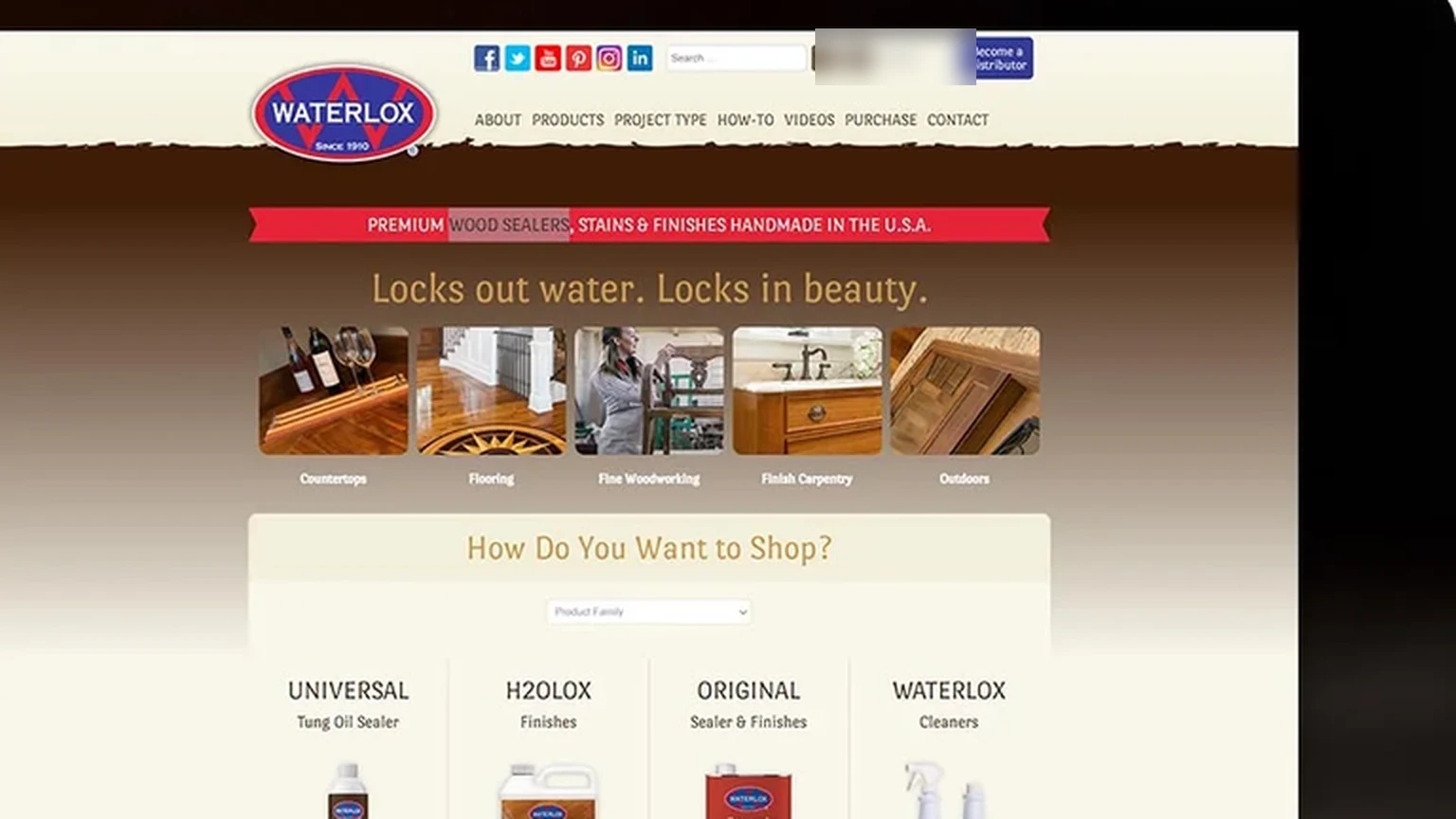
/ Questions with no home on any one page
Odoo FAQs.
Is Odoo cheaper than SAP or NetSuite?
Not a figure anyone can look up, and the license line is the smallest part of it. Odoo Enterprise is licensed per internal user with all applications included on its paid plan tiers; SAP Business One and NetSuite are licensed on a different basis again, so list-to-list comparisons rarely compare the same thing. Read the Odoo vs SAP Business One and Odoo vs NetSuite comparisons instead.
What does Odoo cost to run after go-live?
Four running lines, and we publish figures for none of them. The Odoo subscription, which Odoo sets and changes by country, plan tier and billing term. Hosting, unless you are on Odoo Online. Whoever holds the system afterwards. And custom code, which keeps costing because every module is carried to each new version. Odoo licensing explained sets out the structure.
What does Odoo need in order to talk to our other systems?
An external API you are entitled to, and a hosting option that allows the connector. Odoo's documentation states that access to data via the external API is available only on Custom plans, and not on One App Free or Standard plans. It also documents Odoo Online as incompatible with custom modules, so connectors of your own run on Odoo.sh or your own servers.
How often does Odoo release a new version?
About once a year for major versions. Odoo's own support table lists Odoo 17.0 released in November 2023, Odoo 18.0 in October 2024 and Odoo 19.0 in September 2025, with intermediary online versions every two to three months in between, on Odoo Online only. Standard support runs three years per major version. See Odoo 19.
Who owns the Odoo code and customizations we pay for?
You do, and Odoo's own licensing is what makes that possible. Odoo 18 Community Edition is licensed under LGPL version 3, and the Odoo Enterprise Edition License states you may develop modules based on the software and distribute them under the license of your choice. We hand over the source of everything built for you. See Odoo customization.
Can we get our data out of Odoo if we leave?
Yes, by three documented routes. Odoo Online's database manager has a Download Backup action that produces a ZIP of the database, and a Transfer Ownership request that moves it to another account. Odoo's import and export tool moves records both ways. On Odoo.sh or your own servers you hold the database directly.
Can Odoo meet our access-control requirements?
Access in Odoo is group-based, with record rules restricting which records inside a model a user can reach. Puma Energy runs a seven-role security matrix with custom record rules and two-factor authentication across many sites on one instance. Whether that model is enough for you is settled in the architecture phase of our implementation method.
Which Odoo questions can only be answered against your own data?
Four, and no web page can answer them honestly. How long it will take. What genuinely has to be built rather than configured. How much history can move. What it costs to run once live. Each depends on your entity count, app list, data volume and integrations, which is what an Odoo consulting engagement exists to establish.
Do we have to change how we work to use Odoo?
In places, and that is decided in writing before anything is built. A fit-gap analysis classifies every difference from standard Odoo as a process change, configuration, Studio or custom code, and gives each one an owner. The order matters: Odoo will not upgrade a database whose custom modules have no version for the target release.
Which languages and currencies does Odoo handle?
You choose the database language when the database is created, and Odoo lets you install more afterwards and set one per user. Currency is separate: each company has its own, and multi-currency posts rate differences to a nominated exchange journal. Country behavior comes from fiscal localization modules.
What should we ask an Odoo partner before signing?
Five questions. Which edition and hosting option the proposal assumes. What is configuration and what is custom code. Who owns the source of anything built. What happens to that code at the next Odoo version. And who holds the system after go-live, which is what support and managed services covers. A partner who cannot answer those in writing is describing a shape.
Where do the answers on this page come from?
Two sources, and we label which is which. Anything about how Odoo behaves is cited to Odoo's own version 18 documentation and linked, so you can check it rather than take our word for it. Anything about time, effort or sequencing is Brainvire's delivery record and is described as an estimate. Longer write-ups sit in the Odoo guides.
/ Next step
Ask the question this page did not answer.
- A senior architect replies within one business day
- Your details are never shared or sold
- An NDA can be signed before we hear any detail
US +1 (631) 897-7276 · Gulf +971-54-737-4253 · Singapore +65-9086-0319 · India +91-22-6116-3300.









Trusted by 2,000+ brands worldwide
“Brainvire has helped our business grow. We feel like it’s a true partnership. They’re always present. It’s been seven great years, looking forward to more.”
Book a working session
Send the question, plus a line about what you run today and what you want Odoo to take over.