
Odoo ERP for Agriculture & Agri-food: one system for the whole operation
Brainvire configures Odoo the way agri-food businesses run: intake lots traced back to the grower, expiry deciding what ships first, weights converted into pack sizes, and every site on one stock ledger. Odoo is not a farm-management system.
Inventory, Purchase, Quality, Sales and Accounting on one database, with lot tracking, expiry and unit conversion on. Not a farm-management system: Odoo 18 has no plot record, no crop plan, no livestock.
Growers, packhouses, cooperatives, grain and produce traders, dairies and processors who buy by weight, sell by pack, and have to show where a batch went.
Small implementations 8 to 12 weeks. Mid-market 12 to 24 weeks. Multi-site and cooperative rollouts 6 to 12 months.
An Odoo functional consultant, an intake or packhouse lead, an integration engineer and a solution architect.
/ Before you change anything
Does your season look like any of this?
Patterns we see where growing, intake and the books each hold a different number.
Every load is written down twice
A weighbridge docket, a delivery note and a spreadsheet hold the same intake, and none of them agree.
A recall starts with phone calls
Lot numbers stop at the pack line, so tracing a pallet back to a grower takes a day nobody has.
Stock ages before you see it
Harvest and expiry sit on the carton, not in the record, so the first warning is a pallet that cannot ship.
Bought by weight, sold by the pack
Tonnes in, cases out, priced by the kilogram, and the conversion happens in someone’s head.


Trusted by enterprise Odoo teams worldwide






/ The work itself
What does Brainvire actually configure in Odoo for an agri-food business?
Odoo ships a working Inventory, Purchase and Quality suite. The value is in the configuration, and in being honest about where it stops.
| Odoo default | What Brainvire changes | Why it matters |
|---|---|---|
| Stock counted by quantity alone | Lot tracking applied at intake, so a harvest or a delivery keeps its identity | A pallet traces back to the grower and the day |
| No shelf life on the product | Expiration Dates, with Removal Time and Alert Time per product | An alert fires before a lot turns |
| The nearest pallet gets picked | FEFO removal, reserving the earliest removal date | Short-dated produce leaves before it spoils |
| One unit per product | Units of measure: a purchase unit and a sales unit in one category | Buy by weight, sell by pack, from one record |
| Grade written on a clipboard | Quality Control Points using Measure checks against a norm and a tolerance | Moisture, size or count becomes a dated record |
| Demand planned month to month | The Master Production Schedule against a forecast you adjust by hand, which Odoo documents for variable seasonal demand | A season is planned on one screen. There is no crop calendar, so acreage and yield stay outside |
| Grower supply agreed by email | Blanket orders as long-term purchase agreements, called off as loads arrive | Contracted volume and actual intake sit against one agreement |
| One warehouse, one location | Warehouses per site, with putaway rules for ambient, chilled and frozen space | Intake lands in the right shed or chamber on receipt |
| One company, one set of books | A company per legal entity on one database, so a cooperative and its trading arm share master data | Subsidiaries consolidate without an export |
| Growers phone in to ask what arrived | Portal access for growers and members, which Odoo grants as read-only | Deliveries and invoices become self-service. Letting a grower submit from the field is a build |
Feature names follow the Odoo 18 documentation. There is no farm-management application in it: no plot record, no crop plan, no yield per hectare, no livestock. Everything above the intake gate is a build.
/ Automation where it touches the load
Where do AI and automation earn their place in an agri-food business?
Four places automation pays for itself. The rest of the gain comes from configuration.
Purchase orders read by an agent
For American Lighting, a US lighting manufacturer, we built an agentic workflow that finds the purchase order among ticket attachments in any format, reconciles it against business data and creates a validated draft order.
Vendor bills read, not typed
Supplier and haulage invoices are digitized into draft bills with vendor, dates, taxes and lines populated, then routed for approval. Your team checks exceptions, not every document.
Marketplace orders normalized on arrival
Two Brothers Organic Farms sells from its own store and from marketplaces. We integrated Amazon and Flipkart into its Odoo ERP, so those orders arrive as Odoo sales orders.
Buying against a forecast you can adjust
Reordering rules, supplier lead times and the replenishment report are configured together, and seasonal lines are planned on the Master Production Schedule.
What has to connect to an agri-food ERP?
Odoo does not replace every system an agri-food business runs. It has to agree with them.E-commerce
Farm-direct boxes sell from Odoo stock, not a copy of it. For Two Brothers Organic Farms we brought Amazon and Flipkart orders into Odoo ERP, so a marketplace order lands as an Odoo sales order.
 and more
ERP Systems
Leaving Tally, Sage or QuickBooks need not lose history. We map the item master, growers, open agreements and customers record by record, then reconcile stock and lots before cut-over.
 and more
EDI & Marketplace
Grocery buyers send EDI and marketplaces send their own export, and the two never agree. For Two Brothers Organic Farms we brought Amazon and Flipkart into Odoo. Each partner gets a mapping and an exception queue.
 and more
Shipping Gateways
Produce usually moves on somebody else’s truck. For Russell’s Bromeliads we connected UPS, FedEx and Print Node so rates and labels come off the delivery order, and DHL and Shiprocket for Two Brothers Organic Farms.
 and more
Taxation
Raw produce is often taxed differently from a processed pack of it, and differently again for export. Fiscal positions decide which tax applies to which customer and product.
 and more
Payment Gateways
Trade accounts pay on terms and consumers at checkout, and both settle against one receivable. We connected CCAvenue for Two Brothers Organic Farms and Stripe for Ontario Cash and Carry.
 and more
Other Integrations
Scales, barcode hardware, BI dashboards and payroll all touch an agri-food operation. A retail scale connects through Odoo’s IoT system and feeds Point of Sale. A weighbridge writing to a goods receipt is an interface we build, as for Scoop Wholefoods.
 and more
/ Delivery
How does an Odoo rollout run in an agri-food business?
Small implementations 8 to 12 weeks, mid-market 12 to 24 weeks, multi-site and cooperative rollouts 6 to 12 months. A named owner and a working demo at each stage.
Discovery
We follow one load from the weighbridge to the customer door and list every place a weight, a grade or a lot number is written down.
Design
Intake documents, lot and expiry policy, removal strategy, unit conversions, quality checks and integrations are agreed in writing first.
Build and data
Configuration, integrations and any Studio work, then the item master, growers, open agreements and opening stock with live lots, loaded into a test database.
Pilot and go-live
One site or one crop goes live first, proven with a count and a trace on a real lot. The rest follow on a period boundary, with hypercare.
/ Scope
What makes an agri-food scope bigger or smaller?
A typical engagement covers Inventory with lot and expiry tracking, Purchase, Sales and Accounting for one intake site, with the item master and opening stock migrated.
How many sites
Each site adds its own locations, picking strategy and resupply route, plus a count to prove the opening figure.
How the item master behaves
Variants, units of measure, packaging and substitutes change how stock, orders and pricing are configured.
Where orders arrive from
EDI partners, marketplaces, a B2B portal and rep orders are four pieces of work, not one integration.
Companies and countries
Each legal entity adds intercompany rules, a fiscal localization and a statutory report.
/ Odoo, on the record
Where have we done this in agriculture and agri-food before?
Each card is one client, on the record.
Two Brothers Organic Farms
An ECOCERT-certified organic farm business selling direct from the farm through its own store and franchised outlets. We integrated Amazon and Flipkart into its Odoo ERP and added DHL, Shiprocket and CCAvenue. The Odoo suite and Shopify are what the 2022 announcement plans.
Read the case →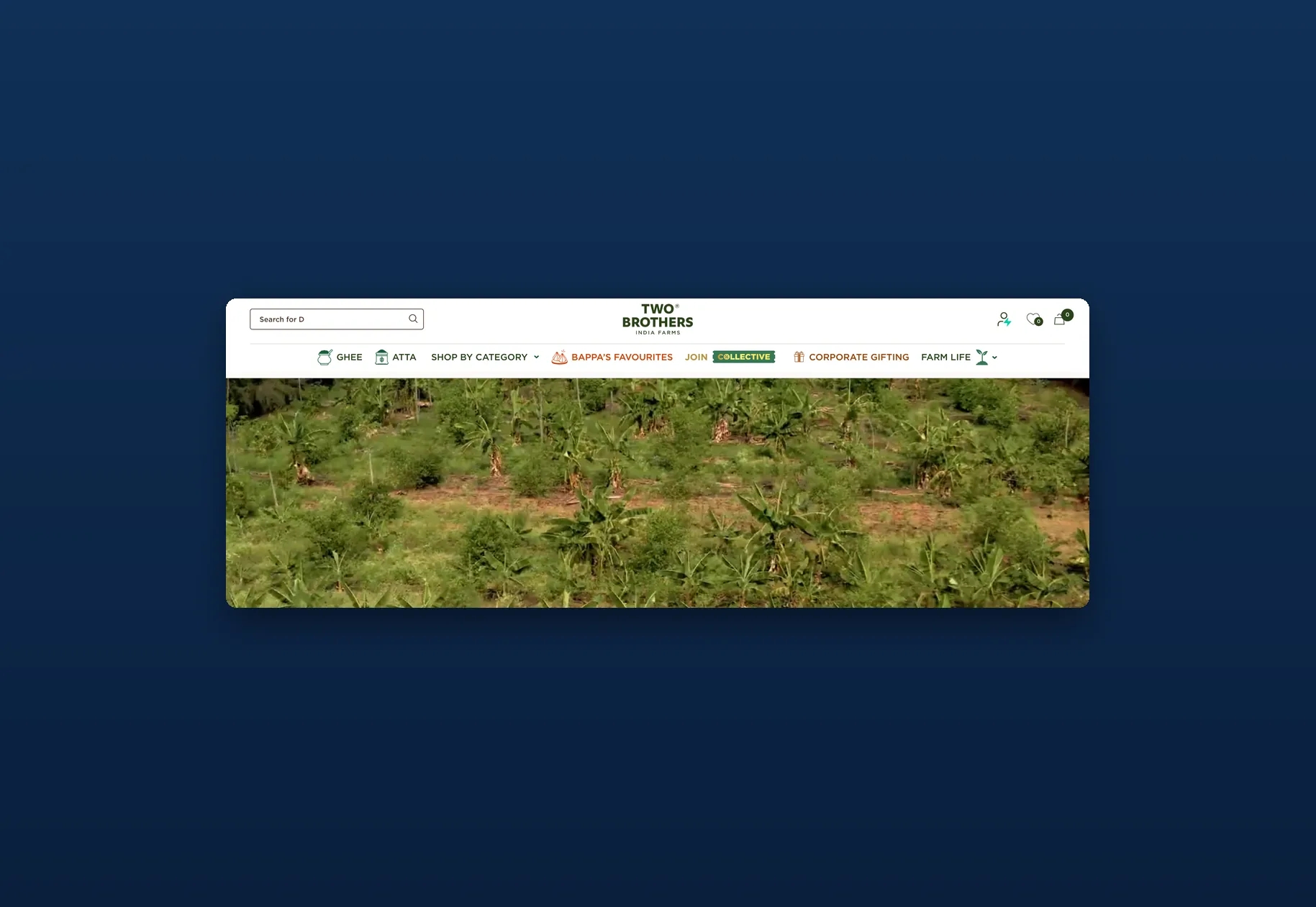
Russell’s Bromeliads
One of North America’s oldest wholesalers of Tillandsia air plants, growing and importing from farmers in their origin countries. We implemented Odoo for sales, purchase, inventory and accounting, connected the WooCommerce storefront, and wired UPS, FedEx and Print Node.
Read the case →
Scoop Wholefoods
A zero-waste wholefoods retailer selling loose product by weight. The engagement puts Odoo Point of Sale behind the Shopify store, tracks stock and expiration dates in Inventory, and integrates tare-weight scales so a weighed pack becomes an order line.
Read the story →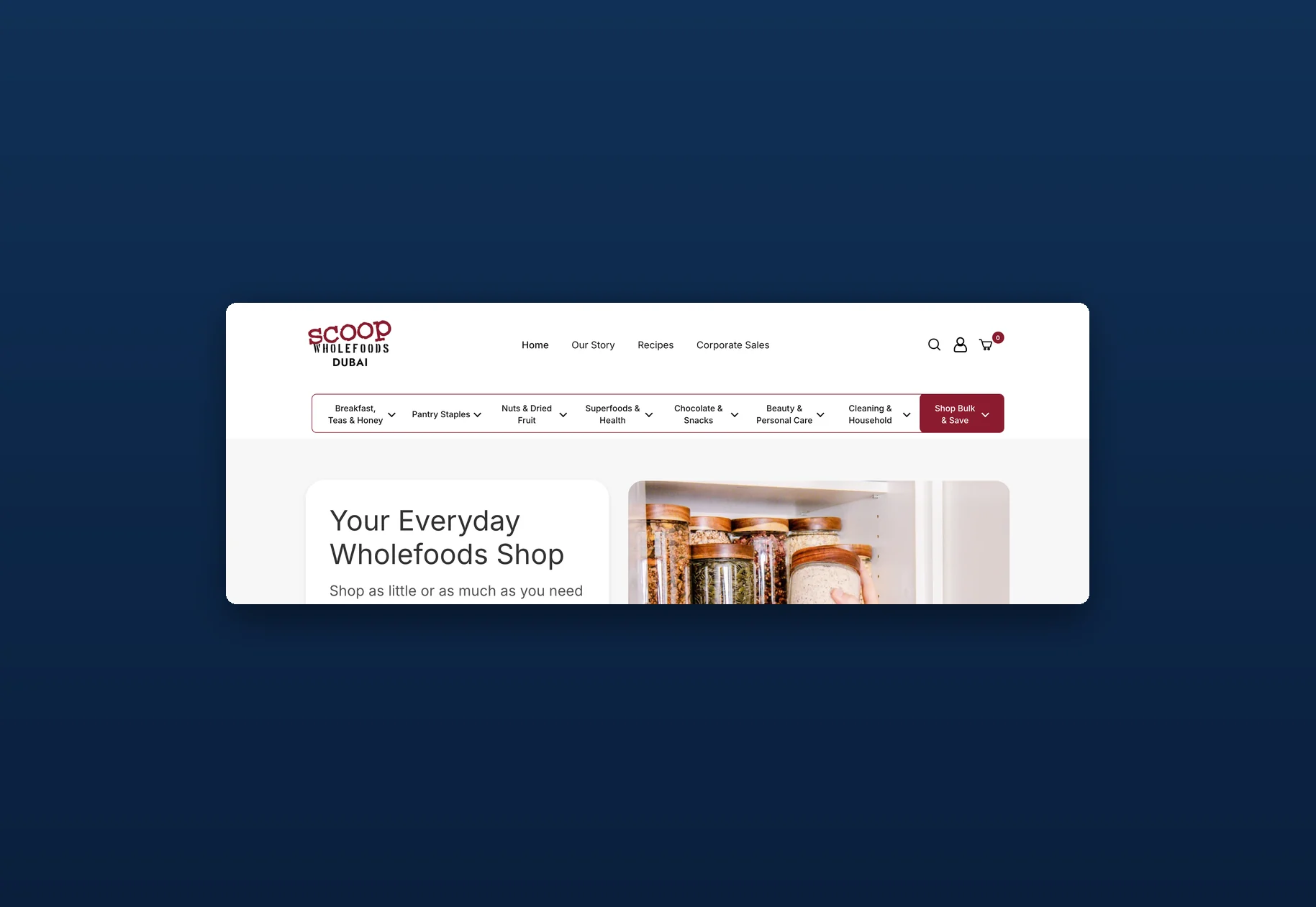
/ Comparison
Odoo, or a farm-management system plus an accounting package?
Farm-management software is built for the field and does that well. The question is what happens to everything after the harvest.
| Criterion | Farm-management software | Odoo |
|---|---|---|
| Fields and crops | Plots, crop plans, spray records and yield built in | None of it. Odoo starts at the intake gate |
| After the harvest | Often ends at the farm gate, or hands over by export | Intake, lots, grading checks, packing, orders and the ledger on one database |
| Selling and invoicing | Usually needs a separate ERP or accounting package | Sales, Purchase, Point of Sale and Accounting are in the same database |
| Running both | Stays the system of record for the field | Takes the load from the intake gate onward, across a defined interface |
Keep a farm-management system if your value is decided in the field. Choose Odoo if the work is after the intake gate: grading, packing, orders, stock and the books. Most agri-food businesses run both. See also Odoo for food and beverage and wholesale distribution.
/ Questions growers and packers ask
Odoo for agriculture FAQs.
Does Odoo have a farm-management module?
No. Odoo 18 ships no field or plot record, no crop plan, no yield-per-hectare report and no livestock module, and we will not pretend otherwise. Odoo starts where produce reaches your intake gate. A farm-management system can stay in place and hand deliveries over across a defined interface.
Can Odoo trace a harvest lot to the customer who got it?
Yes. Switch on Lots and Serial Numbers and every receipt, internal transfer and delivery records the lot. Validating a receipt produces a traceability report naming the document, the product and the lot, so tracing a batch back to a grower and forward to a customer is a query rather than a search.
Can Odoo handle products sold by weight?
Partly. Units of measure let you buy in kilograms and sell in cases, converting on the document, and a retail scale connects through the IoT system to Point of Sale. What Odoo has no concept of is catch weight: the conversion is a fixed ratio, so a genuinely variable-weight pack needs a build.
How do we plan a season in Odoo?
With the Master Production Schedule, which Odoo documents for products with long lead times or variable seasonal demand. You enter expected demand by period and it suggests replenishment against your stock targets. It does not raise the orders for you, and it holds no crop calendar or acreage.
Can Odoo run a cooperative with many member growers?
In part. Each legal entity is a company on one database, growers are contacts, and long-term supply sits on blanket orders that loads are called off against. Portal access lets a member read their own documents. Member equity and patronage settlement are not Odoo features, and are built.
Will Odoo make us GlobalG.A.P., FSMA 204 or organic certified?
No software can. Those schemes are awarded by an auditor or a certifier assessing your operation, and neither Odoo nor Brainvire issues a certificate. What the system contributes is the evidence an audit asks for: lot genealogy for every intake, dated quality checks, and records that reconcile to the ledger.
Can we grade on receipt and have it stick to the lot?
Yes, through Quality Control Points. A control point fires a check on a receipt for chosen products or categories, and a Measure check records a value that has to fall within a tolerance of a norm, such as moisture, size or count. The result is dated and attached to the operation.
Do we have to move every site at once?
No. The usual pattern is one intake site or one crop live first, proven with a physical count and a trace on a real lot, then the rest follow. Cut-over lands on a period boundary so the stock ledger and the books agree from day one.
/ Next step
Let’s map your intake and packing operation onto Odoo.
- A senior architect replies within one business day
- Your details are never shared or sold
- An NDA can be signed before we hear any detail
US +1 (631) 897-7276 · Gulf +971-54-737-4253 · Singapore +65-9086-0319 · India +91-22-6116-3300.








Trusted by 2,000+ brands worldwide
“Brainvire has helped our business grow. We feel like it’s a true partnership. They’re always present. It’s been seven great years, looking forward to more.”
Book a working session
Tell us what you take in, how it is graded, and where the lot number stops.