/ Fintech & financial services · Built from Singapore
Fintech systems, engineered from Singapore.
Ledgers, payments, reconciliation and reporting on Odoo, integrated with the banks, gateways and APIs you already use. Multi-currency and multi-entity by design, from our Singapore office.
/ AI in the ledger
AI for fintech that scores, detects and advises.
A financial product lives or dies on trust and speed. These are the AI capabilities we fit into fintech builds, from risk scoring to customer experiences.
AI credit & risk scoring
Origination and servicing move faster when risk models score an applicant in seconds, so a decision lands while the applicant is still in the journey.
Fraud detection & AML
Transaction platforms carry fraud detection and anti-money-laundering checks built in, not bolted on after a breach.
Robo-advisory at scale
Investment and portfolio apps suggest funds and flag risk with predictive analytics, so an adviser's judgement scales to millions of accounts.
Data cleansing & unification
Scattered ledgers, feeds and spreadsheets get pulled into one clean source before any dashboard or model can be trusted.
Market analytics
Descriptive analytics segments customers and flags churn and fraud risk from live market and trading data.
Self-service & support deflection
Customers who can check a balance, a claim or a loan themselves stop calling the branch, and the cost of that call goes with them.
Audit-ready by design
Financial builds are engineered for the audit that is coming, with logging, access control and data lineage from day one.
Real-time financial data
Equity, pricing and account data move between platforms and languages through APIs secured with JWT and scaled on microservices.




Brands whose storefronts Brainvire engineers and runs












/ By the work
Finance systems outcomes, on the record.
Regional programmes first; global work from the same bench follows.
UVJC
Accounting, Manufacturing, Sales, HR and Payroll consolidated on one Odoo 19 Enterprise platform.
Read the case →
Puma Energy
Odoo 18 ERP and POS rolled out across 12 countries for a Singapore-headquartered energy group.
Read the case →
Diamond Merchant
50 APIs integrated on one Odoo platform, 4X ROI.
Read the case →
/ What we build
Fintech software development services, by sub-sector.
Eight fintech sub-sectors behind one accountable Singapore engagement, each with its own compliance model and reference architecture, whether you are a fintech startup or an established financial institution. Every card links to the Singapore practice that carries it.
Banking & NBFC
Core banking, onboarding and self-service built for audits and uptime, on the same Odoo backbone our ERP practice runs.
AI ticket routing & support deflection Odoo Gold Partner /02Wealth management & portfolio
Investment and portfolio apps with 360-degree views, so an adviser reads one history rather than four.
AI robo-advisory at national scale Power BI & the Microsoft stack /03Lending & loans
Loan origination and servicing with AI credit and risk scoring, wired to the bureau connections and risk policy you already run.
AI credit & risk scoring AI & ML practice /04Payments & billing
Secure payment, billing and transaction apps with fraud detection built in rather than bolted on after a breach.
AI fraud detection & AML iOS · Android · Flutter /05Trading & investing
Real-time trading portals and dashboards that turn market data into decisions, load-balanced for volume.
AI-assisted pattern & risk flags Power BI & analytics /06Insurance & insurtech
Digital-first insurance platforms and claims journeys, engineered with the same compliance discipline as banking.
AI-assisted claims triage AI & ML practice /07Asset & fund management
Portfolio, risk and reporting systems for asset managers, built to reconcile before they report.
AI-assisted portfolio insight ERP & data practice /08Data & fintech APIs
Open, secure APIs that move real-time financial data across platforms and languages on a microservices backbone, with the data engineering behind them.
AI-assisted data cleansing AI & ML practice/ How we deliver
Four stages between a brief and a live fintech build.
One named owner end to end, a demo at every stage, and review slots that sit inside your own working day.
Discovery & Architecture
Compliance, data and integrations are audited in Singapore-hours workshops before any platform or cloud infrastructure is chosen.
Design & Build
The build takes shape integration-first and audit-ready, and you watch it grow demo by demo, with testing at every stage to protect product quality.
Integrate & Launch
Core banking, payments, KYC and credit bureau connections are wired in, then launch runs with a rollback path and monitoring live.
Optimise & Grow
After launch, fraud detection, scoring and AI work continues on a visible roadmap, so risk keeps falling and adoption keeps climbing.
/ How we see fintech here
Trust is the feature, not the disclaimer.
A financial product that is fast but not trusted does not get used. We build for both from the first workshop: security standards, access controls and audit evidence are part of the design, not a later phase.
Compliance scoped in Singapore, before code
Audit trails, access control and data lineage get scoped in the first workshop at our Singapore office (+65 9086 0319), with 1,000+ engineers across 10+ offices behind the room, not retrofitted before a regulator visit.
GST treatment, tax-invoice detail and multi-currency reporting configured in the ERP tax engine.
Self-service that actually deflects
For IIFL we rebuilt the loan journey so customers track loans, get statements and self-serve from a phone. Branch footfall fell 68% and support tickets fell 39% as a result, not as a target.
One dashboard, every account
IIFL's wealth app tracks income, expenses, mutual funds and investment suggestions from AI and ML behind a single dashboard, now managing $100M+ across 20+ bank affiliations.
Data unified before it is trusted
A North American finance company's scattered portfolio data got pulled into one PowerBI view with data extraction and cleansing before a single report went out. 95% of clients stay with us after work like this.
/ Client voices
The reviews are the retention rate, explained.
Brainvire demonstrated reliability, a commitment to delivery, and helped us maintain momentum on critical roadmap items.
/ On the record
Brainvire helped us develop an incredible insurance simulation platform to empower our students. It was a wonderful experience partnering with them.
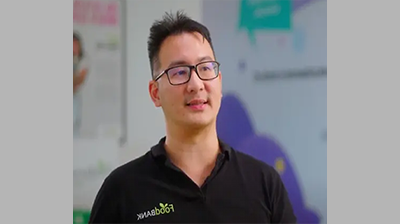
By partnering with Brainvire and utilizing their expertise, we were able to successfully achieve our objectives and reduce our manual workload by over 90%.
Before Brainvire, we had a tough time finding a high-quality software developer. Now, our user churn has dropped from 3.7% to 2.4%, and support-targeted development by 75%. More customers are interested in buying our software.

We’ve worked with Brainvire for six years. They’re task-oriented and great at turning projects around in an expedited fashion.
Brainvire helped us enhance our user experience with a website redesign. The project was very seamless as they were highly professional, dependable, and prompt.
Brainvire truly understood our needs. They’ve improved our internal operations with better task management, reporting, and efficiency.
/ Recognition
The record, kept by independents.
 2026
Clutch
Top eCommerce Developers
 2025
Financial Times
The Americas’ Fastest-Growing Companies
 2025
Inc. Regionals
Fastest-growing private companies in America
 2024
Deloitte Technology Fast 500
North America’s fastest-growing tech companies
/ Frequently asked questions
Choosing a fintech company, Singapore: questions answered.
Which client work backs this page?
The proof cards show the finance-system pattern: 50 APIs integrated into one omnichannel ERP, Odoo 18 ERP and POS rolled out across 12 countries for a Singapore-headquartered energy group, and nine departments including accounting and payroll consolidated onto one Odoo 19 platform for a Singapore manufacturer. Our financial services work for IIFL, from the loan self-service rebuild to the wealth app, is described above. A working session with a fintech architect can tell you within thirty minutes whether our pattern fits your stack.
Can you build AI credit scoring into an existing loan platform?
Yes. Scoring logic gets built around the bureau connections and risk policy you already run rather than replacing them wholesale, and it sits behind the existing journey so nothing has to be rebuilt to test it. We have rebuilt lending journeys with biometric security, integrated payments and credit bureau checks; those case studies sit in the global case library.
How do you handle compliance and audit requirements in a financial build?
Access control, audit trails and data lineage are scoped in the first workshop, not added before an audit. The UVJC programme on this page is the pattern: nine departments, accounting and payroll included, moved onto one platform, so there is a single record to answer from.
Do you build wealth management or robo-advisory apps?
Yes. IIFL's wealth app, built by this team, tracks income and expenses, manages mutual funds and suggests investments with predictive analytics, now serving 500K+ active users and managing $100M+ in assets across 20+ bank affiliations.
Can you connect a payment platform to multiple currencies and gateways?
Yes. Multi-currency handling and gateway routing are designed into the payment layer rather than added per currency, which is the same integration discipline behind the diamond merchant build on this page, where 50 APIs were brought into one omnichannel platform.
How long does a fintech platform build take?
A focused module, such as a support or onboarding flow, is measured in weeks; a core banking, lending or wealth platform in months. Regulatory scope, the number of systems that must connect, and how fast your compliance team can decide drive the timeline, so we phase scope and ship the highest-risk journeys first.
What should you ask a fintech software development company?
Ask for case studies in your industry, the security standards and controls it designs to, who owns the code and the cloud accounts, and how it supports the platform after launch. Then compare proposals on scope and risk, not day rate alone, and start with a discovery phase before committing to the full build.
Can you build for fintech startups and enterprises?
Yes. Fintech startups usually need a secure first product in market quickly, with room to scale. Enterprises and financial institutions usually need new digital channels connected to the core systems they already run. The engagement model changes. The security and audit discipline does not.
How does MAS regulation shape a fintech build?
The Monetary Authority of Singapore (MAS) is Singapore’s central bank and integrated financial regulator. Its Guidelines on Risk Management Practices for technology risk set out risk management principles and best practice standards for financial institutions, so for an MAS-regulated client we design logging, access controls and audit evidence that your compliance team can map to them. Whether a specific requirement applies to you is a question for your compliance team.
What support does Singapore offer fintech startups?
MAS describes its aim as creating a Smart Financial Centre through FinTech and innovation, and it runs several initiatives. Its FinTech Regulatory Sandbox, in MAS’s words, relaxes specific regulatory requirements to enable live experiments of innovation within boundaries. MAS grants can fund proof-of-concepts, hiring and business development, and MAS describes the Singapore FinTech Festival as the world’s largest FinTech festival. Eligibility is set by MAS, so check the current criteria before planning around them.
How do you plug into Singapore’s fintech ecosystem?
Through integration. A fintech product rarely stands alone: it connects to banks, real-time payment rails, payment gateways, identity and data services, and the accounting system behind it. Our work is the system integration that makes those ecosystems hold together, with security features such as encryption, role-based access and logging designed in.
Which software do banks mostly use?
Banks typically run a core banking system from a specialist vendor, with digital banking services, payments, lending, CRM and reporting built or bought around it. The core system manages accounts and processes transactions. Newer platforms are increasingly cloud-native and API-first, which makes integration easier to plan. The integration between those systems is usually where the most delivery risk sits, which is why we map it first.
What is a fintech company?
A fintech company uses software to deliver or improve financial services: digital banking, payments and cross-border transfers, lending, wealth management, insurance or the infrastructure behind them. Some are licensed providers serving individuals and businesses directly. Others, like Brainvire, build the platforms and the digital transformation work those providers run on.
Can AI improve cost efficiency in financial operations?
Yes, where the work is repetitive and rule-bound. Reconciliation, document checks, support triage and first-line fraud flags are common starting points, and each one is measured against a baseline so the savings are evidence, not estimates. The IIFL self-service rebuild on this page is the pattern: branch footfall fell 68% once customers could serve themselves.
Do you build web applications and mobile apps?
Yes. Customer-facing web applications, mobile apps for iOS and Android, SaaS platforms and internal back-office tools, built on the same APIs so the customer experience and operations stay in step.
Can you support growth across Southeast Asia?
Yes. If your ambition is regional, the ledger has to be multi-currency and multi-entity from the start, and that is how we design it for businesses that use Singapore as their hub for Southeast Asia and the wider Asia Pacific. Puma Energy, on this page, is the pattern: Odoo 18 ERP and POS rolled out across 12 countries for a Singapore-headquartered energy group.
How does a partnership on a fintech build start?
With discovery: a short phase that maps your workflows, data, controls and integrations, and ends with a delivery framework, a phased roadmap and a cost range for the build. You keep that output whichever way you decide to go.
Do you build investor portals and trading products?
Yes. Investor portals, portfolio dashboards and trading products that show investors positions and risk in real time, built with the same controls as the rest of a financial sector stack. The trading and asset management cards above cover the detail.
Do your software developers work Singapore hours?
Workshops, demos and reviews run on Singapore working hours, from our Singapore office. The software developers behind them sit across Brainvire’s 10+ global offices and 1,000+ Brainers, so the team can scale up for a launch without changing who owns your project.
/ Next step
Put thirty minutes against your stack.
One working session with a Brainvire fintech architect: compliance, data, platform and where AI earns back first. No sales deck, no follow-up sequence.
Talk to a fintech architect →