/ Education technology for Thailand · delivered from our Singapore office on Thai hours
Learning platforms, localised for Thailand.
We build learning platforms, student portals and admissions systems for universities and training providers, delivered from our Singapore office on Thai working hours (UTC+7), with calls and demos on Bangkok time.
/ AI inside the learning stack
AI that changes what a learner sees next.
Learning AI is worth paying for when it changes the next screen a learner meets. These are the capabilities we fit into an LMS or a wider education build.
Adaptive learning paths
Models read progress and assessment results, then reorder what comes next instead of marching everyone through one sequence.
Course drafting, tagging and translation
Material is drafted, tagged and translated at scale, so a new market gets localised content without a year of manual work.
Automated assessment and marking
Question banks, marking and merit lists run in the system, with human review kept where the stakes need it.
Tutor and helpdesk assistants
Assistants answer learner questions around the clock and escalate to a tutor with the full history attached.
Early warning on drop-off
Models flag the learner who is about to disengage while there is still time for someone to act.
Multilingual delivery
One course, several languages, with translation quality checked by a person rather than assumed.
Skills mapping and certification
Competency models connect a completed course to the skills a role actually needs, and issue certificates that can be verified.
Programme analytics for leadership
Dashboards over enrolment, completion and outcomes, so a training budget is defended with numbers.




/ Proof, on the record
Education outcomes, on the record.
Regional programmes first, delivered from Singapore; global work from the same bench follows.
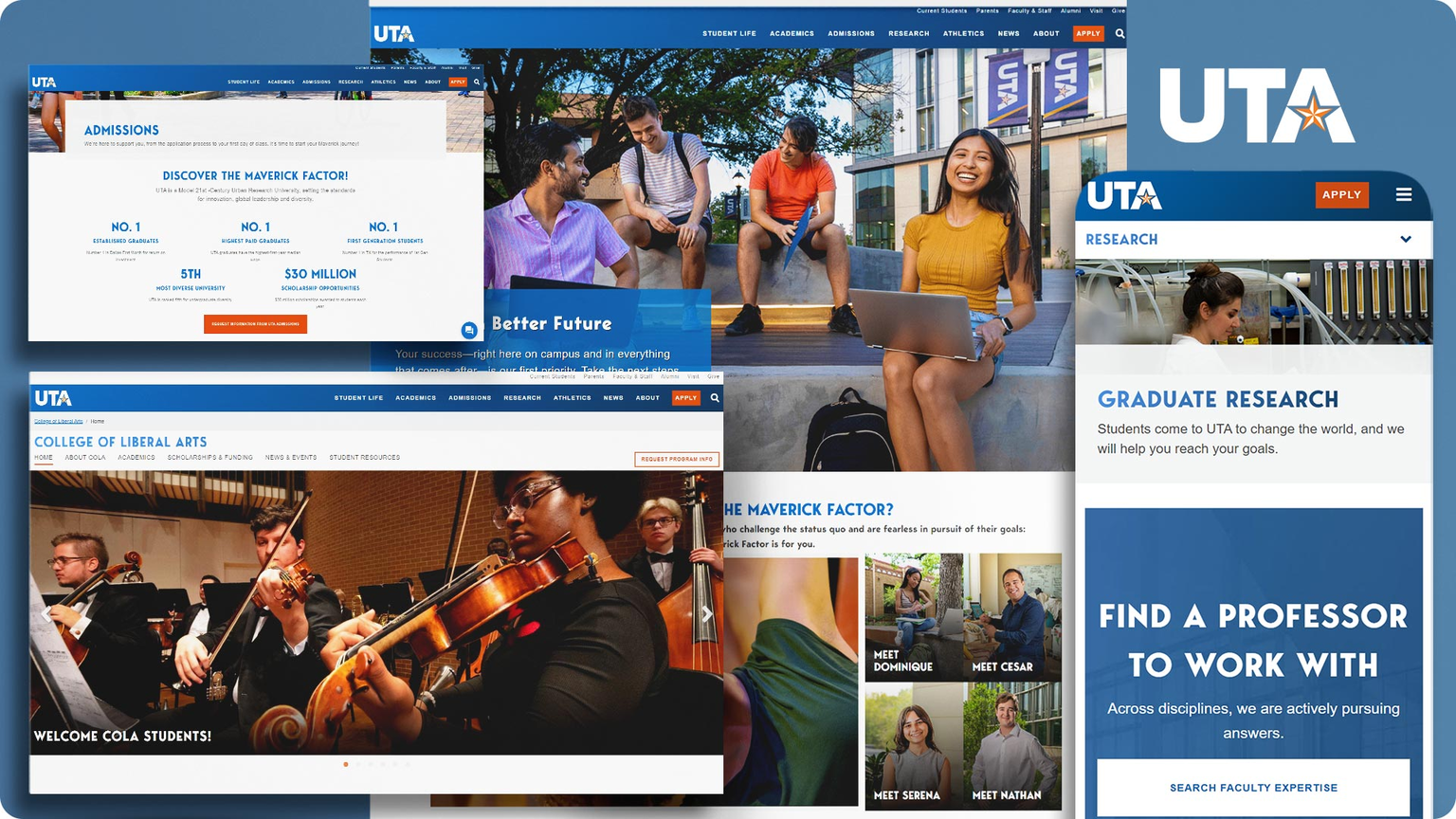
The card above is a global engagement from our education practice, labelled by region. Closer to Thailand, we built the centralised learning platform for Kajima Overseas Asia, which publishes localised content for eight markets, Thailand among them.
/ What we build
Platforms, content, commerce and growth. One team.
Six practices behind one Thailand engagement. Each card opens its own Thailand page.
Learning on Odoo
The Odoo eLearning module behind the Kajima platform, with courses, enrolment and reporting on the same backbone as the rest of the business.
AI-assisted course operations Odoo Gold Partner /02Adaptive learning AI
Recommendation, assessment and drop-off models trained on your own learner data rather than a generic corpus.
Pathways that adapt per learner AI and ML practice /03Course commerce and enrolment
Paid courses, subscriptions and enrolment journeys, with multi-currency checkout for cross-border programmes.
AI search across the catalogue Ecommerce practice /04Student and alumni records
One record from first enquiry to alumnus, so admissions, tutors and finance read the same history.
AI next-best-action on real history Salesforce practice /05Enrolment marketing
Search, paid and conversion work for education brands, measured on enrolments rather than clicks.
AI-assisted keyword and content operations SEO · Paid · CRO /06Everything we run for Thailand
The full Thailand practice in one place: platforms, partnerships, proof and how an engagement is staffed.
One named owner per engagement Thailand overview/ How we deliver
Four stages between a brief and a live platform.
One named owner from start to finish, a demo at every stage, and review slots booked inside your own working day.
Discovery and architecture
Courses, cohorts, assessment rules and data ownership are mapped in workshops booked on Thailand hours.
Design and build
The platform grows module by module, and you review real courses running on it rather than a prototype.
Integrate and launch
Sign-on, human resources data, payment and reporting systems are wired in, then launch runs with a rollback path and monitoring live.
Optimise and grow
After launch, completion rates, content operations and AI work carry on against a visible roadmap.
/ How we read this market
A new country is a content problem first.
Thailand usually arrives as one more market on a platform that already exists. That is a publishing and translation question first, and an engineering one second.
Student and guardian data handled under PDPA (B.E. 2562), with consent and retention agreed at design stage.
One platform, many markets
Kajima’s training runs on one centralised system that publishes localised content for eight countries, Thailand among them, rather than eight systems to keep in step.
Training data stays where you want it
On the Kajima build all training data is hosted on the client’s own systems. Where learner data sits is a decision we take at architecture stage, not at launch.
Localisation is the real work
Translating a course is the easy half. Reordering it for a market, and keeping versions in step as the master course changes, is where a rollout succeeds or stalls.
We are on Thai working hours
A dedicated team works inside your working day. Workshops, demos and release windows are booked on Bangkok time, with 1,000+ engineers across 10+ offices behind it.
/ Client voices
What clients say once the platform is live.
Brainvire demonstrated reliability, a commitment to delivery, and helped us maintain momentum on critical roadmap items.
/ On the record

By partnering with Brainvire and utilizing their expertise, we were able to successfully achieve our objectives and reduce our manual workload by over 90%.
Brainvire helped us develop an incredible insurance simulation platform to empower our students. It was a wonderful experience partnering with them.
Brainvire helped us enhance our user experience with a website redesign. The project was very seamless as they were highly professional, dependable, and prompt.
Not only have they delivered what they said they would as per the timeline, but they are easy to communicate with. The project success allowed their team to create more versions of the solution and add more features.
Brainvire truly understood our needs. They’ve improved our internal operations with better task management, reporting, and efficiency.
/ Recognition
Recognition, on the record.
 2025
Financial Times
The Americas' Fastest-Growing Companies
 2025
Inc. Regionals
Fastest-growing private companies in America
 2024
Deloitte Technology Fast 500
North America's fastest-growing tech companies
 2024
Clutch Global
Top B2B service provider, global rankings
/ Frequently asked questions
EdTech, Thailand: what buyers ask first.
Which learning platforms have you built in Asia?
A centralised LMS for Kajima Overseas Asia, part of the Kajima Corporation construction group, built on the Odoo eLearning module. It publishes localised content for eight countries across Southeast Asia and India, including Thailand, Malaysia, Indonesia and the Philippines. Employees take courses and quizzes and earn certifications on one system.
Which hours does the team work?
The team works Thai working hours (UTC+7). Workshops, demos and release windows are booked on Bangkok time, and one named owner takes your call. Support requests, by email or on a call, reach the same team during your working day.
Can one platform publish different content for Thailand and other markets?
Yes, and that is exactly what the Kajima build does. One centralised system serves eight countries, with content localised per market rather than a separate installation per country. A course changes once and every market inherits the change on the schedule you choose.
Where does our learner data live?
Wherever you need it to. On the Kajima platform all training data is hosted on the client's own systems. We treat data residency as an architecture decision taken in the first workshops, not a question answered a week before launch, and we say plainly in the estimate what a hosting requirement costs.
Can you build assessment, certification and reporting, not just courses?
Yes. The Fortune 500 academy carries live webinars, podcasts, course-wise tests and QR-verified certificates. The Univariety portal runs assessment and guidance for 600+ premier schools across 82 cities. The school portal handles gradebook, attendance and assignments for 20,000+ students and 900+ teachers.
What does a first conversation actually cover?
Thirty minutes on your courses, your learners and the markets you have to publish for. You leave with a platform recommendation and the sequence we would build it in. No sales deck and no follow-up sequence.
Do you work in Thai?
We work in English. Calls, documentation and support for Thailand are delivered in English by our Singapore team.
What is an LMS?
A learning management system (LMS) is the software that hosts courses, manages enrolment, runs assessments and records results. Administrators manage users, courses and reports from one dashboard, so everything a learner has done sits in one record.
What does EdTech cover beyond the LMS?
In addition to the LMS, EdTech covers student portals, admissions systems, assessment engines, course commerce and the analytics on top. We build these applications around one learner record, and the opportunity is usually in how well they connect.
Which industries do you build learning platforms for?
Higher education, schools and training providers, plus corporate learning in industries such as construction. The Kajima LMS trains construction employees across eight countries, and a University of Texas campus runs on a unified web platform we built.
Can the LMS run on Odoo?
Yes. The Kajima platform runs on the Odoo eLearning module, so course, quiz, certification and reporting functions sit on the same backbone as the rest of the business. Where Odoo is not the right fit, we build on another LMS or a custom platform.
How do you plan an LMS rollout?
In four stages: discovery and architecture, design and build, integration and launch, then growth after go-live. Each stage ends with a demo, and the plan names one owner from start to finish.
What information do you need for an estimate?
Your courses and their formats, the number of learners, the systems the LMS must connect to and where learner data has to live. With those details we can scope the development work after a 30-minute consultation.
How do you measure performance after launch?
On completion rates, assessment results and enrolment, plus speed and uptime for the platform itself. Leadership dashboards put those numbers in one view, so a training budget is defended with evidence.
How is learner data protected in Thailand?
The Personal Data Protection Act B.E. 2562 (PDPA) governs personal data in Thailand, including student and guardian records. We set consent, retention and access conditions at the design stage and write them into the data policy for the platform.
Can learners pay for courses online?
Yes. Paid courses, subscriptions and multi-currency checkout run inside the same platform. Each course is set up as a product with its own access period and terms, so customers buy and start learning in one session.
Which AI features are worth adding to an LMS?
The ones that change what a learner sees next: adaptive learning paths, automated marking with human review, tutor assistants and early warning on drop-off. We add them in the areas where your own learner data shows a need.
Can our specialists review content before it goes live?
Yes. Subject specialists approve drafts, translations and assessments in the review workflow. Each course can be held there until a named reviewer signs it off, so courses go live with confidence.
Can you migrate courses from our current LMS?
Yes. We move courses, learner records, results and certificates, then run both platforms side by side until the new one is signed off. Typical examples are video lessons, question banks, SCORM packages and completion history.
What research shapes the platform design?
User research with administrators, tutors and learners in the first workshops, plus completion and drop-off data from any platform you already run. Those findings set the course structure, the screens and the reports.
/ Next step
Put thirty minutes on your learning platform.
One call with a Brainvire education architect: courses, cohorts, data and the markets you have to publish for. No sales deck, no follow-up sequence.
Get your LMS build scoped →