Custom web applications
Products built from a blank repository: marketplaces, portals, booking systems and internal tools that no package covers.
AI features designed inOne page from a senior architect, within two business days. The single highest-payback AI move in your Odoo, Adobe or custom stack, and the two things to leave alone. Yours to keep.
One page from a senior architect in two business days: your highest-payback AI move, and what to leave alone.
/ MEAN stack development for Thailand · delivered from our Singapore office on Thai hours
MongoDB, Express, Angular and Node from one team, delivered from our Singapore office on Thai working hours (UTC+7), with calls and demos on Bangkok time.
/ Why one language matters
MEAN is JavaScript from the database driver to the browser. That is not a style preference. It removes the handover where most schedule slips and most defects are born, and it means a smaller team can hold the whole system in its head.
Document storage suits products whose shape is still moving, and it holds Thai and English fields in one record without a translation table.
A thin, well documented API layer, so the same services feed the web application and the mobile apps rather than being rewritten for each.
Structured, typed front ends that a new developer can join without a month of archaeology, which matters when your team turns over.
Event driven Node handles many small concurrent requests efficiently, which is the shape of most real time and marketplace workloads.
The same engineers own the query, the API and the screen, so a change is one conversation rather than three tickets in two backlogs.
Search, recommendations, document extraction and assistants built into the product, with the model choice measured rather than assumed.
A few of the 2,000+ brands Brainvire has delivered for












/ Global proof, regions named
Regional programmes first, delivered from Singapore; global work from the same bench follows.
One unified web platform, with a 34% drop in compliance issues.
Read the case →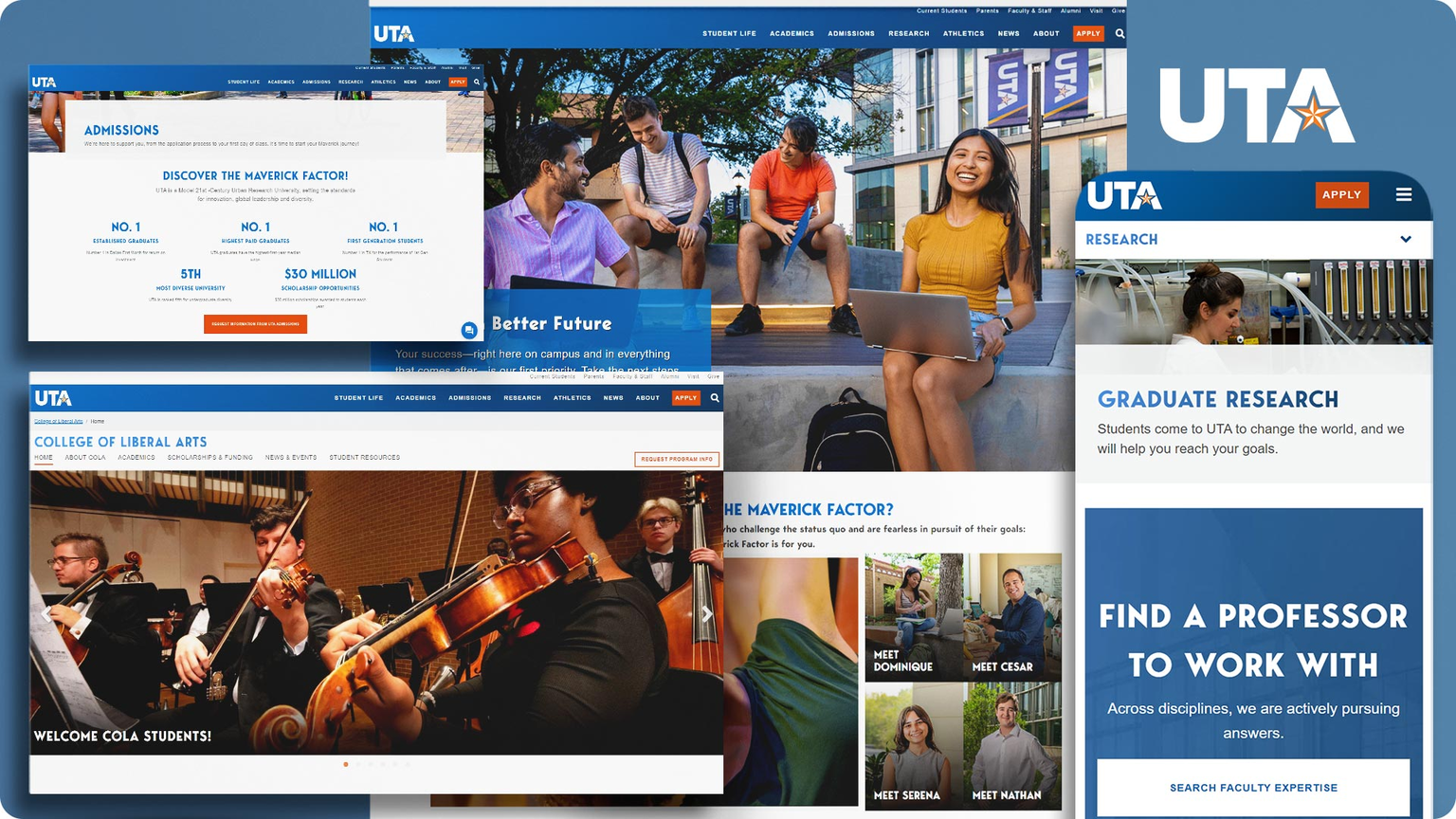
Loyalty app adding 13,000+ new users a month across 12 countries.
Read the case →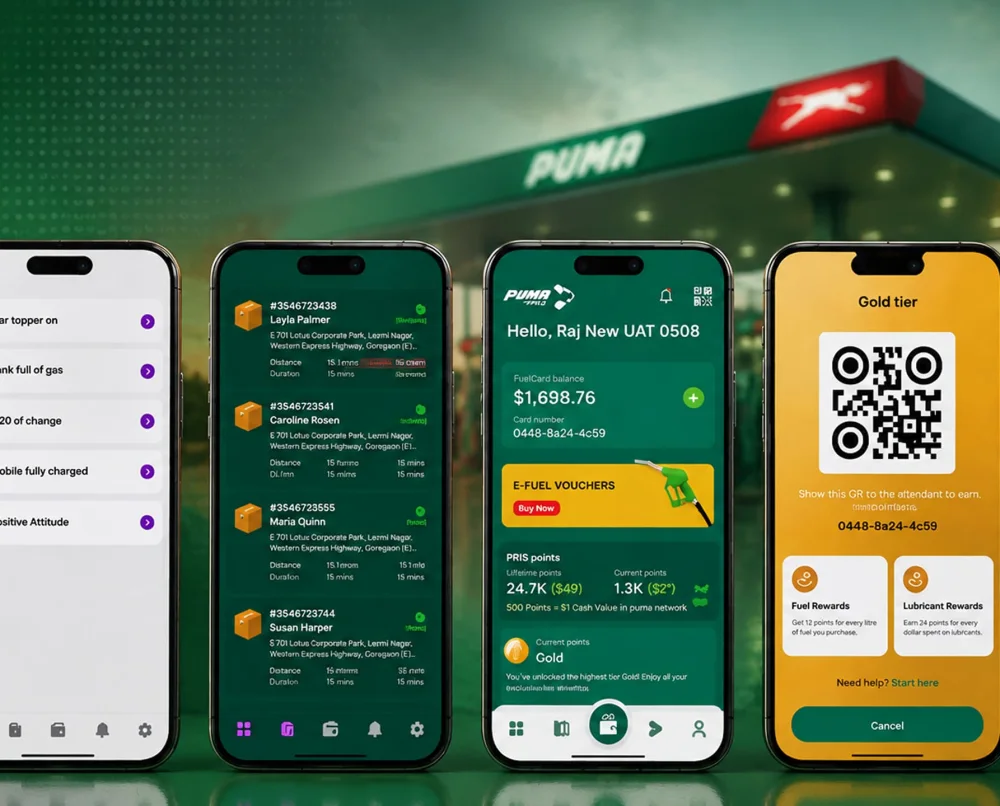
High-traffic airline services website redesign.
Read the case →
Our published MEAN stack builds, and the deeper JavaScript engineering record behind them, are documented in the wider Brainvire case library rather than summarised here.
/ What we build
Products, portals and the APIs behind your mobile apps, built and run by one accountable JavaScript team.
Products built from a blank repository: marketplaces, portals, booking systems and internal tools that no package covers.
AI features designed inOne Express and Node API layer feeding iOS, Android and web, so a rule changes in one place rather than three.
AI-assisted API contractsChat, live tracking, notifications and dashboards on sockets, tested on Thai mobile networks rather than on office fibre.
AI anomaly detection on streamsDocument design, indexing and aggregation that hold up as the data grows, plus Thai text handled properly at the index.
AI query and index reviewStructured, accessible interfaces that render Thai and English side by side without broken word breaking or clipped tone marks.
AI-assisted component scaffoldingMoving a slow PHP or .NET application onto MEAN in stages, with the old system live until the new one has earned the traffic.
AI-mapped data migrationNode services joining your application to ERP, CRM, payment and logistics systems, with one owner per field agreed first.
AI-mapped API integrationPipelines, monitoring and on-call after launch, sized to a Thai traffic pattern rather than a global average.
AI-triaged monitoring, 24x7/ How we deliver
Four stages, a named owner, and something you can click at the end of every one of them.
We agree the data model, the API surface and the first release before anyone opens an editor, because on MEAN the model is the decision.
Each sprint delivers a working slice from database to screen, so you judge a running feature rather than a status report.
Security review, load testing and Thai language testing on real content, on the devices and networks your users have.
Pipelines, monitoring and support after launch, with the on-call window set to your hours rather than ours.
/ Related engineering
A MEAN application rarely arrives alone. These are the practices that usually sit either side of it.
iOS, Android, React Native and Flutter apps on the same Node APIs.
Pipelines, environments and monitoring, so a release is routine rather than an event.
Search, extraction and assistants built into the product rather than bolted beside it.
Field and workforce applications joined to the ERP that already runs the business.
/ Industries
The products where a document database and one JavaScript team beat a package, applied to the sectors that build software in Thailand.
Course platforms, enrolment and student portfolios, which is exactly the shape of the MEAN rebuild in the band above.
Explore education cases →Marketplaces, loyalty and order tracking where the data model is still moving faster than a packaged platform allows.
Explore retail commerce cases →Wallets, lending journeys and reconciliation tools built to be audited rather than demonstrated.
Explore finance cases →Live tracking, driver applications and dispatch boards, where sockets and concurrency are the whole problem.
Explore logistics cases →Listing platforms, viewing schedules and owner portals joined to the systems agents already use.
Explore real estate cases →Patient portals and clinical tools where consent and access control are designed in from the first sprint.
Explore healthcare cases →/ In their words
Brainvire’s expertise in developing scalable and high-performing mobile applications was a great success for us. No performance hiccups, just happy users.
Ian Hamilton, Project Manager, K12
/ On the record
By partnering with Brainvire and utilizing their expertise, we were able to successfully achieve our objectives and reduce our manual workload by over 90%.
Brainvire helped us develop an incredible insurance simulation platform to empower our students. It was a wonderful experience partnering with them.
Brainvire’s transparency helped us to be more confident that they were doing their best engineering work for us at all times. Excellent documentation skills.
Brainvire helped us enhance our user experience with a website redesign. The project was very seamless as they were highly professional, dependable, and prompt.
It was a pleasure working with Brainvire. Our app is now fully responsive and feature-rich, making our process more user-friendly and efficient.
/ Recognition
 2025
The Americas’ Fastest-Growing Companies
 2025
Fastest-growing private companies in America
 2024
North America’s fastest-growing tech companies
 2024
Top B2B service provider, global rankings
/ Working with us from Thailand
What a custom build looks like when the team is not in the country, and a straight note on where the proof stands today.
Stand-ups, sprint reviews and releases are scheduled to Indochina Time, with 1,000+ engineers behind the delivery lead who fronts your programme. There is no Bangkok office; there is a team that keeps your hours.
Code lands in your version control, not ours, and the pipeline is set up so a release never depends on one person being awake.
Segmentation before indexing, tone marks given room, Buddhist Era dates at the document layer, and mixed Thai and English inside one record treated as normal rather than as an edge case.
We have no Thai MEAN case. What we have is four documented builds elsewhere, two of them naming their client, and a preference for saying so rather than borrowing someone else’s market.
/ Questions, answered
No. Our published MEAN record is four builds and none of them is Thai: an e-learning platform rebuild, the Alghanim Cadillac owner application in the Middle East, the Catholic Legacy forms application, and a bill splitting point of sale for an Australian payments firm. Two of the four name their client. We would rather write that than let a page suggest otherwise. Our documented delivery for groups trading in Thailand is Odoo, Magento and Adobe Commerce, on our Odoo ERP in Thailand page.
No. Brainvire delivers to Thailand remotely from offices in the United States, the United Arab Emirates, India and the wider region. Indochina Time overlaps a full working day with our delivery centres, so sprint reviews and demos happen inside your working hours rather than after them. If you want people in Bangkok for a workshop, we will plan and price the travel.
MongoDB for storage, Express for the API layer, Angular for the interface and Node to run it all, which means one language across every layer. The practical benefit is organisational, not technical: one team owns the query, the endpoint and the screen, so there is no handover between a back-end group and a front-end group. That is where most schedule slip and most defects come from.
When the problem is a package problem rather than a product problem. If you are running commerce, choose a commerce platform and read our ecommerce page. If the problem is inventory, finance and operations, choose an ERP and read our Odoo page. If your data is deeply relational with heavy transactional integrity, a relational database and a different stack is the honest answer. MEAN is for products you are inventing.
Both are the same stack with a different view layer, and we build both. Angular arrives with routing, forms, HTTP and testing decided, which suits a long lived enterprise application and a team that changes people. React is lighter and hires more easily in some markets, which suits a product still finding its shape. We will recommend one at the scoping session and give you the reason, not the preference.
Yes, with engineering rather than a locale setting. Thai is written without spaces between words, so MongoDB text indexing, search and any truncation need segmentation. A tokeniser written for English will cut a Thai word in half and quietly wreck your search results. Thai tone marks sit above the line and get clipped by line heights chosen for Latin type. Business records also carry Buddhist Era dates and thirteen digit national ID numbers. We handle that at the data and component layer and test it on your own content.
You do, in your own repository, from the first commit. We work in your version control with your branch rules where you have them, and we set up the pipeline so a release does not depend on a person. If you take the product in-house or move it to another partner, nothing has to be handed over because nothing was ever held back.
Through the services people here actually use. PromptPay and Thai QR, card and instalment gateways, and bank transfer with slip verification on the payment side. LINE rather than only email for notification and login, because that is where Thai users are. Both sit behind the Node API layer, so swapping a provider is a service change rather than a rewrite.
More than it does for a packaged one, because you decide everything. We agree at design time which collections hold personal data, how consent is captured and recorded, how long each type is kept, and how an export or deletion request is answered. Those routes are built as features rather than promised as process, so answering a data subject request is an administrative task rather than a developer ticket.
We work in English. Calls, documentation and support for Thailand are delivered in English by our Singapore team.
/ Next step
Thirty minutes with a Brainvire principal engineer, booked on Bangkok hours: the product you are building, the data model underneath it, and whether MEAN is honestly the right stack for it.
Scope your MEAN stack build →Cookies on this site
Essential cookies are always on. They keep the site secure and make forms work.
We also use Google Analytics and Microsoft Clarity to see how the site is used. We only turn these on if you accept.