Singapore officea senior architect replies within one business day4.8 / 5 on Clutch · 265 reviewsOdoo Gold · Adobe · Shopify Plus partner+65-9086-0319CallBook a working session
TH Thailand

/ Sitecore to AEM for Thailand · delivered from our Singapore office on Thai hours

Sitecore to AEM, on a reusable accelerator.

Templates, components and content moved from Sitecore to AEM, delivered from our Singapore office on Thai working hours (UTC+7), with calls and demos on Bangkok time.

2,500+Projects delivered
10+Offices, Singapore nearest
1,000+Engineers
95%Client retention

Trusted by 2,000+ brands worldwide

McAfeeRev-A-ShelfNikeTridelPAN HomeAmerican LightingBay Alarm MedicalCenomi RetailOCuSOFTEntrepreneurLarsonAmerican Tire Depot

/ The accelerator

A reusable migration framework, not a one-off port.

Source extraction is kept separate from target transformation, and your specifics live in configuration rather than hard-coded work. That is what makes the framework reusable, and it is why a Thai estate starts ahead of zero rather than at it.

/01

EMA-first AI migration

Wherever rendered Sitecore HTML carries enough to rebuild the target, Adobe's EMA agents discover, extract and transform it into EDS-compatible blocks. Orchestration, exception handling and validation sit on top.

  • Adobe EMA agents for static content
  • Automated HTML to EDS block conversion
  • Exceptions and validation layered on top
/02

Dynamic Content Accelerator

Datasource, API and logic driven components cannot be rebuilt from a rendered snapshot. Our reusable engine discovers the underlying data, classifies each component and maps it to the right EDS block or integration pattern.

  • Datasource and API discovery
  • Automated component classification
  • Reusable dynamic block strategy
/03

Config-driven core

Both tracks converge on one canonical content model, so your mapping is configuration in a versioned library rather than bespoke code. Thai language copies and market specific fields are declared there too, not bolted on at the end.

  • Source neutral canonical model
  • Configuration driven mapping library
  • Adapter based Sitecore version support

/ What moves

Every Sitecore content pattern, mapped to EDS.

Each content type is routed to whatever reproduces it faithfully: EMA agents for what renders cleanly, the Dynamic Content Accelerator for what does not. Everything is normalised, mapped and reconciled against the source, Thai language pages included.

/01

Static pages

Templates and rendered pages converted to EDS documents and blocks by Adobe's EMA agents, with orchestration and validation layered on.

/02

Structured content

Structured, authored content mapped through the canonical model with schema, field and transformation rules, not scraped from HTML.

/03

Dynamic components

Components backed by datasources, APIs, commerce or search are discovered, classified and rebuilt as the equivalent EDS block or integration.

/04

Assets

Images, documents and metadata migrated with duplicate handling, reference resolution and validation on every item.

/05

URLs and redirects

URL structure preserved and redirects mapped through the pipeline, with validation rules that protect the search equity your Thai pages have already earned.

/06

References

Internal links and content dependencies resolved against the canonical model, so nothing breaks on the target.

/07

Multi-site and languages

Reusable site and language mapping patterns for multi-site, multilingual Sitecore estates, which is what a Thai plus regional rollout actually is.

/08

Integrations

Third party and runtime scenarios handled through reusable adapters, with personalisation assessed for an EDS-compatible replacement.

/ How we migrate

One AI-assisted pipeline, discovery to cutover.

One pipeline runs the full load, the delta cycles and the cutover itself. Adobe’s EMA agents carry the static content, the Dynamic Content Accelerator carries everything datasource and API driven, and every item is reconciled against the source before anyone signs anything off.

Step 01

Discover

A discovery accelerator analyses templates, renderings, components, the content tree, datasources, assets, integrations, languages and volumes. Output: a complete source inventory and migration backlog.

Step 02

Classify

Every item is separated into static, structured, dynamic and integration driven content, then routed to EMA agents or the Dynamic Content Accelerator. Output: a routing decision for the whole estate.

Step 03

Extract

EMA agents pull suitable HTML and content, while our extraction services capture datasources, linked items and API driven data. Output: raw content and structured data, captured.

Step 04

Normalise

Source content is converted into a canonical model, keeping mapping independent of Sitecore implementation details. Output: a source neutral representation.

Step 05

Map

Template, field, component and EDS block mappings are applied from a versioned library, customer specifics as configuration. Output: content mapped to target structures.

Step 06

Transform

The engine generates EDS-compatible content and block structures, normalises HTML and resolves metadata and references. Output: ready to ingest documents and blocks.

Step 07

Load

Content, assets, metadata and references are ingested into AEM as a Cloud Service and EDS through Adobe supported mechanisms. Output: content live on the target.

Step 08

Validate

Technical, content, structural and experience level checks run automatically, from field counts to rendered output and SEO metadata. Output: a multi-layer validation pass on every item.

Step 09

Reconcile

Source and target are compared on counts, links, assets and fields, with failed items reprocessed rather than lost. Output: reconciliation reports and a clean exception queue.

Step 10

Delta and cutover

Change detection drives incremental delta cycles, and the same pipeline runs the production cutover with checkpoints and rollback support. Output: a controlled go-live.


/ Scoped to your complexity

Three tiers, sized by migration complexity.

The reusable accelerator baseline is a 360 person day framework, and these tiers set the opening implementation budget for a specific Sitecore migration. Page volume, component count, dynamic and API dependency, languages, assets, integrations and cutover complexity decide which one you land in. Read these as our sizing commitments, not as a client outcome.

Small
120 to 180

person days · 10 to 14 weeks · 4 to 5 FTE

High EMA reuse, low custom behaviour

High static reuse with limited custom Sitecore behaviour, few dynamic or API components, and standard datasources. The fastest path onto AEM and Edge Delivery, and where a single-market Thai site usually sits.

Medium
220 to 320

person days · 16 to 22 weeks · 6 to 7 FTE

Mixed static and dynamic content

A mix of static and dynamic content, several datasource patterns, moderate APIs and integrations, custom components, and multi-site or multilingual mapping. A Thai and English estate on one platform usually lands here.

Large
350 to 500+

person days · 24 to 32+ weeks · 8 to 10 FTE

Significant dynamic and integration depth

Significant dynamic and API content, deep dependencies, extensive custom extensions, several integrations and a complex cutover, delivered wave by wave across markets.

/ In their words

In our clients’ own words.

/ On the record

Jameson Chow of Food Bank, whose manual workload fell by over 90% on the system Brainvire delivered
Jameson ChowSingapore Manager, Food Bank
By partnering with Brainvire and utilizing their expertise, we were able to successfully achieve our objectives and reduce our manual workload by over 90%.
RS
Robert SmithFounder, Fox Sports
We wanted to elevate our viewing experience for our audience and Brainvire’s tailored solutions and designs worked wonderfully, even enhancing our website ranking.
JB
John BerkshireIT Manager, Southwest Airlines
Brainvire helped us enhance our user experience with a website redesign. The project was very seamless as they were highly professional, dependable, and prompt.
Jessica Bowman of Northridge Learning Center, on the technology stack transition Brainvire delivered
Northridge Learning CenterJessica Bowman, Operations Manager
There’s been a smooth transition and implementation of the latest technology stack, and our business processes have been effortless since we partnered with Brainvire.
DH
Dan HendersonPresident, TRIDEL
Not only have they delivered what they said they would as per the timeline, but they are easy to communicate with. The project success allowed their team to create more versions of the solution and add more features.
JA
Joseph AndersonCEO, Founder, Connex
Before Brainvire, we had a tough time finding a high-quality software developer. Now, our user churn has dropped from 3.7% to 2.4%, and support-targeted development by 75%. More customers are interested in buying our software.

/ Proof, on the record · Global

AEM outcomes, on the record.

Regional programmes first, delivered from Singapore; global work from the same bench follows.

There is no Sitecore to AEM migration in our case-study library — not in Thailand, not anywhere — and we will not imply one. What we can evidence is AEM itself, and every figure is quoted from the case study it links to. Thai-market work on other platforms sits in the Thailand case study library.

/ Delivery, for Thailand

How the migration runs for Thailand.

The accelerator is global. What Thailand adds is the delivery layer: whose clock the programme keeps, who answers, and how Thai content and Thai data are handled on the way across.

Hours

Discovery on your clock

Discovery, tier sizing and cutover planning are run inside Thai working hours. We have no Bangkok office; our nearest office is Singapore, one hour ahead, and the engineering bench sits two and a half hours behind, so decisions are same-day rather than next-day.

Bench

1,000+ engineers behind the programme

The accelerator team draws on a bench of 1,000+ engineers and the wider Adobe practice. The full practice is on our AEM services in Thailand page.

Language

Thai content survives the move

Thai language copies, Thai typography and the fields Thai buyers actually filter on are declared in the canonical model before anything is transformed, so the target is not an English site with Thai pasted into it.

Cutover

Delta cycles on your trading calendar

Change detection drives incremental syncs, and the production cutover is scheduled with checkpoints and rollback around the hours your site can least afford to be down.

/ Questions, answered

Sitecore to AEM, in plain terms.

Have you migrated anyone in Thailand from Sitecore to AEM?

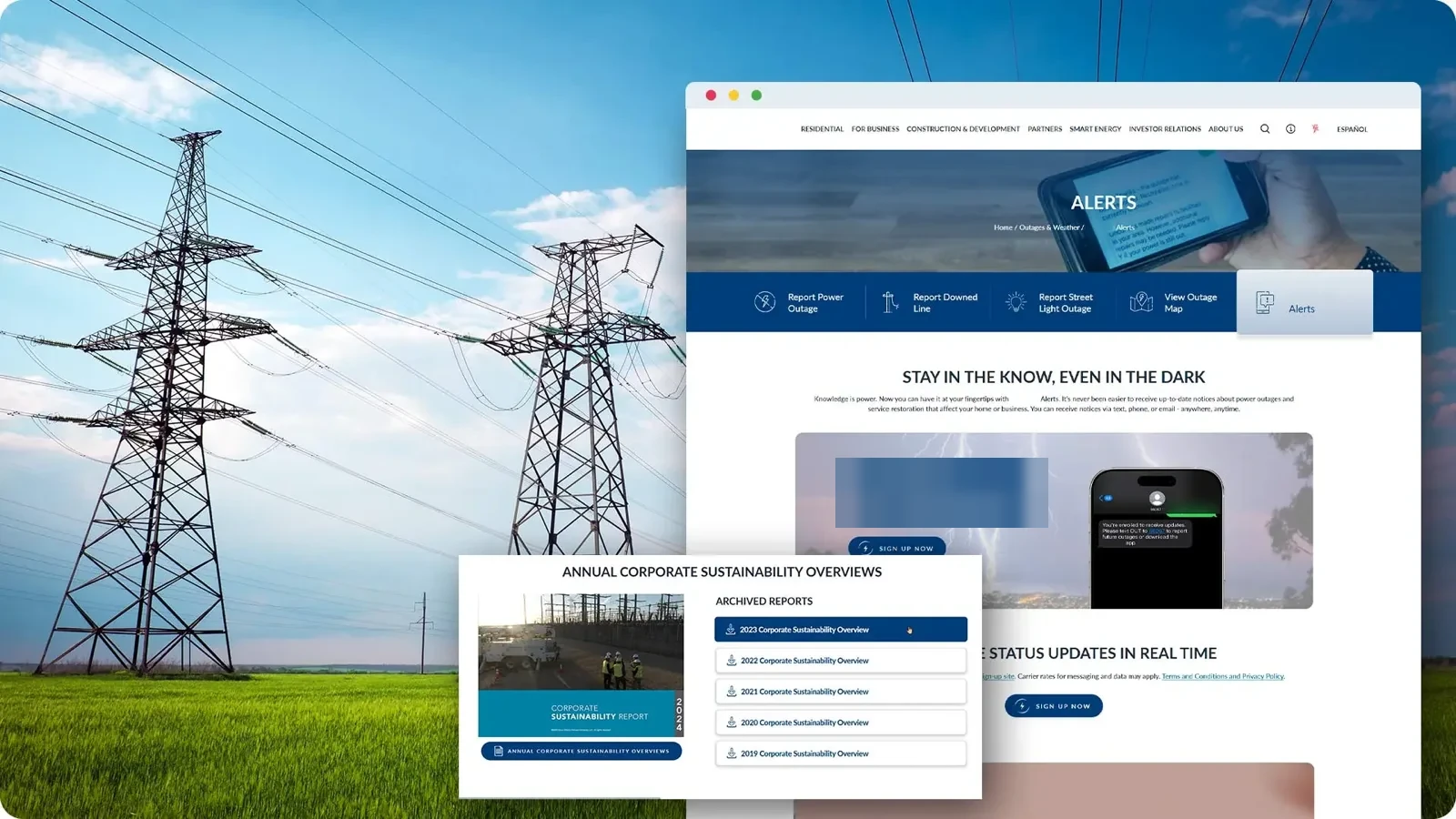
No, and we will not imply otherwise. We hold no Sitecore to AEM migration case study anywhere in the library, in Thailand or outside it. What we can evidence on AEM itself is on this page — a legacy AEM platform re-architected for a US energy utility serving millions of homes and businesses, and 30% faster load speed on AEM for a global antivirus provider. What Thailand gets is the delivery layer, a reusable framework rather than a first attempt, and Thai casework on other platforms in the case study library.

How much of a Sitecore to AEM migration is actually automated?

The static path is carried by Adobe’s EMA agents, which convert rendered HTML into Edge Delivery blocks, with our orchestration and validation on top. The dynamic path runs through our reusable engine for datasource and API driven components. Discovery tells you the split for your own estate before you commit, and a high EMA share is what puts a migration in the Small tier of 120 to 180 person days.

What happens to our Thai URLs and search rankings?

URL structure is preserved and redirects are mapped through the transformation pipeline, with validation covering links and key metadata. Reconciliation then compares source and target on counts, links and references, so anything that fails is reprocessed rather than quietly lost. Thai language URLs are treated as first-class, not as an afterthought that gets normalised into English.

Does the Thai language content survive intact?

Yes, because it is modelled rather than scraped. Thai language copies, Thai typography and the market specific fields your buyers filter on are declared in the canonical content model before anything is transformed. That is the difference between a Thai site on AEM and an English site with Thai text dropped into it.

Which Sitecore versions can you migrate from?

The extraction layer is adapter based, so version specifics sit in configuration rather than in the core framework. Discovery starts by confirming compatibility for your exact Sitecore version and estate, and the canonical content model then carries the content across whichever version it came from.

How long will our migration take?

The accelerator baseline is a 360 person day framework, and your estate sets the tier: Small runs 120 to 180 person days over 10 to 14 weeks, Medium 220 to 320 over 16 to 22 weeks, and Large 350 to 500 or more over 24 to 32 weeks or more. These are our sizing commitments, not a client result. A discovery and validation phase proves representative patterns before the full run, so the tier you budget is evidenced rather than guessed.

Do you have a team in Thailand?

No. Brainvire has no Bangkok office, and we would rather say that than imply otherwise. Delivery is remote from our engineering centres, with workshops and review slots inside Thai working hours and one named owner for the life of the engagement. Our nearest office is Singapore.

What does Thailand’s PDPA change about the migration?

Mostly it changes what moves and where it lands. Thailand’s Personal Data Protection Act has been in force since June 2022. A content migration usually carries little personal data, but forms, profiles and any personalisation store do, so we identify those sources during discovery, agree retention and residency, and reconcile them separately from the content run. Author and publish regions, personalisation data and consent flags documented for Thailand PDPA (B.E. 2562).

Do you work in Thai?

We work in English. Calls, documentation and support for Thailand are delivered in English by our Singapore team.

/ Next step

Scope the move before you commit to it.

Start with a discovery and validation phase: representative static and dynamic Sitecore patterns proven on AEM and Edge Delivery before the full run. Thirty minutes with a migration architect, inside your working day, no sales deck.

Scope your move to AEM →