Optimizer strategy and roadmap
Journey mapping and an optimization roadmap grounded in your real engagement data, starting with which backend, PIM, and ERP stay in place.
AI-assisted journey analysis Adobe Certified Team Americas' Fastest-Growing 2025
One page from a senior architect, within two business days. The single highest-payback AI move in your Odoo, Adobe or custom stack, and the two things to leave alone. Yours to keep.
One page from a senior architect in two business days: your highest-payback AI move, and what to leave alone.
Brainvire’s certified Adobe Experience Cloud team implements Adobe Commerce Optimizer, the SaaS layer that adds AI-driven merchandising, personalized product discovery, and Edge-Delivery storefront performance on top of your existing commerce backend, lifting conversions with no replatforming. We ingest product data from your existing systems, set up catalog views, search, and recommendations, and launch the storefront your shoppers see.
Trusted by leading brands worldwide












/ Commerce and experience work, on the record
Three are Adobe Commerce migrations and builds, and the fourth is the Southwest Airlines website rebuild. None is an Adobe Commerce Optimizer project. Every figure comes from a documented engagement, and every card is one client, on the record.
Retail · Adobe Commerce
5.4×
Improved conversion rate for Rev-a-Shelf
A cabinet-hardware manufacturer replatformed from Magento to Adobe Commerce, unifying B2B and B2C on one experience and improving conversion 5.4×.
Read the case →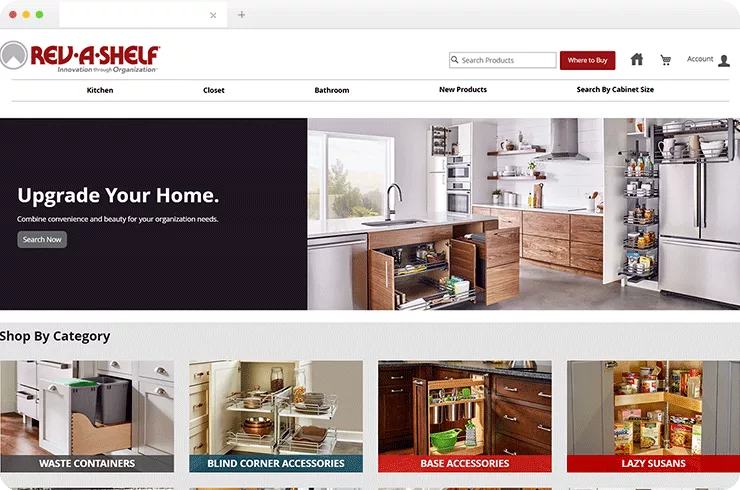
 Beauty · Adobe Commerce Cloud
3×
Better customer retention after an Adobe Cloud build
An Adobe Commerce Cloud solution established a tailored, personalized shopping experience for a luxury beauty brand, tripling customer retention.
Read the case →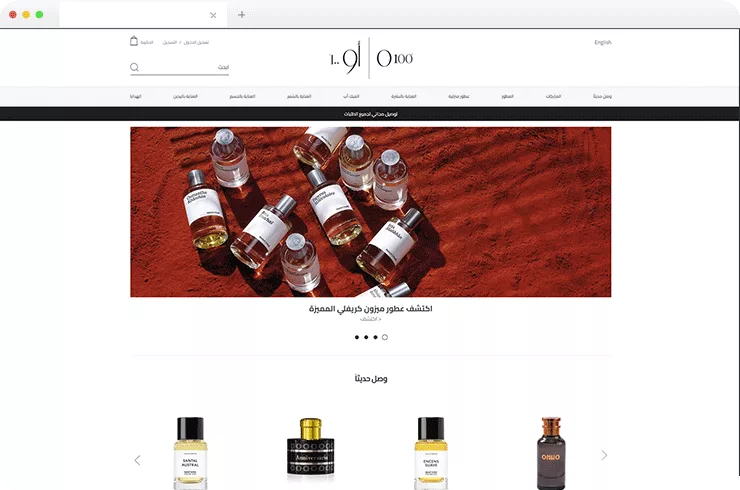 Airline · Experience Design
37%
Lift in engagement after the Southwest website redesign
A full website makeover reworked Southwest Airlines’ digital experience and information architecture, lifting engagement 37% and search use 55%.
Read the case →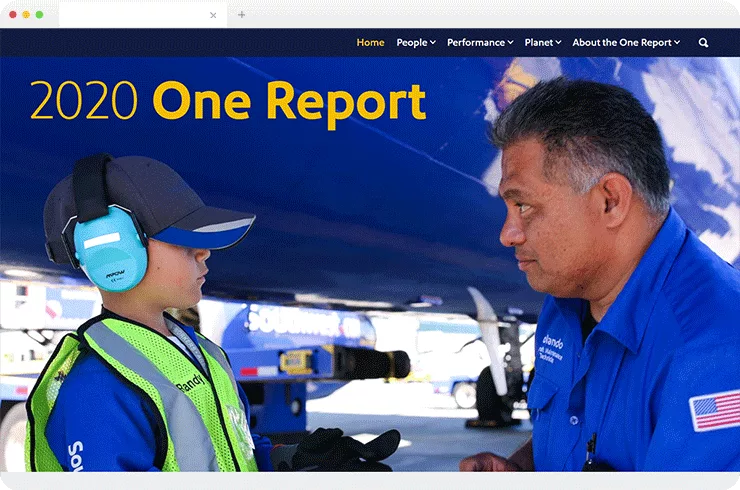 Apparel · Digital Transformation
25%
Efficiency gain from apparel digital transformation
An apparel brand modernized its digital operations and storefront experience with Brainvire, driving a 25% gain in operational efficiency.
Read the case →
/ What we build
Most of what Optimizer fixes starts as a catalog problem: the same product reaching every channel in a different shape. We build the catalog layer first, so search, recommendations and speed have clean data to work on. Eight practice areas, one certified Adobe roof, from catalog and merchandising to Edge-Delivery storefront speed, with AI woven through every build.
Journey mapping and an optimization roadmap grounded in your real engagement data, starting with which backend, PIM, and ERP stay in place.
AI-assisted journey analysis Adobe Certified TeamPersonalized search and product recommendations from Adobe Commerce Optimizer’s AI and ML models, plus rules- and model-driven personalization across web, app, and campaign touchpoints.
AI audience & offer decisioning Experience CloudStructured experimentation programs with clean measurement and lift analysis, read against Optimizer’s before-and-after metrics.
AI-prioritized test backlog ExperimentationConsistent storefront experiences across web, mobile, and app, driven from one catalog, with catalog views and policies deciding what each brand, dealer network, or channel receives.
AI next-best-experience OmnichannelCore Web Vitals, speed, and conversion-path tuning on a Commerce storefront powered by Edge Delivery Services and Adobe’s drop-in components.
AI performance budgeting CWV & SpeedAdobe Analytics wired to Optimizer for closed-loop measurement of every change, alongside Optimizer’s success metrics and search performance reports.
AI-surfaced insights Adobe AnalyticsAdobe Commerce Optimizer connected to Analytics, Target, and the wider Adobe Experience Cloud, including Adobe Experience Manager and AEM Assets for product visuals.
AI-reconciled data flow IntegrationManaged experimentation and continuous optimization after go-live, with data sync and storefront events monitored.
AI-triaged monitoring 24×7 Managed Services


/ Agentic AI, built in
Search that understands shopper intent, not just keywords, with AI-ranked results and merchandising rules layered in.
Recommendation engines trained on real purchase behavior to lift average order value and repeat purchase rate.
Conversational agents that answer product questions, compare options, and guide shoppers straight to checkout.
Automated product copy, imagery, and catalog enrichment that keeps 800k+ SKUs current without manual effort.
/ Accelerators
Ready-made Adobe packages built on real projects, so you launch sooner with less risk.
Move to Adobe Commerce SaaS and cut running costs, keeping your custom features and adding a fast storefront, with no full rebuild.
Move from Shopify to Adobe Commerce with zero downtime and every order, customer and product carried across.
/ Industries
Catalog shape changes by vertical, so that's where every engagement starts. Auto parts sellers need a view per dealer network, retailers need storefronts ready for Black Friday, and B2B suppliers price by account. Each team gets a catalog built for how it sells.
Omnichannel platforms with unified inventory, AI merchandising, and storefronts that learn from every order.
See Retail and ecommerce work →HIPAA-conscious patient platforms, operational AI, and connected systems for providers and pharmacies.
See Healthcare work →Secure lending, payments, and decision-intelligence platforms built for audits, uptime, and scale.
See Finance and fintech work →Dealer commerce, VIN & fitment catalogs, and service platforms connected to live inventory nationwide.
See Automotive work →PropTech platforms, CRM-ERP integration, and AI valuation models for developers and brokerages.
See Real estate work →Route intelligence, warehouse automation, and end-to-end shipment visibility on one operational spine.
See Logistics work →Content platforms, subscription commerce, and audience analytics that turn viewers into recurring revenue.
See Media work →Learning platforms, enrollment systems, and AI tutoring experiences for institutions and edtech firms.
See Education work →/ In their words
Brainvire demonstrated reliability, a commitment to delivery, and helped us maintain momentum on critical roadmap items.
/ Recognition
2026Top eCommerce Developers
 2025
The Americas’ Fastest-Growing Companies
 2025
Fastest-growing private companies in America
 2024
North America’s fastest-growing tech companies
/ How it runs
Six steps from the first working session to a live storefront, with a checkpoint at the end of each. Each checkpoint is signed by the owner of that piece: catalog, feeds, channels, rules or checkout. How long the rollout runs follows your catalog sources and checkout integration.
A working session maps your commerce backend, PIM, ERP, and the system that keeps cart and checkout, then the business groups your catalog views will need. Your ecommerce lead, IT architect and catalog owner join a Brainvire Adobe architect, and you sign the catalog map.
AI-assisted journey analysis DiscoveryProducts, attribute metadata, price books, and prices flow in through the Data Ingestion API, and the Data Sync page confirms what reached Optimizer from each source. A feed that loads with stale prices is the quiet failure here, so sync is checked feed by feed before anything else is built. Each source owner signs off their feed.
AI-reconciled data flow DataCatalog views and policies are set up per brand, dealer network, locale, or channel, with private catalog views wherever only signed requests should see the data. Your channel owners approve what each one exposes.
CatalogMerchandising rules, facets, synonyms, and recommendation units are configured, and storefront events are verified so the AI has real behavior data to learn from. Recommendations trained on thin event data look random to buyers, which is why events come first. Your merchandising lead approves the starting rules.
MerchandisingThe storefront goes live on Edge Delivery Services with Adobe’s drop-in components, or as a headless front end on the Merchandising API, connected to your cart and checkout. A broken handoff to checkout is the launch risk that costs most, so it runs end to end on staging first, and your IT lead signs it.
AI performance budgeting StorefrontBefore-and-after metrics, search performance, and Adobe Analytics show what each change did, while data sync and storefront events stay monitored after go-live.
AI-triaged monitoring Support/ Questions, answered
Adobe Commerce Optimizer is an Adobe-managed SaaS product that adds a high-performance storefront, catalog management, and AI-powered merchandising on top of the commerce system you already run. Adobe says that storefront is built to boost organic traffic, customer engagement, and revenue, and that Optimizer lets you grow and scale your catalog without replatforming your entire commerce stack, ingest catalog data from any source, define catalog views and policies, and create personalized search and recommendations using AI and ML.
Adobe names three groups: merchants who want to keep their existing backend commerce system and only transform storefront experiences, businesses where a third-party system manages the cart and checkout lifecycle, and Adobe Experience Manager customers who want a simple way to manage their product catalog from a third-party commerce engine.
Not your entire commerce stack. Commerce Optimizer sits on top of what you run today: catalog data is ingested from your existing commerce catalog, a PIM, an ERP, or another third-party source, which means the system that handles orders can stay in place while the storefront and merchandising layer change.
Catalog views group your catalog into meaningful business units, for example dealers in the automotive industry, subsidiaries of a multi-brand group, or manufacturing locations for suppliers. Policies are data access filters inside those views that send the right product data to the right destination, such as point-of-sale stores, marketplaces, or advertising feeds for Google, Facebook, and Instagram. Private catalog views only return data to requests that carry a valid signed token.
Through the Data Ingestion API, a REST API that adds and manages products, attribute metadata, price books, and prices in JSON, either directly or from third-party systems. The data lands in a SaaS component called Merchandising Services, the Data Sync page shows whether each feed from your PIM or ERP has loaded and synchronized, and catalog layers let you modify product data without changing the source data.
Yes. Adobe’s Merchandising API is a GraphQL API designed for front-end applications to read catalog data, for example to filter products by category or brand or to fetch localized prices for users in a specific region. A headless storefront and Adobe’s own storefront can both query the same catalog views and render the responses.
Adobe’s Commerce storefront powered by Edge Delivery Services lets you launch a site quickly with prebuilt storefront components for product listing pages, product detail pages, cart, and checkout. Adobe describes Edge Delivery Services, its Commerce drop-in components, and content blocks as its way to “create the fastest storefronts on the web.” We design the layout, build the blocks, and tune Core Web Vitals on that storefront.
Recommendations use artificial intelligence and machine-learning algorithms to analyze aggregated visitor data together with your catalog, and appear on the storefront as labeled units such as “Customers who viewed this product also viewed.” You create, manage, and deploy them directly from Adobe Commerce Optimizer. Search ranking prioritizes exact and near matches and same-field matches, and merchandising rules, facets, and synonyms refine what shoppers see.
Storefront event data powers product discovery and recommendations, so incomplete eventing leaves the AI with less to learn from. The Events page in Commerce Optimizer shows whether events are implemented correctly and being captured, and we check it before launch and after each storefront release.
It can. Adobe documents API Mesh and App Builder as the way to integrate Commerce Optimizer with third-party cart and checkout systems, so the platform where customers buy today can keep taking orders while the storefront and catalog layer shift to Optimizer.
Commerce Optimizer helps you judge each change with a success metrics report, a search performance page that shows the search terms shoppers use, and before-and-after metrics that give real-time insights into specific KPIs around a change and can be exported as a PDF. We read those alongside Adobe Analytics, so every merchandising change has a clear before and after.
Yes. Adobe describes Merchandising Services, the foundation of Commerce Optimizer, as a scalable, flexible catalog data model that unlocks multi-brand, multi-business unit, and multi-language use cases, and its developer guide positions it for large, complex catalogs. Product data stays separate from product context, so a brand entering new markets can compose a catalog for another locale, channel, or business model such as B2B, B2C, or D2C without duplicating the base catalog.
When AEM Assets supplies product images, the Product Visuals feature applies an AEM Assets catalog layer, so imagery stays in AEM while product data comes from your commerce sources.
Adobe Commerce is a full commerce platform. Commerce Optimizer is aimed at merchants who keep the commerce backend they already have and change only the storefront, catalog, and merchandising layer, including businesses where a third-party system runs cart and checkout. If you already run Adobe Commerce, your existing Commerce catalog can be one of the sources Optimizer ingests.
It begins with a working session where we explore your catalog sources, the business groups your catalog views need, the channels each policy feeds, and the systems that keep cart and checkout. From there we set up ingestion, storefront events, search and recommendations, and the storefront, with a checkpoint at the end of each step.
Managed services cover data sync and storefront events. We tune merchandising rules, facets and synonyms against search performance, and keep recommendation units up to date as behavior data builds up. The CFO sees conversions against a before-and-after baseline, and IT keeps the commerce backend it already runs. Merchandisers get rules they control, and Operations sees one catalog feeding every channel.
License and build are priced separately. Licensing comes from Adobe, which documents system boundaries and licensing for Optimizer capabilities in its limits and boundaries guide. Implementation cost moves with the number of catalog sources, the brands and policies you need and the cart and checkout integration. A headless storefront adds to it. We quote a fixed-price phase 1 after discovery, so the budget is agreed before the build.
Brainvire is an Adobe Gold Solution Partner with 14+ years of experience, 1,000+ people, 10+ global offices and 95% client retention. The Adobe Commerce migrations and builds on this page, including Rev-a-Shelf’s move to Adobe Commerce, are the catalog, integration and storefront work an Optimizer rollout depends on. Call us when backends, brands or channels each hold a different version of the catalog. A single store that already merchandises well should tune what it has first.
Yes. Adobe positions Optimizer for merchants who keep their existing backend commerce system, and catalog data can come from any third-party source through the Data Ingestion API, so a store on another platform can feed the same catalog views, search, and recommendations.
/ Next step
A 30-minute working session with a Brainvire Adobe architect: your catalog sources, journeys, experimentation plan and AI roadmap, on one page. Bring a product that looks different on every channel. That’s where we begin.
Book a working session →Cookies on this site
Essential cookies are always on. They keep the site secure and make forms work.
We also use Google Analytics and Microsoft Clarity to see how the site is used. We only turn these on if you accept.