Why US Manufacturers Are Moving from Legacy Systems to Adobe Commerce
-

Hiren Raval

US manufacturers are no longer competing solely on product quality. Digital experience now plays a decisive role in how buyers evaluate, select, and remain loyal to suppliers.
From initial product discovery to ongoing account management, buyers expect seamless, transparent, and efficient digital interactions that increasingly mirror consumer-grade experiences.
Legacy commerce platforms, however, were built for basic transactions, not for today’s multi-stakeholder purchasing journeys, contract-based pricing models, or large-scale catalogs. As manufacturers expand across markets and partner ecosystems, these limitations become more visible and more costly.
Why Digital Commerce Modernization Is No Longer Optional
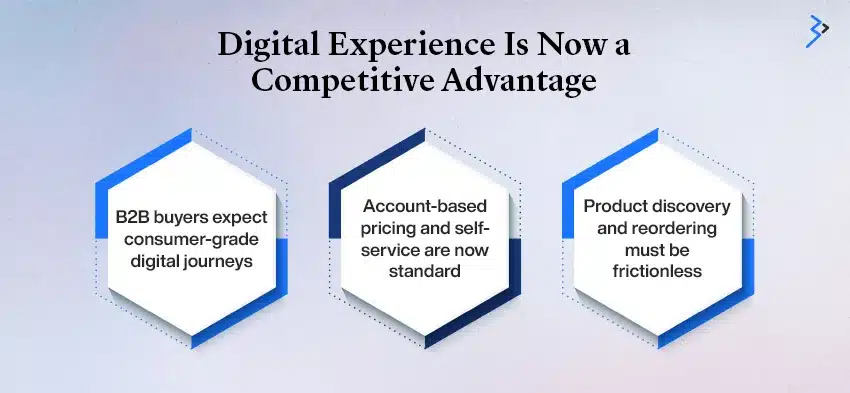
Modern B2B buyers expect accurate, account-specific pricing, real-time inventory visibility, intuitive reordering, and self-service capabilities as standard. Internally, sales and operations teams rely on deep ERP integration, automation, and minimal manual intervention to maintain efficiency and reduce errors.
The pandemic accelerated this shift. Manufacturers with mature eCommerce capabilities adapted quickly, while those dependent on manual processes and fragmented systems faced disruption and lost momentum.
Today, many US manufacturers are responding by modernizing their commerce foundations with platforms like Adobe Commerce, repositioning eCommerce as a strategic layer that supports growth, customer experience, and operational control.
eCommerce is No Longer a Peripheral Channel
eCommerce in manufacturing has evolved from a niche tool for repeat orders into a core driver of commercial strategy. Previously restricted to low-volume transactions, digital commerce now dictates revenue, retention, and brand strength.
This shift demands that eCommerce move out of isolation and operate as a connected layer across sales, customer support, and supply chain operations.
For modern executives, digital channels are no longer separate from traditional processes; they are the connective tissue supporting enterprise-wide objectives.
A US manufacturer, Fine Linens, shows this shift. They upgraded from Magento 1 to Adobe Commerce and deployed a structured product information management strategy. This centralized over 1 million SKUs. Based on internal implementation outcomes, the transition led to improved data consistency, reduced manual handling, and positive revenue momentum.
Why Legacy Systems Are Holding Manufacturers Back
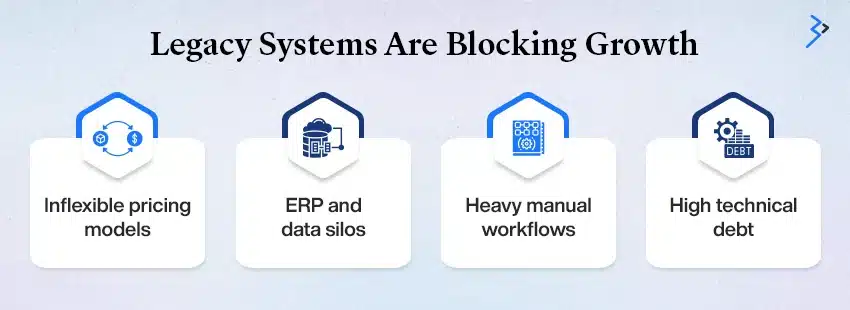
Legacy eCommerce tools such as ERP extensions and custom portals struggle as manufacturers scale. They were not designed to support extensive catalogs, complex pricing, or long-term customer relationships.
Common challenges include:
- Inflexible pricing and limited scalability
- Weak ERP integration and data silos
- Heavy reliance on manual processes
- Growing technical debt from frequent customizations

These limitations increase operational risk and slow growth.
Adobe Commerce offers a scalable, modular alternative with strong customization and integration capabilities, making it a preferred platform for manufacturers modernizing digital commerce.
eCommerce as a Strategic Commercial Layer
Executives view modern ecommerce platforms as strategic enablers that extend core operations and support sales teams, rather than replace them. These platforms empower executive efforts to drive productivity and customer engagement.
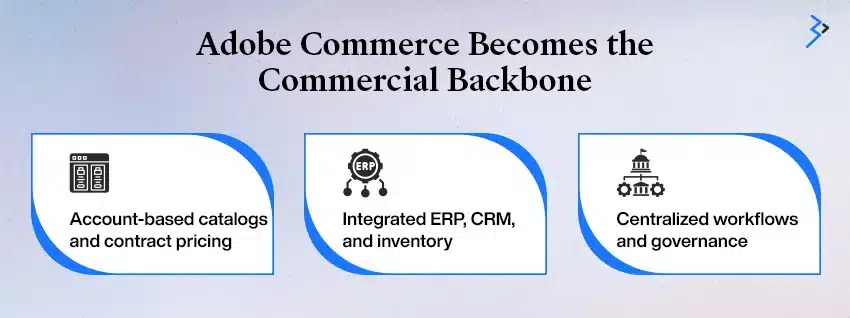
Adobe Commerce gives executives centralized control over customer catalogs, contract pricing, approval workflows, and purchasing rules. With ERP and CRM integrations, eCommerce becomes a reliable commercial layer for executive goals of accuracy, compliance, and scalability.
This approach provides executives with deeper insights into customer trends and operational performance, enabling better-informed, cross-functional decision-making at the leadership level.
Scaling Account-Based Commerce With Precision
Manufacturing commerce is fundamentally account-centric. Executives know every client demands tailored agreements and approval structures. Managing this complexity at scale is a leadership challenge as organizations expand.
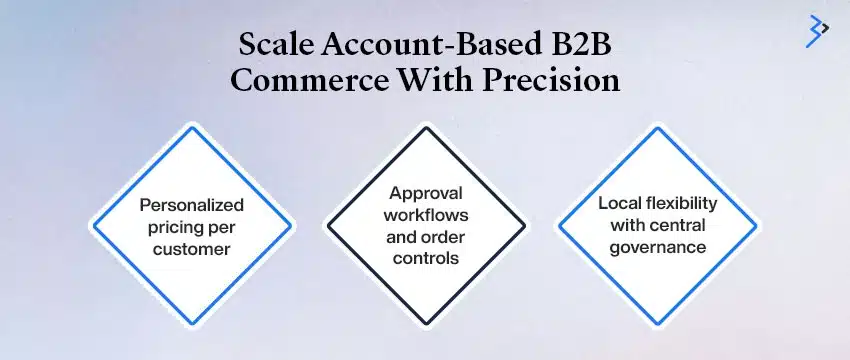
Adobe Commerce enables precise personalization. Manufacturers can centrally control account-specific catalogs, pricing, order limits, and workflows. This ensures consistency and adaptability to regional or customer-specific needs.
Manufacturers serving national accounts can standardize governance while enabling local flexibility. Executives consider this balance critical for scalable growth and for meeting mandates for control and customer satisfaction.
[ Read More: How Much Does Adobe AEM Cost? A Breakdown for US Enterprises ]
Aligning With Modern B2B Buying Behavior
Executives see that modern B2B buyers demand autonomy, transparency, and digital efficiency, expecting seamless self-service and expert support for complex issues.
Adobe Commerce enables hybrid models by displaying account-specific info without overwhelming users. Pricing, inventory, eligibility, and workflows match real procurement. This increases adoption and lowers friction.
For sales teams, executive-driven automation of routine tasks frees resources for consultative engagement and strategic account development, furthering executive objectives for relationship growth and value creation.
Operational Enablement, Governance, and Long-Term Value
Turning Product Complexity Into a Competitive Advantage
Product complexity shapes manufacturing and influences purchasing beyond pricing alone. Executives understand that well-structured product data is a key competitive differentiator.
Poorly managed complexity leads to confusion, delays, and mistakes. When organized, it becomes an asset. Adobe Commerce supports configurable products, guided selling, and validation rules to simplify complex purchases.
This accuracy and efficiency deliver measurable operational value and support executive planning for performance improvement.
Pricing Transparency as a Foundation for Trust
To stay ahead, manufacturers should quickly assess their current platforms. Explore Adobe Commerce’s potential to drive lasting digital growth. Once you schedule a consultation with Brainvire, our team will assess your systems, identify transformation opportunities, and offer a tailored integration and scalability roadmap.
Adobe Commerce centralizes pricing with real-time, contract-based accuracy. Tiered models, discounts, and promotions remain aligned, reducing disputes across channels.
This transparency builds buyer trust and speeds up procurement cycles. Reliable pricing encourages self-service and reduces manual validation over time.
Self-Service as an Operational Multiplier
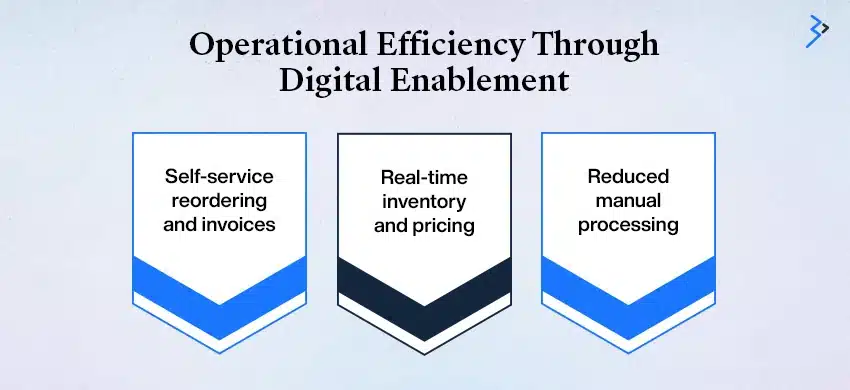
Self-service is now expected in modern B2B commerce. Buyers want digital ways to reorder, track orders, get invoices, and access documents.
By enabling these functions online, manufacturers reduce administrative workload and free sales teams to focus on higher-value activities. Organizations that successfully implement self-service often report reduced manual order processing, faster response times, and improved operational predictability.
Self-service also supports scalability by standardizing workflows and reducing variability across customer interactions.
Integration as the Backbone of Reliable Commerce
Manufacturers operate within complex technology ecosystems that include ERP, CRM, inventory management, and supply chain platforms. eCommerce success depends on seamless integration across these systems.
Adobe Commerce’s API-driven architecture enables real-time data synchronization, ensuring consistency across inventory levels, pricing, customer records, and order status.
This integration reduces operational risk, supports accurate forecasting, and improves responsiveness to supply chain disruptions.
It also enables manufacturers to extend digital commerce across channels, regions, and business units without introducing instability or excessive technical debt.
Governance, Security, and Compliance
Manufacturing organizations face executive-level governance, compliance, and security requirements. Digital commerce platforms must support these standards while enabling executive-driven innovation and scalability.
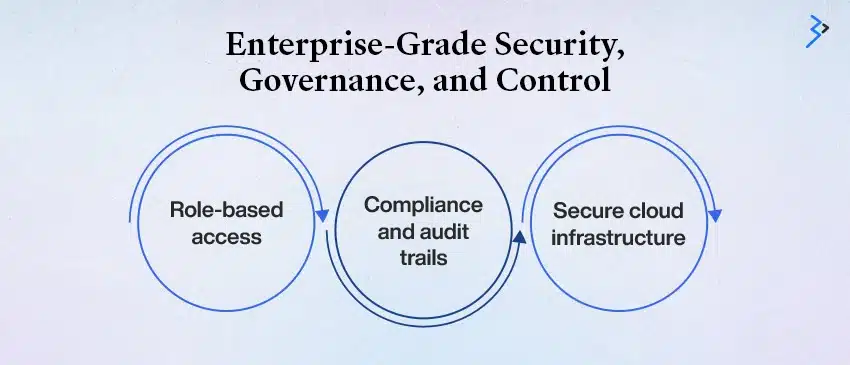
Adobe Commerce offers enterprise-grade security, role-based access control, audit trails, and cloud-native infrastructure. These capabilities help manufacturers enforce governance policies, support regulatory compliance, and maintain system reliability as transaction volumes increase.
Measuring Transformation Beyond Revenue
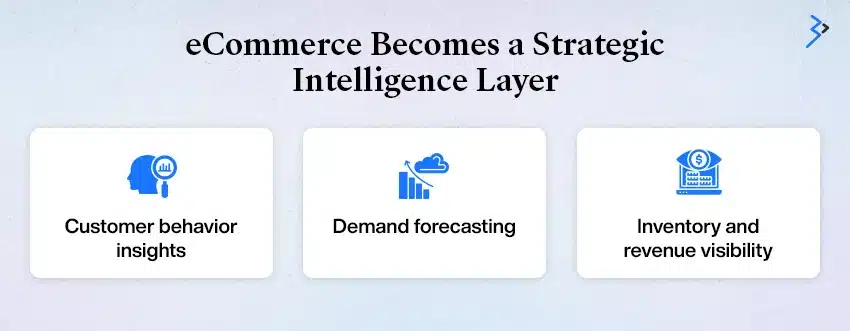
The impact of modernizing B2B ecommerce extends beyond immediate revenue growth. Manufacturers gain enhanced visibility into purchasing behavior, improved customer relationships, and more predictable operations.
Digital commerce platforms generate actionable insights that support demand forecasting, inventory optimization, and growth in customer lifetime value.
eCommerce evolves from a transactional interface into a strategic intelligence layer that informs decision-making across the organization.
Preparing for the Next Phase of Manufacturing Commerce
To modernize effectively, manufacturers should adopt a structured executive roadmap:
- Assess current digital maturity and identify critical capability gaps. This evaluation serves as the foundation for future decisions.
- Engage cross-functional stakeholders early in the planning process to ensure alignment across departments and clarify roles and responsibilities.
- Prioritize ERP, CRM, and product data integrations to ensure seamless operations and data consistency.
- Pilot initiatives to validate assumptions before scaling. These tests help anticipate challenges and solidify strategies before wider implementation.
- Invest in user training and change management to facilitate smooth transitions and encourage user adoption.
- This phased approach not only reduces risk and accelerates adoption but also aligns with strategic planning needs, maximizing return on investment and driving measurable outcomes.
Conclusion: eCommerce as a Strategic Enabler
Legacy commerce systems were built for transactional efficiency, not for the complexity and scale modern manufacturers face today. As buyer expectations evolve and operations grow more interconnected, ecommerce must function as a strategic capability rather than a supporting channel.
Adobe Commerce enables US manufacturers to modernize their digital foundations, supporting complex pricing models, scalable operations, and seamless customer experiences. When implemented with the right strategy, it becomes a long-term enabler of growth, agility, and operational control. As an Adobe Gold Partner, Brainvire helps manufacturers design, implement, and optimize Adobe Commerce solutions that deliver measurable, sustainable value.
By aligning technology with people and processes, we help them build resilient digital commerce ecosystems that remain competitive in a rapidly changing market. Explore more about of our Adobe Commerce solution today.
FAQs
Modernizing B2B ecommerce systems enables manufacturers to keep pace with evolving buyer expectations, improve operational efficiency, reduce manual errors, and support scalable growth. Platforms like Adobe Commerce offer greater flexibility, integration, and a better customer experience than legacy systems.
Adobe Commerce offers superior user experience customization, seamless integration with ERP and CRM systems, extensive scalability, and a rich ecosystem of third-party extensions. This makes it especially well-suited for manufacturers with complex product catalogs and specialized pricing needs.
Adobe Commerce enables manufacturers to manage account-specific catalogs, pricing, order limits, and workflows, ensuring each customer receives a tailored experience and pricing that aligns with their contract terms and business requirements.
Digital transformation streamlines order processing, enhances pricing transparency, reduces administrative workload through self-service, and provides actionable insights for decision-makers, all of which improve reliability, reduce costs, and boost customer satisfaction.
Key steps include assessing current digital maturity, engaging stakeholders early, prioritizing integration of core systems (ERP, CRM, product data), piloting initiatives to validate strategies, and investing in user training and change management.
Related Articles
-
 Leveraging Adobe Substance 3D For High-Impact Marketing
The ability to create captivating, lifelike imagery can set a brand apart. With stunning, hyper-realistic 3D designs, businesses can engage audiences, streamline workflows, and push the boundaries of creativity. In
-
From RFP to Go-Live: How Enterprises Implement AEM Successfully
Imagine a world where your marketing team launches 65 hyper-personalized campaign variations in a single week, achieving a $1.2 million increase in Q3 revenue simply because your content could adapt
-
 Why Does Adobe Experience Manager Matter – Accelerating the Journey from Content to Experience
Customers who contact a company receive an experience, whether in person, on a website, in a tailored email, or via an app notification. Consider an experience a collection of material