Azure IaaS
Scalable virtual machines, networking, and storage provisioned and hardened on Azure.
AI-assisted capacity planning Infrastructure Americas' Fastest-Growing 2025
One page from a senior architect, within two business days. The single highest-payback AI move in your Odoo, Adobe or custom stack, and the two things to leave alone. Yours to keep.
One page from a senior architect in two business days: your highest-payback AI move, and what to leave alone.
Brainvire plans, migrates, and manages scalable, secure Microsoft Azure environments: cloud migration, Azure IaaS and PaaS, Azure DevOps, data analytics, and identity and access management, integrating legacy systems and wiring agentic AI into delivery.
Trusted by enterprises running on the Azure cloud












/ Azure, on the record
Every figure below comes from a documented engagement. These success stories are one client per card, on the record.
 Automotive · Microsoft Azure
[41%]
Increase in sales for Alghanim Honda
A cloud-hosted, intuitive app for a Kuwaiti Honda dealer drew more qualified traffic and lifted sales by 41% with a 24% rise in visitors.
Read the case → Enterprise · Microsoft Azure
[49%]
Increase in visitors for a Kuwaiti conglomerate
Intelligent customization on a cloud platform raised a Kuwaiti conglomerate’s online presence: 49% more visitors, 54% better conversion, and a 41% ROI boost.
Read the case → Logistics · Microsoft
[43%]
Boost in logistics efficiency on a Microsoft stack
A Microsoft-based freight-management web application delivered 95% accurate location tracking and a 43% boost in logistics efficiency.
Read the case →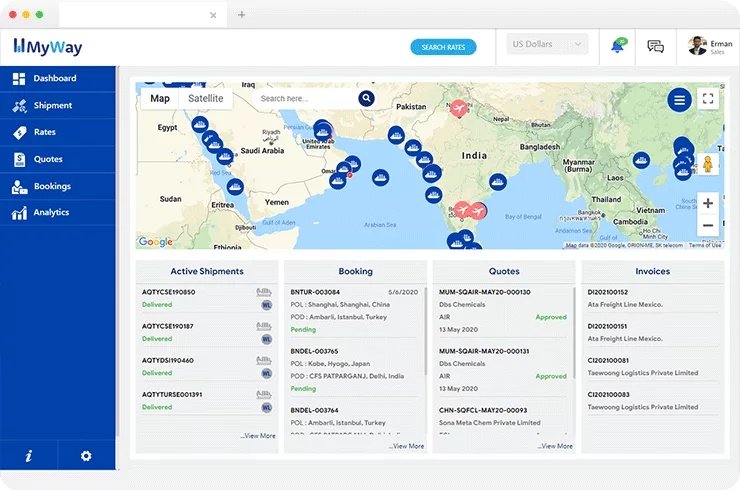 Services · Microsoft Azure
[87%]
Performance improvement after a cloud-hosted app
An executive-search firm gained major monetization benefits from a new cloud-hosted mobile app, with performance improved by 87%.
Read the case →
/ What we build
Eight Azure consulting practice areas, one roof. AI is built into each, not billed as a ninth.
Scalable virtual machines, networking, and storage provisioned and hardened on Azure.
AI-assisted capacity planning InfrastructureApp Service, Functions, and managed platforms that ship features without server toil.
AI-assisted service design Platform ServicesLow-downtime lift-and-shift and re-platform moves to Azure without data compromise.
AI-mapped migration planning Migration SolutionsCI/CD pipelines, IaC, and release automation across the Azure toolchain.
AI-assisted pipeline generation DevOps AutomationData pipelines, warehousing, and Databricks-based processing and ML.
AI-built data models Databricks & SynapseIdentity, access management, and single sign-on across the estate.
AI anomaly detection on access IAM & SecurityConversational bots and cognitive services on Azure AI.
Agentic AI on Azure OpenAI Azure AIMonitoring, optimization, and hybrid support via Azure Arc.
AI-triaged monitoring & alerts 24×7 Managed Services


/ AI, built in
We wire Azure OpenAI and Cognitive Services into your workloads for copilots, search, and document AI.
Agents on Logic Apps and Functions that automate provisioning, scaling, and remediation across the estate.
Models on Azure Machine Learning that forecast demand, right-size resources, and flag cost anomalies.
Defender and Sentinel-driven proactive threat detection for Azure security, plus automated config and compliance checks wired into ops.
/ Accelerators
Each accelerator packages the playbooks, IaC, and AI tooling from dozens of prior Azure programs, so the riskiest step of your migration starts most of the way done.
A structured lift-and-shift to Azure with AI-driven dependency mapping, right-sizing, and phased cutover with rollback.
Pre-built CI/CD pipelines, infrastructure-as-code, and release gates so teams ship to Azure from day one.
A governed lakehouse on Synapse and Databricks with AI-built pipelines and analytics wired to the KPIs that matter.
A pre-built agentic AI layer on Azure OpenAI: retrieval, guardrails, and workflow automation on your own data.
/ Industries
Each vertical has dedicated teams with industry-specific knowledge, pre-built data models, and reference architectures shaped by hundreds of engagements.
Omnichannel platforms with unified inventory, AI merchandising, and storefronts that learn from every order.
See Retail & eCommerce work →HIPAA-conscious patient platforms, operational AI, and connected systems for providers and pharmacies.
See Healthcare work →Secure lending, payments, and decision-intelligence platforms built for audits, uptime, and scale.
See Finance & Fintech work →Dealer commerce, VIN & fitment catalogs, and service platforms connected to live inventory nationwide.
See Automotive work →PropTech platforms, CRM-ERP integration, and AI valuation models for developers and brokerages.
See Real Estate work →Route intelligence, warehouse automation, and end-to-end shipment visibility on one operational spine.
See Logistics work →Content platforms, subscription commerce, and audience analytics that turn viewers into recurring revenue.
See Media work →Learning platforms, enrollment systems, and AI tutoring experiences for institutions and edtech firms.
See Education work →/ In their words
Brainvire demonstrated reliability, a commitment to delivery, and helped us maintain momentum on critical roadmap items.
/ Recognition
2026Top eCommerce Developers
 2025
The Americas’ Fastest-Growing Companies
 2025
Fastest-growing private companies in America
 2024
North America’s fastest-growing tech companies
/ How it runs
Six steps, in this order, on every engagement. Nothing moves until the assessment is agreed on.
A read-only assessment of applications, dependencies, cloud infrastructure, and spend, with the before-numbers captured while the workloads are still on-premises.
AI-assisted dependency mapping AssessmentSubscriptions, networking, identity, and policy laid down as a landing zone, sized to your specific business outcomes rather than to a reference diagram.
AI-modeled capacity and cost Landing ZoneWorkloads move in dependency order, each wave with a rollback. App development runs in the same waves, so integrations land with the systems they depend on.
AI-mapped migration planning MigrationLeast-privilege access, segmentation, encryption, and logging wired to Defender and Sentinel, with every control evidenced against your compliance requirements.
AI-assisted policy checks SecurityA rehearsed cutover with a defined rollback point, hypercare cover afterward, and a checklist that is consistently delivered the same way on every wave.
AI-triaged launch monitoring Go-LiveMonitoring, patching, incident response, and capacity reviews on an agreed-on cadence, plus a monthly review that revisits cost, reliability, and the roadmap.
AI anomaly detection on cost 24×7 Managed Services/ Questions, answered
Microsoft Azure consulting services cover the whole cloud journey: assessment, cloud architecture design, migration planning, build, and the ongoing support that keeps the platform healthy afterward. Brainvire runs that full scope, so the team that designs your Azure environment is the team that operates it.
An Azure consultant maps the estate you have now, sets the target architecture, and sequences the work. Day to day that means sizing infrastructure resources, designing landing zones and governance, choosing between rehosting and rebuilding, and turning project goals into a plan your development teams can run.
We work across the Azure services our eight practice areas cover: compute and networking, App Service and Functions, Azure SQL and Synapse, Azure DevOps, Azure Machine Learning, Azure OpenAI, and Defender and Sentinel. Where a workload needs something outside that list, we scope it rather than bend the workload to fit.
Azure managed services are the run phase: monitoring, patching, backup, incident response, and cost optimization on an agreed-on schedule after go-live. Azure managed operations at Brainvire also include technical support, capacity reviews, and continuous improvement, so the platform keeps pace with the business instead of drifting.
Cloud is usually grouped into three main service models: infrastructure as a service, platform as a service, and software as a service. Microsoft states that Azure offers infrastructure as a service (IaaS), PaaS, and SaaS solutions, and most estates end up using a mix of all three rather than one.
With Azure IaaS you rent infrastructure resources, virtual machines, networking, and storage, and you keep control of the operating system. With PaaS, Azure runs the platform and your team concentrates on deploying applications. Rehosting tends to land on IaaS; teams that want less to patch tend to land on PaaS.
Microsoft renamed Azure Active Directory to Microsoft Entra ID. Microsoft's own documentation is explicit that all features and capabilities remain available, licensing and terms stay the same, and existing login URLs, APIs, and PowerShell cmdlets are unchanged, so identity and access management work carries straight over under the new name.
An assessment first, then a strategy chosen per workload. Microsoft's Cloud Adoption Framework calls these the "Rs" of cloud migration: retire, retain, rehost, replatform, refactor, rearchitect, rebuild, and replace. A serious cloud migration plan assigns one of them to every application before anything moves.
Cost optimization is a design decision, not a cleanup job. We right-size before cutover, tag everything, set budgets and alerts, and review reserved capacity against real usage. Azure spend is then reported against the outcomes the cloud investment was approved for, rather than arriving as a monthly surprise.
Security and compliance are built into the landing zone: least-privilege access, network segmentation, encryption, logging, and Defender and Sentinel wired to a real response path. Enhancing security after launch costs more and covers less, so compliance requirements are gathered before the first resource group exists.
The Microsoft Cloud Solution Provider program lets a partner sell Microsoft cloud services and own the billing and support relationship. Microsoft documents two models: indirect, through a distributor, and direct-bill, where the partner transacts with Microsoft. Ask any vendor which model it uses, and who you would call at two in the morning.
Ask for named references in your specific industry, ask who runs the platform after go-live, and ask to see the vendor's Microsoft partner listing on Microsoft's own directory rather than a badge on a website. A trusted partner will talk about the engagement that went worst, not only the showcase ones.
Microsoft publishes Azure specializations, still often called advanced specializations, for areas such as Infra and Database Migration to Microsoft Azure, Analytics on Microsoft Azure, and App Modernization on Microsoft Azure. Each one carries its own audit, so check which of them a shortlisted vendor actually appears under on Microsoft's site.
Yes. Hybrid estates, several subscriptions, legacy integrations, and regulated workloads are the normal starting point. Complex cloud environments usually break on dependencies nobody documented, so the assessment maps them first and the migration waves follow those dependencies rather than the org chart.
Cloud architecture design starts from the Azure Well-Architected Framework, whose five pillars Microsoft names as reliability, security, cost optimization, operational excellence, and performance efficiency. We set subscriptions, networking, identity, and policy as a landing zone first, then place workloads into it.
Yes. That can be a full delivery team, a squad working alongside yours, or named Azure experts embedded in your own. Either way the specialized knowledge transfers: runbooks, infrastructure-as-code, and architecture decision records stay with you, so your development teams are not left dependent on ours.
Yes. App development sits in the same practice: web and mobile app development, APIs, and integrations built to run on Azure rather than ported onto it afterward. Cloud applications designed that way lean on managed services instead of recreating a data center inside a subscription.
Backup, replication, and a recovery plan that has actually been rehearsed. Business continuity targets are set as recovery time and recovery point objectives per workload, then the architecture is built to meet them, whether that means availability zones, paired regions, or a warm standby.
Through APIs, events, and a documented contract for every interface. Seamless integration is a phrase everyone uses; what makes it real is versioned interfaces, retries, idempotency, and monitoring on each hop, so an ERP or CRM that was never designed for cloud still behaves predictably.
Both, deliberately. Accelerators supply the repeatable parts, landing zones, pipelines, and data platform scaffolding, and on top of those we provide tailored solutions shaped to your business needs. Customized solutions go where they earn their keep; proven templates go everywhere else.
The platform is sized for the next step, not only for today. Autoscale, quotas, and capacity reviews are revisited on a schedule, so as the business grows the Azure environment grows with it and optimal performance does not depend on somebody happening to notice a dashboard.
A working cadence with demos, a shared backlog, and a monthly review that goes past status. That review is where we offer strategic insights: what the telemetry says about cost, reliability, and adoption, and what the next quarter of the cloud strategy should change as a result.
Then scope moves, not quality. We sequence the Azure strategy so the workloads with the clearest payback move first, and later waves are funded partly by what those release. Budget constraints are far easier to manage as a series of funded steps than as one large program.
Enough to hold any vendor to account: someone who owns the architecture, someone who owns cost, and someone who owns security. We build those technical capabilities into the handover through modern tools, documentation, and pairing, rather than leaving behind a platform only we can operate.
Monitoring and alerting, patching, incident response with agreed-on severities, release support, and a periodic architecture review. Professional services stop at go-live; ongoing support is the part that decides whether the platform still fits the business two years later.
Against a baseline taken before migration: deployment frequency, change failure rate, incident volume, and run cost per workload. Operational efficiency that is not measured against a before-number is an opinion, so the assessment captures those figures while the estate is still on-premises.
Yes. A takeover starts with a read-only assessment of the subscriptions, the identity model, and the spend, then a remediation backlog ranked by risk. Azure cloud services someone else built are inherited exactly as they are, and we document what we find before changing anything.
The portal is approachable; the operating model is the hard part. Teams pick the individual services up quickly and then struggle with governance, identity, and cost. That is why Azure expertise is usually bought in for the first platform and built in-house for the second.
Where demand is uneven, where release speed matters, and where the data center refresh is due anyway. Cloud-based solutions do not automatically cost less; they cost differently, and digital transformation only pays off when the operating model changes alongside the infrastructure.
Retail and eCommerce, healthcare, finance, automotive, real estate, logistics, media, and education, as the industries section above sets out. Industry-specific needs shape the data model and the compliance work more than the Azure services do, so the vertical team joins at the assessment.
Scope drives it: how many workloads move, how much rework each one needs, how deep the compliance work goes, and how long you want the run phase covered. Project complexity and the size of the organization move that number far more than a day rate does, so we price a scoped plan instead of publishing a rate card.
More capability than you started with. A successful engagement ends with your own people able to run, change, and argue with the platform: documented architecture, runbooks, pipelines, and enough autonomy that the next change does not need a new purchase order.
By reusing designs that have already been proved. Reusable landing zones, tested migration patterns, and rehearsed cutovers let an organization move to Azure faster and with lower risk than a first attempt built from scratch, because the failure modes have been met before.
Ask who your named contact is, how often you will meet, which channel raises an incident, and what the response commitment is out of hours. Communication style is the part of an Azure engagement nobody scores in the proposal and everybody notices in month three.
It can, if the architecture is built for it. Autoscale, availability zones, and managed platform services increase scalability and reduce operational risk compared with a fixed on-premises estate, but a lifted-and-shifted virtual machine inherits every limitation it already had.
By writing the regulatory constraints into the architecture decisions rather than checking them afterward. Data residency, retention, audit logging, and access review each land on a specific Azure control, so a well-architected deployment aligns technical choices with business goals and regulatory requirements.
For teams in Southeast Asia, Brainvire provides OpenAI partner in Singapore and OpenAI Select Partner for Thailand.
/ Next step
A 30-minute working session with Brainvire Azure consultants: your migration path, landing zone, and AI roadmap, on one page.
Book a Working Session →Cookies on this site
Essential cookies are always on. They keep the site secure and make forms work.
We also use Google Analytics and Microsoft Clarity to see how the site is used. We only turn these on if you accept.