Custom PHP Web Applications
Custom web applications and dynamic websites on core PHP, with clean, maintainable architecture.
AI-assisted code & test generation PHP 8 Americas' Fastest-Growing 2025
One page from a senior architect, within two business days. The single highest-payback AI move in your Odoo, Adobe or custom stack, and the two things to leave alone. Yours to keep.
One page from a senior architect in two business days: your highest-payback AI move, and what to leave alone.
Most LAMP apps don't need a rewrite. They need an owner for the PHP version, the server and the patch queue. Hire LAMP stack developers as a dedicated team, or add remote LAMP developers to yours.
Trusted by leading brands worldwide












/ Client work, on the record
Every figure below comes from a documented engagement, and every card is one client. The dental chain rebuild ran on PHP; the other three are portal and marketplace builds from our wider portfolio.
 Healthcare · Web Platform
4X
Web performance for a leading dental chain
A cloud-and-web transformation rebuilt a leading dental chain’s platform for scale, lifting web performance by 4X across the operation.
Read the case → Media · Web Portal
60%
Drop in bounce rate for a sports news portal
A rebuilt sports news portal with accessibility and design optimization cut the bounce rate by 60% and scaled monthly users from 12M to 28M.
Read the case → Directory · Web Platform
96%
Spurt in revenues for a local-search portal
An enhanced local-search directory portal, rebuilt for speed and discovery, recorded a 96% spurt in revenues.
Read the case → Marketplace · Web Platform
10,000+
Products & services on a discovery platform
A business-finder platform streamlined the discovery and sale of 10,000+ products and services across Kuwait on one web backbone.
Read the case →/ What we build
Brainvire is a LAMP development company. We design and ship production-grade web applications on the LAMP stack (Linux, Apache, MySQL, and PHP), from custom portals and SaaS platforms to high-performance web applications. Eight practice areas cover the whole technology stack, from the Linux operating system to the PHP application layer, for new builds, migrations and ongoing maintenance. AI is baked into each build, not sold as a separate ninth practice area.
Custom web applications and dynamic websites on core PHP, with clean, maintainable architecture.
AI-assisted code & test generation PHP 8Framework-driven builds on Laravel and Symfony for structure and speed.
AI-scaffolded modules & APIs Laravel · SymfonySchema design, query tuning, replication, and database management for MySQL and MariaDB at scale.
AI-assisted query optimization MySQL · MariaDBMulti-tenant portals and SaaS products with role-based access and billing.
AI-scored usage & churn signals Multi-Tenant SaaSREST and GraphQL APIs wiring the LAMP app into third-party systems.
AI-assisted API & schema design REST · GraphQLLinux server administration and Apache or Nginx hosting, hardened and load-balanced for uptime and throughput.
AI-triaged monitoring & alerts Linux · ApacheLAMP application migration: refactoring and re-platforming aging PHP codebases and existing applications without a rewrite from zero.
AI-mapped code & dependency audits Legacy → ModernManaged LAMP application maintenance: security patches, PHP version upgrades, and continuous optimization.
AI-assisted vulnerability triage 24×7 Managed Services


/ Who it's for
The open-source editions of the LAMP stack are completely free to use, so the cost savings go to engineering time. Project work starts with a fixed-price phase 1.
Upgrades planned inside php.net's support window, hardened servers, and AI-assisted code review and vulnerability scanning in every release.
Standups, tickets and code reviews in your Git workflow and your existing team, with one named owner on our side.
Monitoring, backups with restore tests and patching under the managed services model, with releases scheduled around your busy periods.
/ Cost and accelerators
It depends on four things. The seniority you need. How many developers, and for how long. How much time-zone overlap the work needs. And whether you add developers to your team or hand us the whole build.
There's no rate card on this page, and that's deliberate. For project work, we quote a fixed-price phase 1 after discovery, so the budget is agreed before the build starts. An underfunded upgrade isn't cheaper. It just moves the cost to next year's outage.
Where a step is already packaged, an accelerator below frames it, built with AI tooling and the playbooks we reuse.
The proven path off aging PHP: AI-audited code review, dependency mapping, and framework migration to Laravel or Symfony without a ground-up rewrite.
A pre-built multi-tenant portal foundation with auth, roles, billing, and admin, so a new LAMP SaaS product ships from a running base.
AI-assisted query tuning, indexing, and caching that keeps a high-traffic LAMP app fast under real load.
A pre-built layer that adds smart search, recommendations, and content generation to an existing LAMP application without a replatform.
/ Industries
Each vertical brings its own rules: HIPAA in healthcare, audit trails in finance, peak season in retail. We plan for them at discovery, not after launch.
Omnichannel platforms with unified inventory, AI merchandising, and storefronts that learn from every order.
See Retail and ecommerce work →HIPAA-conscious patient platforms, operational AI, and connected systems for providers and pharmacies.
See Healthcare work →Secure lending, payments, and decision-intelligence platforms built for audits, uptime, and scale.
See Finance and fintech work →Dealer commerce, VIN & fitment catalogs, and service platforms connected to live inventory nationwide.
See Automotive work →PropTech platforms, CRM-ERP integration, and AI valuation models for developers and brokerages.
See Real Estate work →Route intelligence, warehouse automation, and end-to-end shipment visibility on one operational spine.
See Logistics work →Content platforms, subscription commerce, and audience analytics that turn viewers into recurring revenue.
See Media work →Learning platforms, enrollment systems, and AI tutoring experiences for institutions and edtech firms.
See Education work →/ In their words
Brainvire demonstrated reliability, a commitment to delivery, and helped us maintain momentum on critical roadmap items.
/ Recognition
2026Top eCommerce Developers
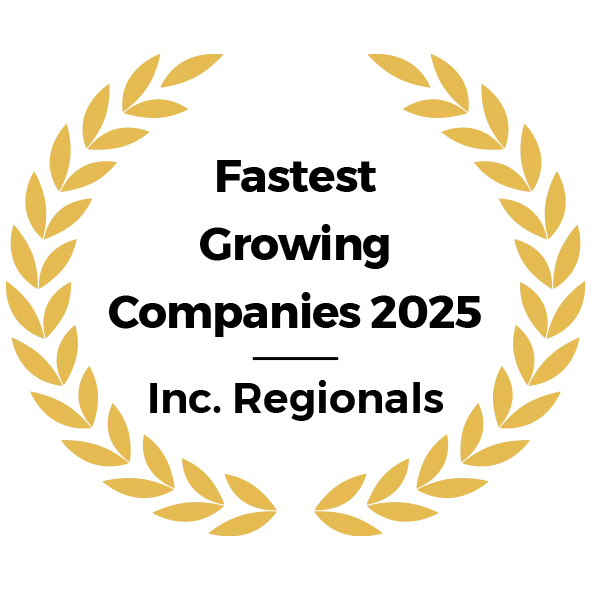
 2025
The Americas’ Fastest-Growing Companies
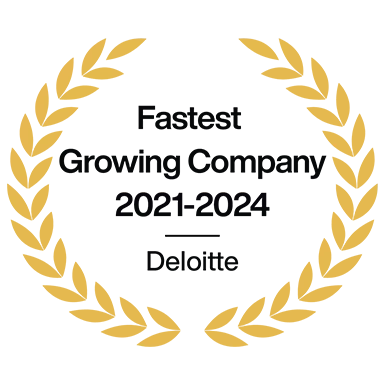
 2025
Fastest-growing private companies in America
 2024
North America’s fastest-growing tech companies
/ How it runs
Six phases take a LAMP stack development engagement from the first working session to a monitored application in production. Each one names who's in the room, how long it runs, what you get and what you sign off.
Who: your product owner and tech lead, our architect. How long: one working session, then until the brief is agreed. You get: a written brief covering your application, your technology stack, the business needs it serves and what project success looks like. You sign off: the brief, and for project work a fixed-price phase 1.
DiscoveryWho: your engineering manager, our delivery lead. How long: until the team shape is agreed. You get: seniority and skills matched to the scope: dedicated LAMP developers inside your team, or a Brainvire team that owns delivery, with working hours set for overlap. You sign off: the team and engagement model.
TeamWho: your IT or infrastructure lead, our architect. How long: before the first sprint starts. You get: a design for the server layout, Apache and PHP-FPM configuration, the MySQL schema and the deployment pipeline, so every environment matches production. You sign off: the architecture.
AI-assisted API & schema design ArchitectureWho: our LAMP developers and your product owner. How long: short increments against a shared backlog. You get: a development process with code review, Git version control and a working build at the end of each increment. You sign off: each build at its demo.
AI-assisted code & test generation BuildWho: our QA engineers, with your security reviewer. How long: before every release. You get: automated tests, query and load checks and a security review, with the server configuration hardened before go-live. You sign off: the release.
AI-assisted vulnerability triage ReleaseWho: the same team that built it, with your IT owner. How long: for as long as you need it. You get: patches, upgrades and monitoring, with PHP upgrades planned before each branch reaches end of life. You sign off: the support plan.
AI-triaged monitoring & alerts SupportWhat usually goes wrong, and how we contain it.
Unsupported PHP versions. A branch past end of life gets no security fixes. We plan upgrades inside php.net's support window and run the test suite on the new version first.
Unhardened servers. Default configurations expose more than they should, so LAMP server development starts with hardening. We load only the Apache modules the site needs, enforce TLS and keep PHP-FPM off untrusted networks.
Knowledge locked in one developer. If one person holds the server setup in their head, you're one resignation from trouble. We keep configuration in version control and document every environment at handover.
/ Questions, answered
LAMP stands for Linux, Apache, MySQL, and PHP, the four open-source layers a classic web application runs on. Linux is the operating system, the Apache HTTP Server is the web server that answers requests, MySQL is the database server that stores the data, and PHP, which php.net describes as a general-purpose scripting language especially suited to web development, is the programming language that builds each page or API response. Each layer can be tuned or replaced independently.
A browser request reaches the Apache web server running on Linux. When the request is for a PHP file, Apache hands it to PHP; for modern deployments, the PHP manual recommends PHP-FPM with Apache httpd's mod_proxy_fcgi module rather than mod_php. PHP runs the application code, queries the MySQL database for the data it needs, and returns HTML or JSON, which Apache sends back to the browser.
Yes. All four projects are actively maintained. php.net lists PHP 8.2 through 8.5 as supported branches, with PHP 8.5 receiving security support until December 31, 2029, and the Apache HTTP Server project released httpd 2.4.68 on June 8, 2026. For portals, content-heavy sites, and business web applications, LAMP remains a mature, well-documented choice.
Because our LAMP stack developers work across every layer, from Linux server work to the PHP application layer. We bring 14+ years of experience, 1,000+ people and 10+ global offices, with headquarters in Plano, Texas. One engineering standard covers the eight practice areas above, and AI is part of how every team codes, tests and reviews.
When the application runs on PHP and MySQL and you need people who can own the servers as well as the code: a new portal or SaaS build, a migration off an unsupported PHP version, or a platform that needs more capacity than your in-house team has.
A LAMP stack developer builds and runs the whole application: PHP code and frameworks, MySQL schema and queries, Apache configuration, and the Linux servers underneath. Day to day that means web development on the front and back end, API integration, performance tuning, version control with Git, and the deployment pipeline that ships each release.
A PHP developer focuses on PHP application development: the code itself. LAMP developers also own the rest of the stack: Apache virtual hosts and modules, MySQL performance and replication, and Linux server configuration. If your team already runs the infrastructure, a PHP specialist may be enough; if you want one owner for the whole stack, a LAMP developer is the better fit.
Strong PHP, including a framework such as Laravel or Symfony, plus relational schema design, indexing, and query optimization in MySQL. Add Apache and Linux administration on the command line, Git workflows, automated testing, and CI/CD pipelines. Senior LAMP engineers bring capacity planning, replication, and caching, along with the communication skills to explain trade-offs to people who don't write code.
You can hire dedicated LAMP developers who join your team and work to your roadmap, or hand a defined scope to a Brainvire team that owns delivery end to end, from a single application development project to a long-running platform. The working session is where we match the model to your team and timeline.
It depends on seniority, team size, how much time-zone overlap you need and the engagement model, so there's no rate card on this page. For project work, we quote a fixed-price phase 1 after discovery. Discovery reviews your code, servers and PHP versions first, so the quote reflects your app, not a template.
It can be. The Linux kernel is licensed under GPL-2.0, the Apache HTTP Server under the Apache License 2.0, and PHP under a BSD-style license, and MySQL describes its Community Edition as freely downloadable under the GPL license. That keeps licensing fees out of the budget, with commercial options such as MySQL Enterprise Edition available if you want vendor support. Most of the real cost is engineering time, so cost-effectiveness depends more on the team than on the stack.
Business portals and multi-tenant SaaS platforms, content-heavy and dynamic websites, marketplaces and directories, internal enterprise applications, and APIs that feed mobile apps. The cards above show a PHP rebuild for a dental chain alongside portal and marketplace builds from our wider portfolio.
The eight practice areas above: custom PHP web applications, Laravel and Symfony builds, MySQL data engineering, portals and SaaS platforms, APIs and integration, Linux and Apache operations, legacy modernization, and support and maintenance. Most engagements combine several of them, and the same team can stay on for maintenance after launch.
Yes. LAMP application migration covers two routes: moving an application onto the stack from another platform, and moving an aging LAMP application onto current versions, meaning a supported PHP branch, a maintained framework, and a current MySQL release. Our migration services start with a code and dependency audit, then move the application in stages with testing at each step.
Yes. php.net supports each PHP branch fully for two years from its initial stable release, then for two more years for critical security issues only, after which the branch reaches end of life. We plan upgrades inside that window, fix deprecated code, and run the test suite on the new version before release.
Security patches for the operating system, Apache, MySQL, and PHP; version upgrades before a branch loses support; monitoring and alerting; backups with restore tests; and ongoing tuning of slow queries and pages for improved performance. It runs under the 24×7 managed services model shown in the support card above.
Start with the database and cache, then add servers. MySQL replication copies data from one database server, the source, to one or more replicas, so reads can spread across them. On the web tier, Apache's mod_proxy_balancer module provides load balancing, and PHP-FPM, which the PHP manual describes as useful for heavy-loaded sites, manages the PHP worker pools.
Security hardening starts on the hosting server: a minimal Linux install, firewall rules, and patched packages. Apache loads only the modules the site needs, TLS is enforced, and PHP-FPM is never reachable from an untrusted network, which the PHP manual warns against directly. In the application, prepared statements, input validation, and role-based access protect the data.
The Apache HTTP Server Project describes itself as a collaborative effort to build a robust, commercial-grade, feature-rich, and freely available HTTP server. It is modular: the project lists 100+ modules for rewriting, proxying, load balancing, and scripting, and on selected operating systems mod_so loads modules at runtime rather than requiring a recompile.
Linux is the L in LAMP and the usual production choice, but the other layers are portable. The Apache HTTP Server project states that httpd runs on Linux, Windows, macOS, and most Unix-like systems, and the PHP and MySQL manuals both document installation on Windows and macOS, so many developers build locally on a laptop and deploy to Linux servers.
MySQL is a relational database server with direct PHP support: the PHP manual recommends both its mysqli and PDO_MySQL extensions for new projects. MySQL Community Edition is freely downloadable under the GPL license, and replication lets read traffic spread across servers as the application grows. MariaDB, which our data engineering card also covers, is an option when you prefer it.
Yes. The Apache HTTP Server is developed by a group of volunteers around the world, and MySQL describes its Community Edition as supported by a huge and active community of open source developers. PHP publishes its manual, release notes, and supported-versions policy on php.net. For production systems, most teams still want a named engineering team on call, which is what our support and maintenance practice provides.
Yes. With 10+ global delivery offices, we set working hours to overlap with yours, and remote LAMP developers join your standups, tickets, and code reviews in the tools you already use, such as Slack or Microsoft Teams, the same way in-house engineers do.
Define the project scope and technical requirements first, then assess against them. Review a code portfolio, past production work, and client success stories, and ask candidates how they would diagnose a production issue or optimize a slow MySQL query. The right developer also shows secure coding habits, such as defending against SQL injection and cross-site scripting (XSS), hashing passwords, validating input, and securing sessions.
Yes. The AI Feature Accelerator above adds smart search, recommendations and content generation to an existing LAMP application without a replatform. AI-assisted code review, test generation and vulnerability scanning also run in every LAMP release we ship.
Choose by team and workload. LAMP pairs PHP with a relational MySQL database and suits content-heavy sites and transactional business applications; MEAN runs JavaScript end to end on MongoDB and Node.js. If your team and existing code are PHP, LAMP is usually the shorter path.
Book the 30-minute working session below. A Brainvire architect reviews your stack, architecture, and roadmap with you, and from there we agree on the team shape and the first milestone.
/ Next step
A 30-minute working session with a Brainvire architect, no sales deck. We review your stack, architecture and AI roadmap on one page, whether you need a full team or a few dedicated LAMP developers.
We're a good fit if your app runs on PHP and MySQL and you want one team to own the code and the servers. Or you're stuck on an unsupported PHP version.
We're probably not the right call if you need one plugin fix or a small PHP site. A freelancer will cost a lot less.
Book a working session →Cookies on this site
Essential cookies are always on. They keep the site secure and make forms work.
We also use Google Analytics and Microsoft Clarity to see how the site is used. We only turn these on if you accept.