Why Saudi Enterprises are Migrating to Hybrid Cloud for Data Sovereignty
-

Hiren Raval

In recent years, the Kingdom of Saudi Arabia has emerged as one of the most dynamic markets for digital transformation in the Middle East. As enterprises modernize, traditional IT models are giving way to hybrid cloud architectures, a blend of on-premises infrastructure and public cloud services. While digital efficiency, scalability, and innovation are strong drivers of this shift, data sovereignty has become a core strategic imperative shaping cloud adoption decisions.
In the sections ahead, we explore why hybrid cloud has emerged as a practical choice for Saudi enterprises, the forces shaping this transition, and how organizations are aligning compliance, performance, and innovation in the process.
Understanding the Saudi Cloud Context
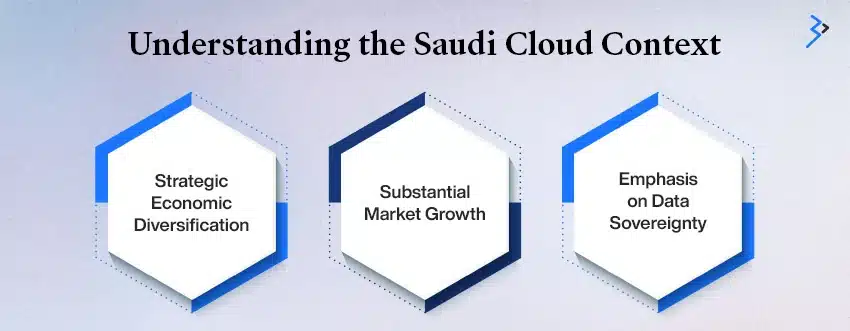
According to industry research, Saudi Arabia’s digital transformation strategy under Vision 2030 prioritizes technology as a catalyst for economic diversification and operational excellence. Cloud adoption across the government, finance, healthcare, and energy sectors is accelerating, with annual cloud spending in the Kingdom projected to approach US$3.9 billion by 2027, according to PwC, supported by regulatory frameworks and market readiness.
However, unlike markets with more permissive approaches to data handling, Saudi Arabia’s cloud migration journey is deeply intertwined with national data sovereignty policies, compelling enterprises to rethink where and how they store, process, and manage information.
Data Sovereignty and PDPL
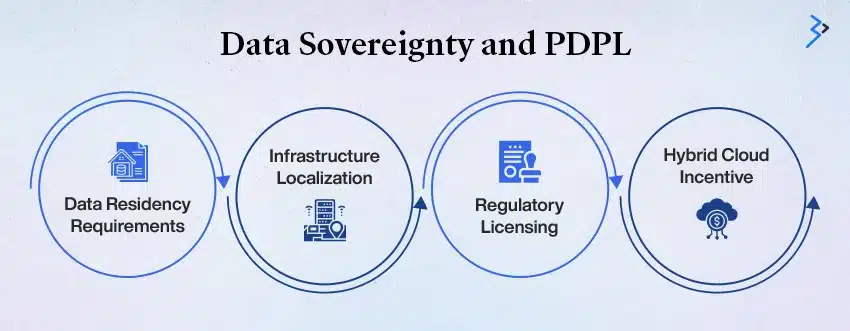
As noted by global technology analysts, one of the primary catalysts of hybrid cloud adoption in Saudi Arabia is the Personal Data Protection Law (PDPL), which imposes strict limitations on the transfer of personal data beyond national borders. Companies must often store sensitive data domestically unless they obtain specific permissions from the Saudi Data & AI Authority (SDAIA).
Saudi Arabia’s Cloud Cybersecurity Controls (CCC-1:2020) explicitly require that core services such as primary data storage, backups, and disaster recovery systems reside within the country, effectively requiring cloud service providers to host key infrastructure locally or through licensed partners.
These laws aren’t simply compliance checkpoints; they redefine operational boundaries. For example:
- Personal data must remain in-country unless a formal permit is obtained.
- Hosting regulated workloads in Saudi Arabia requires cloud providers to be licensed and registered under the Communications, Space & Technology Commission (CST) framework.
- Government-regulated data (e.g., financial or health sector data) often cannot be transferred abroad without explicit consent.
Taken together, these regulations have created a strong incentive for enterprises to adopt hybrid cloud models that combine local control with cloud scalability.
What Is Hybrid Cloud, and Why Does It Matter
Hybrid cloud refers to an architectural approach that blends on-premises infrastructure, private cloud environments, and public cloud services. This model enables organizations to:
- Maintain sensitive workloads on-premises or in localized cloud regions to comply with regulatory mandates.
- Leverage the agility and scalability of global public clouds for less sensitive applications or analytics.
- Balance performance optimization with compliance and cost management.
In Saudi Arabia, hybrid cloud is increasingly central to enterprise strategy. Organizations reported high adoption rates of cloud-smart architectures that distribute workloads across private and public environments, often as part of modernization roadmaps.
Why Hybrid Cloud for Data Sovereignty?
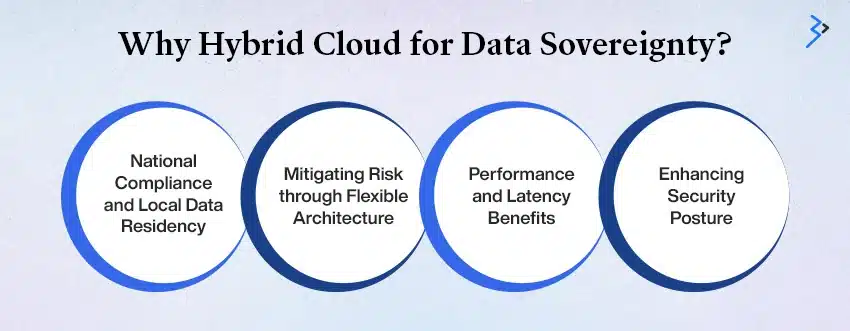
1. National Compliance and Local Data Residency
At the heart of the migration to hybrid cloud models is the need to meet sovereignty and compliance demands without compromising innovation. Hybrid cloud enables enterprises to localize sensitive data within Saudi borders while continuing to leverage advanced cloud services.:
- Shared services such as analytics, machine learning, and disaster recovery can run in cloud environments within geographically nearby regions (e.g., AWS or Google Cloud local zones).
- Local instances of platforms (e.g., Cloudera’s data and AI platform on AWS Saudi Region) enable regulated industries to scale analytics and AI workflows securely.
This balance between control and innovation is critical for sectors such as banking and healthcare, where data privacy and compliance are non-negotiable.
2. Mitigating Risk through Flexible Architecture
Data sovereignty isn’t just a legal requirement; it’s also a risk management imperative. Hybrid cloud enables enterprises to:
- Segregate sensitive and regulated data in private or sovereign cloud segments.
- Apply robust encryption, identity controls, and governance policies on data handling.
- Maintain disaster recovery systems locally to meet uptime and compliance standards.
Such architectures ensure that governance controls and audit requirements align with local regulatory expectations.
3. Performance and Latency Benefits
Keeping data and compute resources near the point of consumption improves application performance and reduces latency, a critical factor for real-time analytics, industrial IoT use cases, and mission-critical operations. Hybrid cloud solutions enables:
- Local processing of high-volume data workloads.
- Cloud-native capabilities for large-scale, non-regulated tasks.
This hybrid approach is becoming standard practice among Saudi enterprises seeking to optimize both compliance and performance.
4. Enhancing Security Posture
Hybrid cloud models support stronger security frameworks. Enterprises can configure private environments with stringent access controls and network isolation for compliance, while using public cloud environments for less sensitive workloads, effectively reducing the attack surface.
Moreover, tools such as Customer-Managed Encryption Keys and sovereign cloud offerings (e.g., Google Cloud’s Sovereign Controls for KSA) give organizations greater control over keys and data governance policies.
Market Trends Supporting Hybrid Cloud Growth
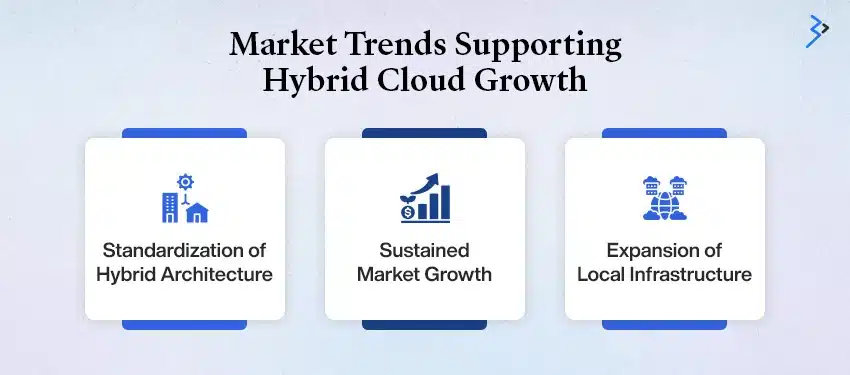
Several recent reports and forecasts underscore the momentum behind hybrid cloud and localized cloud infrastructure in Saudi Arabia:
- Hybrid and multi-cloud strategies dominate cloud adoption patterns, with significant expansion expected in the near term as organizations seek flexibility across multiple environments.
- Hybrid cloud markets are projected to grow robustly through 2030, driven by digitalization mandates and enterprise maturity in multi-cloud strategies.
- Cloud adoption in Saudi Arabia extends beyond public services, with a growing ecosystem of local zones and data centers operated by both global hyperscalers and regional providers.
- These trends highlight that hybrid cloud isn’t a transitional phase; it is rapidly becoming the standard enterprise architecture in Saudi Arabia.
Sector-Specific Impacts
Financial Services
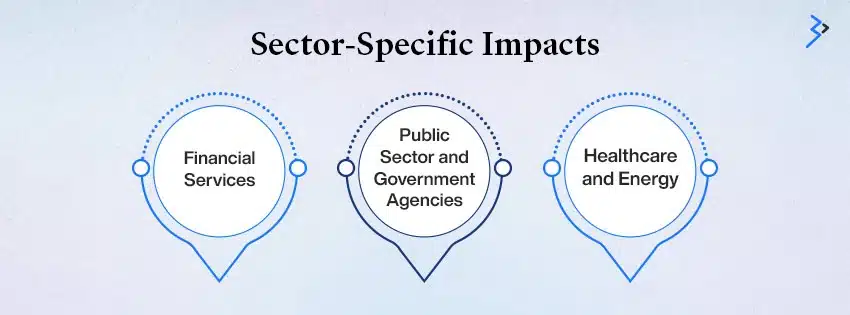
Banks and financial institutions are among the earliest adopters of hybrid cloud models. Regulatory directives such as SAMA’s cloud guidelines and data localization laws have compelled financial entities to host core banking and payments data within Saudi Arabia while still leveraging cloud analytics and Artificial Intelligence in scalable public environments.
The result is layered architectures in which sensitive transactions are processed locally, while non-regulated workloads are distributed across optimized cloud environments.
Public Sector and Government Agencies
Governmental initiatives, such as the Cloud First Policy, mandate that public agencies transition to approved cloud platforms to modernize and ensure compliance. This dual objective has accelerated the shift toward sovereign and hybrid cloud strategies that keep regulated data within national borders.
Moreover, expanded deployments such as SAP Business Network, hosted locally, illustrate how hybrid cloud can support complex, cross-organizational commercial processes while respecting data residency requirements.
Healthcare and Energy
Healthcare providers and energy companies, with their vast stores of sensitive operational and patient data, are implementing hybrid cloud models to enhance outcomes while safeguarding data privacy.
For example, healthcare systems are balancing private cloud environments for patient records with cloud-based analytics to improve clinical insights and service delivery. Likewise, energy firms leverage hybrid models to manage IoT data while complying with national data governance frameworks.
Actionable Insights for Industry Leaders
For organizations evaluating their cloud strategy in Saudi Arabia, here are some best practices that are starting to take shape:
1. Prioritize Regulatory Mapping Early
Start with a clear understanding of PDPL and CCC requirements to define data residency and transfer rules that will shape your cloud architecture.
2. Architect for Sovereignty and Scalability
Hybrid cloud enables you to segment workloads by sensitivity, balancing compliance and flexibility.
3. Leverage Local Cloud Regions and CSP Partnerships
Partnering with cloud providers that have local regions or sovereign cloud offerings (e.g., AWS, Google Cloud, Microsoft Azure) reduces compliance risk and supports performance.
4. Implement Comprehensive Governance Controls
Extend your data governance policies to include encryption, identity management, and audit capabilities aligned with national standards.
Why Hybrid Cloud Is Powering Saudi Arabia’s Next Phase of Digital Transformation
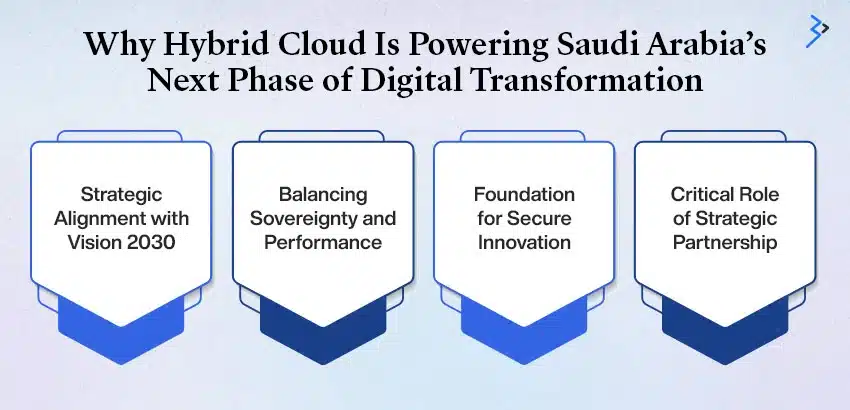
The migration to hybrid cloud in Saudi Arabia is not merely a technical evolution; it is a strategic leap driven by data sovereignty, compliance frameworks, performance demands, and an imperative for secure and resilient operations. As enterprises modernize under Vision 2030, hybrid cloud offers a balanced blueprint that meets both regulatory demands and innovation goals.
By aligning cloud strategy with local governance, enterprises can achieve a future-ready architecture that supports AI, analytics, and digital marketing services without compromising control over their most valuable asset: data.
As Saudi enterprises navigate increasingly complex regulatory requirements and multi-cloud environments, execution becomes as critical as strategy. This is where Brainvire plays a pivotal role, not merely as a cloud services provider, but as a transformation partner that aligns technology, governance, and business outcomes.
Ultimately, hybrid cloud is no longer a compromise between control and innovation; it is the foundation for Saudi Arabia’s sovereign digital transformation. With the right strategy, architecture, and governance partner, enterprises can confidently scale, innovate, and comply in parallel.
Frequently Asked Questions
Hybrid cloud enables enterprises to retain sensitive and regulated data in Saudi Arabia while leveraging the scalability, analytics, and innovation of the public cloud. This model aligns better with PDPL, CST controls, and sector-specific regulations compared to a fully public cloud approach.
Personal data, government data, financial records, healthcare information, and other regulated datasets often require local storage and processing, unless explicit approval is obtained from authorities such as SDAIA or CST. Hybrid cloud enables compliance by keeping such data on-prem or in Saudi-hosted cloud regions.
Hybrid cloud enables workload segmentation, helping organizations apply stricter security controls to sensitive data while using standardized cloud security tools for non-regulated workloads. This results in stronger governance, reduced attack surfaces, and improved auditability.
Yes. With hybrid architectures, sensitive data can remain local while aggregated, anonymized, or non-regulated data is processed in the cloud. Additionally, many hyperscalers now offer AI and analytics services across Saudi regions, enabling innovation without exposing data.
Related Articles
-
 Cloud Business Intelligence – Top 3 Cloud BI Tools to Gain a Competitive Edge
The latest cloud computing studies suggest that nearly 81% of businesses leverage at least one cloud-based application. This means that you may have already come across a lot of articles
-
 Do You Need Reasons To Migrate Your Business To Cloud?
Migrating your data to cloud platform assures that it is in an environment that is scalable, trustworthy and highly accessible but these shouldn’t be the only factors to drive your
-
 How Using Edge Computing Can Help You Outrun the Competition
In the time it took you to read this sentence, a high-frequency trading algorithm executed 500 trades, a smart factory sensor prevented a catastrophic turbine failure, and an autonomous delivery