How to Launch an AI-Powered Food Delivery Startup in Kuwait and the Middle East
-

Pratik Roy
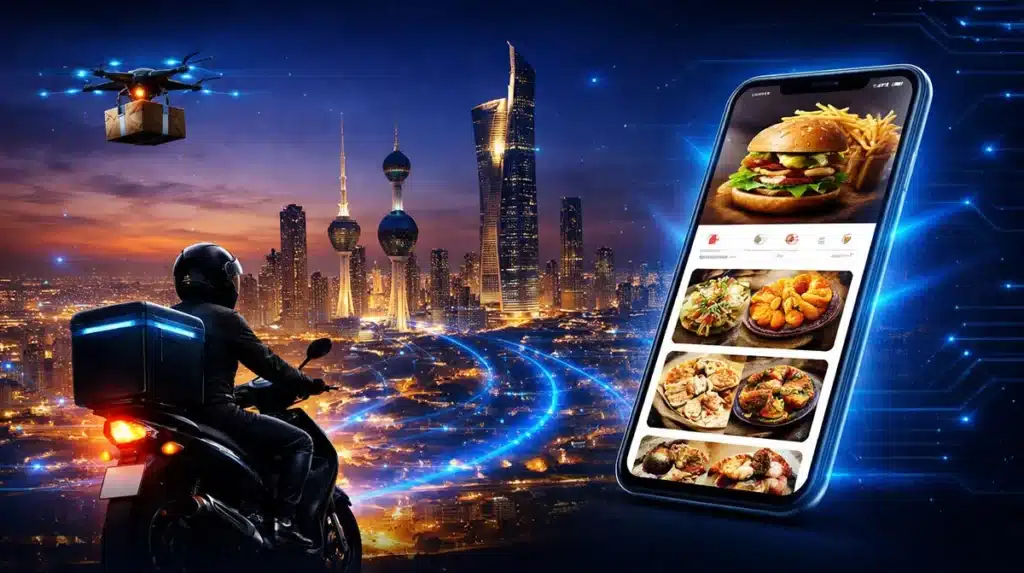
In 2026, the streets of Kuwait City tell a new story: “30-minute delivery” is no longer a luxury; it’s the entry ticket. In a market where 99% of the population lives life through a smartphone, a single minute of delay can mean a lost customer.
The startups dominating the market today aren’t just delivery companies; they are AI-first businesses that happen to deliver food. While giants like Talabat still overshadow others, a new breed of “Zero-Loss” startups is winning by out-predicting the rain, out-maneuvering the 6th Ring Road traffic, and knowing what customers want before they even open the app.
With Kuwait’s market projected to leap from $880M to $1.43B by 2032, according to GMI research, the opportunity is massive, but the room for error is zero. Success now demands a high-risk trifecta: futuristic tech, deep local roots, and a “compliance-first” mindset. At Brainvire, we don’t just build apps; we architect regional leaders. Here is your roadmap to navigating the 2026 food-tech surge.
The Market Opportunity: Why Kuwait?

Food delivery in Kuwait has moved from a luxury to an everyday essential. The regional market is booming, but Kuwait is the “power user.”
Today’s customers care about two main things: Speed and Fairness.
- The Need for Speed: Thanks to brands like Cari, 30-minute delivery is now the standard. If you can’t hit that window, customers will switch to a rival. The best startups use Edge-AI to forecast traffic in busy areas like Salmiya and Hawally before the driver even starts the engine.
- The Demand for Fairness: Restaurants are tired of giving away 30% of their earnings to big platforms. They now prefer “fair” models with fixed fees. This shift is supported by new 2026 laws that protect small businesses from sudden fee hikes.
- Personalization is Fundamental: PwC reports that about 57% of Middle Eastern diners are actively interested in using an app that acts as a digital concierge. They don’t want to scroll through 5,000 restaurants; they want a feed that knows they like keto meals on weekdays and spicy food on the weekend. Almonds Ai shows that startups using AI to learn these habits achieve 40% better customer loyalty.
Laws You Need to Know: Ministerial Decision No. 10
In 2026, Kuwait introduced stricter rules to make the delivery market fairer. If you’re launching today, here is the “cheat sheet” for being compliant:
- Commission Caps: You need to lock in your restaurant fees for three years. You can’t surprise small restaurants with sudden price hikes.
- No Exclusive Deals: You can’t force a restaurant to use your app exclusively. You have to win their business by being the best, not by using legal tricks.
- New Licensing: You need to register under a specific “Electronic Platform Management” license and connect your system to the Ministry’s monitoring platform.
Good News for Founders: Through KDIPA, many foreigners can still own 100% of their startup, making Kuwait a great place to start before expanding into Saudi Arabia or the UAE.
The Tech Stack: Your Hidden Advantage
To win, your app needs a “brain.” Brainvire builds these systems using top-tier tools, including Node js development for the engine, Flutter for the UI, and AWS SageMaker for the AI.
| Feature | How AI Helps | The Result (Source: Toxl) |
| Smart Routing | Finds the best path using traffic and weather data. | 30% faster deliveries. |
| Demand Prediction | Tells you what people will crave before they order. | 30% less food waste. |
| Personalization | Suggests the exact meal the user wants. | 40% more repeat orders. |
| AI Chatbots | Answers customer questions 24/7 in Arabic and English. | 80% instant fixes. |
The Roadmap: From Idea to GCC Success

Building a food delivery startup in the Middle East is a high-speed journey. While you need a long-term vision, your daily execution needs to be lightning-fast. At Brainvire, we use a four-stage process to help you launch and grow:
Stage 1: Start Small and Test (Months 1–3)
The biggest mistake is trying to do too much at once. Instead of launching nationwide, pick one busy area, like Kuwait City or Salmiya.
- Pick 20–50 Partners: Focus on a small group of high-demand restaurants. This keeps your delivery area tight and your drivers fast.
- The “Demand Bot”: We turn on your first AI tool here. It looks at social media trends, local events, and even the weather to predict when orders will spike. If the AI correctly predicts a busy Friday night, you know your tech is ready to scale.
Stage 2: Build for the Local Culture (Months 4–6)
To win in Kuwait, your app can’t just be a “translated” version of a Western app. It has to feel local.
- Arabic First: We build a high-quality interface that works perfectly from right-to-left.
- Easy Payments: Kuwaitis love digital payments. We support KNET, Apple Pay, and Google Pay from day one, so checkout takes only seconds.
- Smart Logistics: Behind the pretty design, we build the “brain” that manages your drivers. This ensures your 30-minute delivery promise is derived from real-time traffic data, not just a guess.
Stage 3: Learn from the “Soft Launch” (Q2 2026)
Now you move from testing to real business. You start with a small group of users to “train” your AI.
- Real-World Learning: Your AI begins mapping Kuwait’s unique traffic, including bottlenecks on the Sixth Ring Road and the specific gate layouts of residential blocks.
- Staying Legal: We help you finalize your KDIPA paperwork and your 2026 delivery license. This ensures you’re fully protected and in compliance with all new government rules before you open the doors to everyone.
Stage 4: Expand and Diversify (12+ Months)
Once you’ve mastered Kuwait, it’s time to think bigger. You can use your successful “Kuwait Blueprint” to enter cities like Riyadh or Dubai.
- Be a Partner, Not Just a Vendor: Don’t just deliver food. Follow the lead of successful brands like GrubTech by offering restaurant software to manage their whole kitchen.
- New Revenue: By helping restaurants manage their inventory and sales through your artificial intelligence, you become a partner they can’t live without. This is how you grow from a young startup into a regional giant.
Possible Risks: How to Avoid Failing

01 | The “Perfect” Trap: Speed Over Perfection
- The Risk: Spending a year in the lab while rivals capture the market.
- The Fix: Launch a Minimum Viable Product (MVP) in 12 weeks. Use real-world data from the streets of Kuwait to improve your AI rather than guessing in an office. Real feedback is better than a “perfect” theory.
02 | Competing with Giants: Win the “Niche” Battle
- The Risk: Trying to out-spend giants like Talabat on every front.
- The Fix: Go deep, not wide. Use Vertical AI to own a specific segment. Become the go-to app for Healthy AI Recommendations (syncing with fitness trackers) or a Business Subscription model that batches office lunch deliveries to save on costs.
03 | Driver Churn: Keeping Your Fleet Happy
- The Risk: High rider turnover due to heat, traffic, and disorganized routes.
- The Fix: AI Gamification. Use AI to make routes easier and less stressful. Give “missions” and rewards for fuel-efficient driving or perfect delivery times. When you make the job easier, your drivers stay longer.
The Bottom Line: Building for a “Zero-Loss” Future
In 2026, the Middle Eastern food delivery market is no longer a “growth at all costs” playground; it is a game of precision. To succeed in Kuwait’s evolving $1.43B landscape, your startup must move beyond basic logistics and adopt the efficiency of a “Zero-Loss” model. This means building a foundation where “Compliance-by-Design” is baked in, ready for Ministerial Decision No. 10 and Central Bank regulations from day one.
The road from a local MVP in Kuwait City to a GCC-wide success story in Riyadh and Dubai is paved with data. By combining localized payment gateways like KNET and deploying AI models that forecast demand before it happens, you don’t just survive the competition, you out-predict it.
At Brainvire, we’ve spent over a decade acting as digital architects for this specific transition. With deep roots in Hawalli, Dubai, and Riyadh, we’ve helped launch over 350 solutions by closing the gap between advanced AI and local market nuances. The technology to dominate the 2026 food-tech surge is already here; the next step is simply ensuring your data and strategy are ready to power it.
Frequently Asked Questions
Ministerial Decision No. 10 requires you to fix commission rates for three years, preventing sudden fee hikes. To stay profitable, you must use AI to slash operational waste and delivery times. Efficiency, not higher fees, is now the primary driver of your margins.
Yes. Through the KDIPA framework, Kuwait encourages foreign investment by allowing 100% ownership in the technology sector. To qualify, your startup generally needs to show a commitment to transferring advanced technical knowledge and creating meaningful career opportunities for local Kuwaiti talent.
Absolutely. In 2026, a massive fleet without smart routing is just a massive liability. AI makes your existing drivers 25% more efficient by predicting traffic and batching orders. This helps you increase your order volume significantly without the overhead of hiring more staff.
The key is to go deep where the giants go wide. Use Vertical AI to dominate a specific niche, such as hyper-personalized “Wellness” plans or specialized “Diwaniya” group-order features. By offering a personalized experience that generalist apps ignore, you build a much stronger, more loyal following.
Speed is a competitive advantage. With Brainvire’s pre-built modules, we can develop and test a working prototype in just a few weeks. A complete, AI-integrated platform that is fully compliant with Kuwaiti regulations takes 4 to 6 months to launch officially.

Related Articles
-
 Artificial Intelligence: Top Trends and Predictions
As the year 2019 has approached, we are expecting a lot of major changes in just about every domain, every industry, owing to Artificial Intelligence. We are already aware of
-
 Top 10 Reasons Your Company Needs To Hire An AI Developer
Let’s face it, software and technology are the future of businesses. Today, it’s imperative for business owners to adopt cutting-edge technologies to maintain a competitive edge in the evolving landscape.
-
 How Artificial Intelligence Trading Technology is Educating Stock Market Investors?
Have you seen the equations that experienced traders make in their heads? Or have you seen how recent trades are being recorded while current data is being monitored in movies?