Your Smart Guide to UAE Construction Cost Control with Odoo ERP
-

Hiren Raval
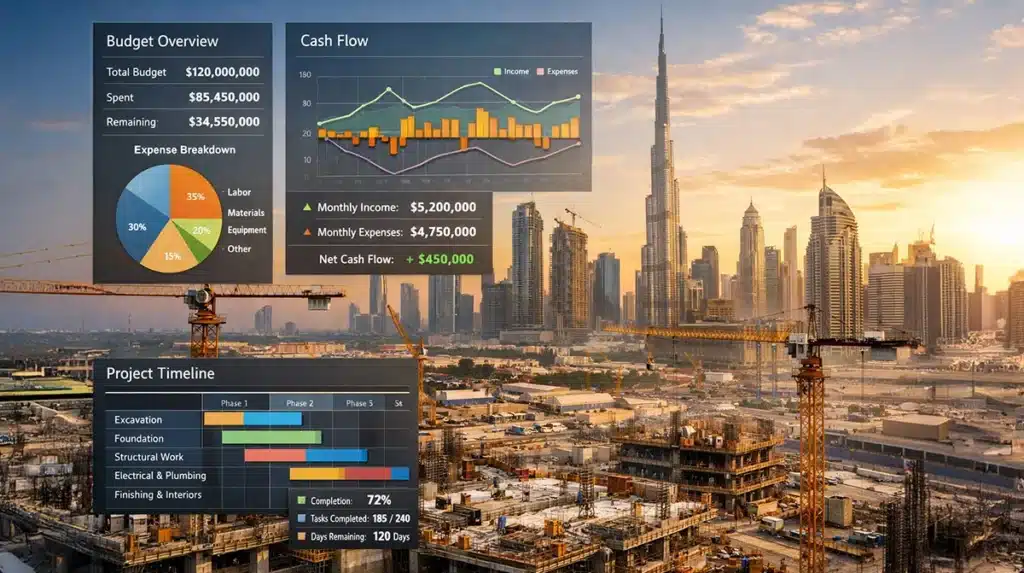
Construction projects in the UAE operate under intense pressure, tight timelines, fluctuating material costs, and increasing expectations for cost certainty. Yet even with detailed planning, budget overruns continue to erode margins and strain client relationships.
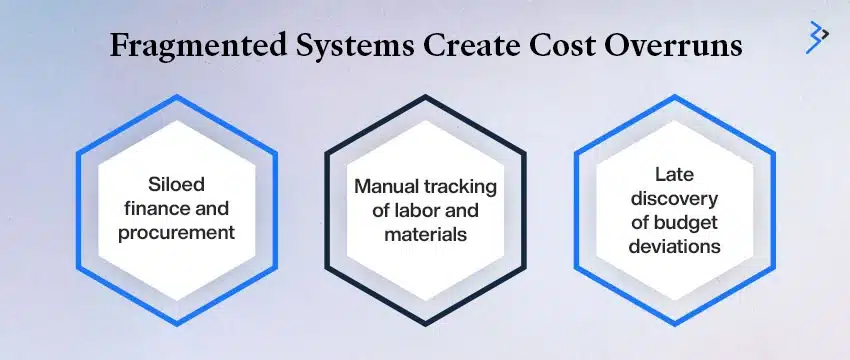
In many firms, costs are tracked across disconnected systems and spreadsheets, delaying visibility into actual spending. By the time it overruns the surface, corrective action becomes expensive, disruptive, or no longer possible.
This is where centralized project budgeting becomes critical. By bringing financials, procurement, labor, and project data into a single system, Odoo ERP equips construction firms with real-time insights to proactively control costs, protect profitability, and deliver projects with confidence.
Understanding the Cost Overrun Challenge
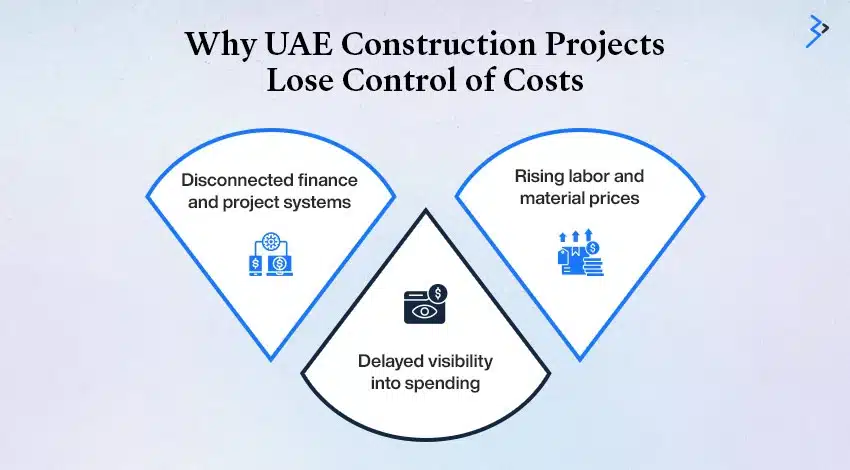
Historically, fragmented processes have hindered effective construction budgeting. Finance, procurement, operations, and project management teams often function in silos, resulting in delayed visibility, duplicated effort, and limited financial control.
Industry research consistently highlights the scale of the challenge. Large construction projects across global markets routinely exceed their original budgets, with studies showing that cost overruns and schedule delays are more common than on-time, on-budget delivery. According to research published by McKinsey & Company, large construction projects take 20% longer to complete and exceed budgets by up to 80%, underscoring the systemic nature of cost management issues in the industry.
Additional findings from the Project Management Institute (PMI) indicate that only a small percentage of projects successfully meet both budget and schedule expectations, largely due to poor cost visibility, ineffective change management, and fragmented data systems.
In the UAE, these challenges are further intensified by high labor costs, fluctuating material prices, and complex multi-vendor procurement environments, making proactive budget control and real-time financial oversight essential for project success.
Why Centralized Budgeting is Critical
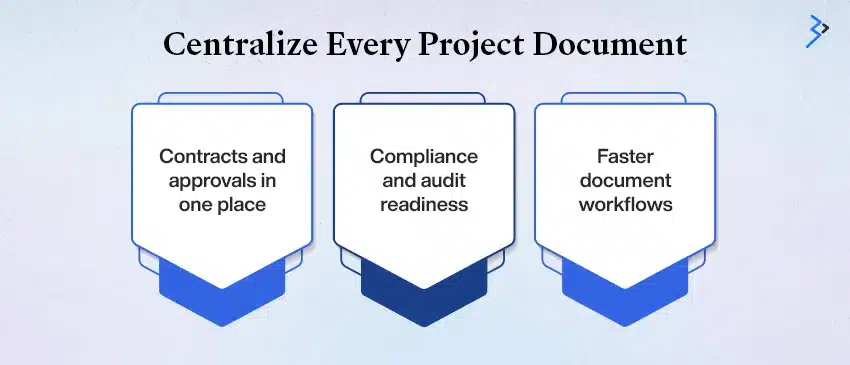
Centralized budgeting lets firms consolidate all financial activities, from procurement to labor, in a single platform. This approach enables firms to: Monitor budget vs actual spending in real time.
- Allocate resources efficiently across multiple sites.
- Detect and correct overspending early.
- Improve transparency with stakeholders and clients.
- Reduce administrative overhead
Key Benefits of Centralized Budgeting
| Benefit | Description | Outcome |
| Real-Time Financial Visibility | Access to project budgets, expenses, and cash flow at any moment | Decisions based on live data, reducing delays |
| Streamlined Procurement | Centralized purchase approvals and vendor tracking | Reduced waste and better cost management |
| Labor Cost Accuracy | Timesheets integrated with payroll and project accounting | Correct labor cost allocation and increased efficiency |
| Predictive Analytics | Automated forecasting and trend analysis | Early detection of potential overruns |
| Document Centralization | Contracts, approvals, and compliance are stored in one system | Faster approvals and lower legal risk |
By centralizing budget management, firms can proactively track all expenditures, spot overspending early, efficiently allocate resources, maintain financial discipline, and protect profit margins from avoidable financial losses.
How Odoo ERP Enables Centralized Budget Control in Construction
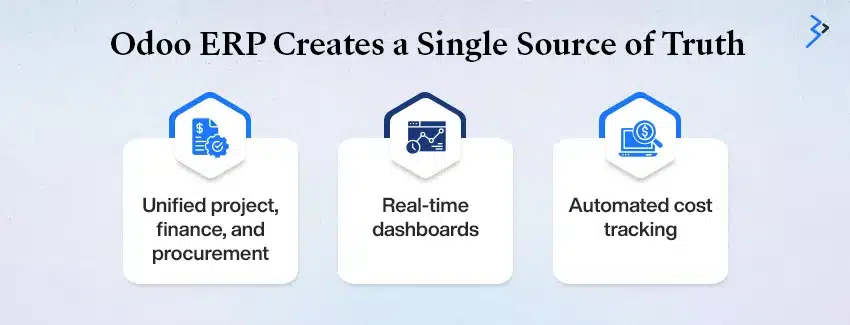
Odoo ERP is a modular enterprise resource planning system that unifies multiple business functions. For construction firms, it integrates accounting, procurement, inventory management, labor tracking, project management, and document management. Key functionalities include:
1. Real-Time Financial Monitoring
Delayed reporting is a significant cause of cost overruns. Odoo ERP provides:
- Dashboards displaying budgets vs actuals
- Pending invoices and purchase orders
- Cash flow forecasts
- Alerts for budget deviations
Managers gain immediate insights from Odoo ERP, enabling them to take corrective action before overspending starts and improve cost control.
2. Centralized Procurement and Inventory
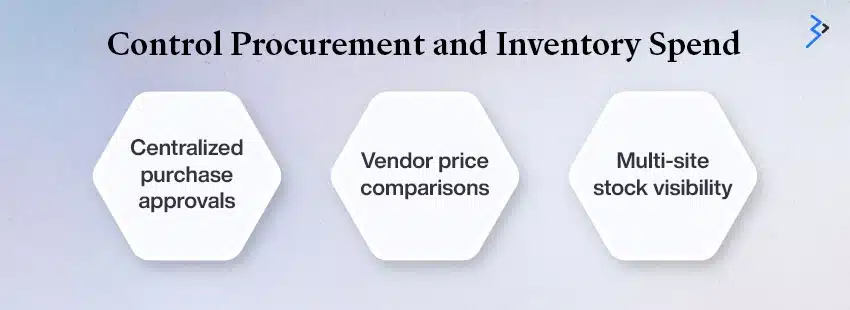
Procurement inefficiencies contribute strongly to overspending. Odoo ERP helps managers with:
- Vendor price comparisons
- Automated stock replenishment
- Multi-site inventory tracking
- Approval workflows for purchase orders
Managers use Odoo ERP to reduce emergency purchases, optimize inventory, and achieve lower material costs.
3. Accurate Labor Cost Management
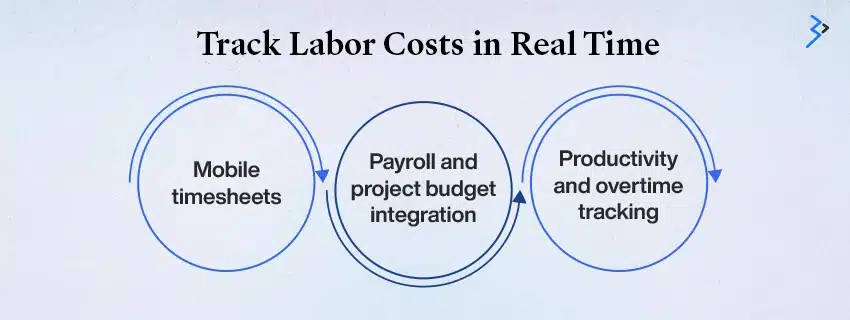
Labor costs make up a significant share of total project expenditure. Odoo ERP equips managers to handle:
- Mobile timesheets for onsite teams
- Integration with payroll and project budgets
- Labor hours and overtime tracking
- Productivity analysis per project phase
Industry data shows that miscommunication and poor project data recording account for 52% of rework in construction, according to Autodesk, underscoring the importance of accurate labor tracking.
4. Predictive Budget Analytics
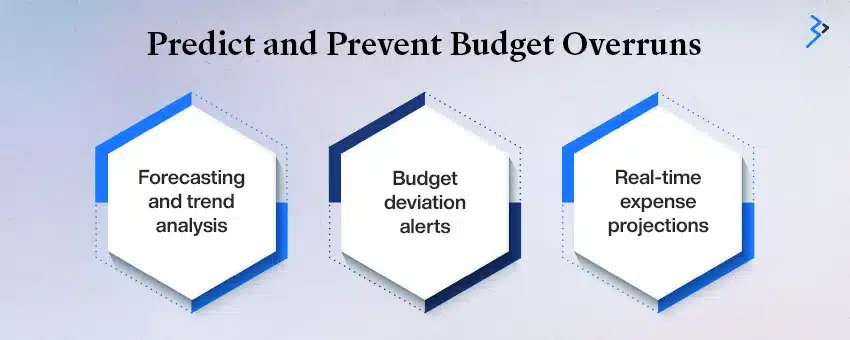
Odoo ERP transforms historical and current data into actionable insights:
- Alerts for budget deviation
- Expense forecasting
- Trend analysis for procurement, labor, and equipment
Predictive analytics provides project managers with early warnings, accurate expense estimates, and timely recommendations, enabling them to manage costs effectively throughout the project lifecycle.
5. Unified Document Management
Construction projects generate substantial documentation. Odoo ERP provides:
- Centralized repository for contracts, approvals, and compliance
- Faster document retrieval and approval
- Improved audit readiness
Centralized document management reduces administrative delays, ensures regulatory compliance, saves time, and keeps all cost-related documents accessible for project cost tracking at every stage.
Implementation Strategy for Construction Firms
A phased approach ensures smooth adoption and maximizes ROI. Recommended phases include:
Phase 1: Procurement Optimization
- Standardize purchase approvals
- Track vendor performance
- Integrate inventory across sites
Phase 2: Labor Management Automation
- Introduce mobile timesheets for onsite teams.
- Link labor data with project accounting and payroll
- Analyze productivity trends
Phase 3: Financial Reporting Integration
- Consolidate all project data into dashboards.
- Compare budgets against actuals.
- Provide real-time insights to leadership.
Early wins build confidence, and each phase addresses specific pain points before the team moves on.
Real-World Results: Measuring Success
Construction firms implementing Odoo ERP have consistently reported measurable improvements in cost control, efficiency, and project delivery accuracy. By centralizing procurement, labor tracking, and financial reporting, organizations gain tighter control over budgets and faster decision-making.
Drawing from Odoo-led implementations and Brainvire’s experience delivering ERP solutions across construction and engineering businesses, common outcomes include:
| Metric | Before Odoo ERP | After Odoo ERP | Impact |
| Cost Overruns | High and unpredictable | Significantly reduced | Improved margin protection |
| Procurement Efficiency | Fragmented | Centralized & automated | Lower material wastage |
| Labor Cost Accuracy | Manual & delayed | Real-time & integrated | Better cost allocation |
| Budget Visibility | Periodic reports | Live dashboards | Faster corrective action |
Overcoming Common ERP Misconceptions
Many SMEs view ERP as complex or expensive. Key clarifications:
- ERP is more than software: It transforms workflows, improves decision-making, and enhances efficiency.
- Phased adoption minimizes disruption: Starting with procurement and labor modules reduces risk.
- ROI is tangible: Reduced cost overruns, improved operational efficiency, and faster project delivery provide measurable value.
[ READ MORE: Transform Your Aluminum & Steel Manufacturing with Odoo ERP ]
Cost Control Roadmap for UAE Construction Firms
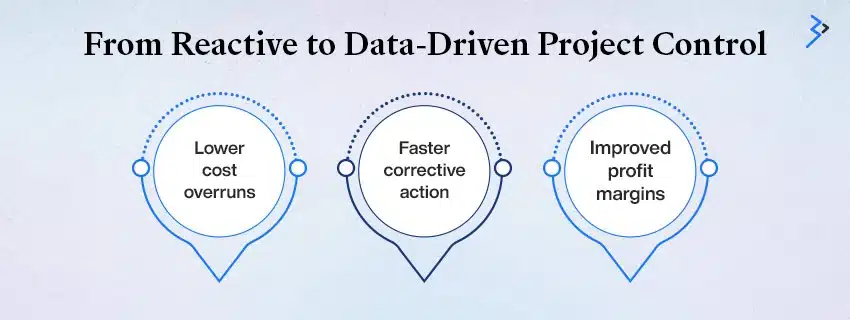
Optimizing project budgeting requires a structured approach, starting with a clear cost-control strategy. The following guide illustrates how construction firms can systematically reduce cost overruns and improve operational efficiency by implementing Odoo ERP.
1. Centralize Project Data
Objective: Ensure all project-related financial, operational, and resource data is accessible in a single platform.
Steps:
- Consolidate accounting, procurement, inventory, and labor data into Odoo ERP.
- Integrate data from multiple construction sites to provide a holistic view of project spending.
- Create centralized dashboards displaying budgets, actual costs, pending invoices, and cash flow.
Benefits:
- Eliminates data silos that cause delayed insights.
- Ensures real-time monitoring of budget variances.
- Enables management to quickly identify areas of overspending.
2. Automate Procurement Processes
Objective: Reduce material wastage, emergency orders, and supplier mismanagement.
Steps:
- Standardize purchase approvals in Odoo ERP.
- Set up automated reorder inventory rules based on project requirements.
- Track vendor performance, including delivery times, cost trends, and reliability.
- Implement approval workflows to ensure that only necessary purchases are made.
Benefits:
- Reduces emergency procurement costs driven by reactive sourcing and logistics premiums
- Minimizes inventory storage costs and prevents overstocking.
- Ensures materials are available when needed, reducing project delays.
3. Digitize Labor Management
Objective: Track labor costs accurately and improve workforce productivity.
Steps:
- Deploy mobile timesheets for on-site workers to log hours in real time.
- Integrate timesheet data with payroll and project accounting in Odoo.
- Monitor productivity trends per crew, project phase, or task.
- Track overtime and compare against budgeted labor hours.
Benefits:
- Ensures accurate labor cost allocation per project.
- Reduces payroll errors caused by manual data entry.
- Identifies underperforming teams or tasks, ensuring corrective measures are taken.
4. Forecast Costs Proactively
Objective: Identify potential budget risks before they impact the project.
Steps:
- Use Odoo ERP’s analytics to generate real-time expense forecasts.
- Compare current spending trends with original budget estimates.
- Set up alerts for deviations beyond defined thresholds.
- Incorporate predictive insights into planning for materials, labor, and equipment usage.
Benefits:
- Reduces the likelihood of cost overruns by enabling timely corrective action.
- Improves accuracy in long-term project planning and bidding.
- Enhances decision-making through data-driven insights.
5. Monitor Budgets Continuously
Objective: Maintain continuous oversight of project financials to prevent overspending.
Steps:
- Review Odoo dashboards daily or weekly to track budget vs. actual costs.
- Compare departmental or project-specific expenditures with approved budgets.
- Identify and investigate anomalies immediately.
Benefits:
- Continuous monitoring prevents minor overspending issues from compounding.
- Enhances accountability across teams and departments.
- Supports timely management intervention and cost correction.
6. Streamline Document Management
Objective: Ensure contracts, approvals, and compliance documents are easily accessible and controlled.
Steps:
- Store all project-related documents in Odoo’s centralized repository.
- Implement approval workflows for contracts, change orders, and purchase requests.
- Track document status and deadlines to prevent compliance lapses.
Benefits:
- Reduces administrative delays and lost documents.
- Enhances accountability in approvals and cost-related decisions.
- Simplifies audits and regulatory compliance.
7. Iterate and Improve
Objective: Continuously refine processes to maintain efficiency and cost control.
Steps:
- Regularly review project performance metrics in Odoo ERP.
- Identify recurring cost overruns or inefficiencies.
- Adopt additional Odoo modules as business needs evolve (e.g., advanced reporting, asset management).
- Train teams regularly to leverage ERP features effectively.
Benefits:
- Ensures the firm adapts to evolving project complexity and market conditions.
- Drives continuous improvement in budgeting accuracy and operational efficiency.
- Enhances long-term profitability and competitiveness.
The Future of Construction Budgeting in the UAE
Digital transformation is reshaping the UAE construction industry. Firms that adopt integrated ERP systems gain:
- Real-time financial visibility
- Efficient resource allocation
- Proactive decision-making
- Improved client trust through transparency
Centralized budgeting is not just a technology upgrade; it is a strategic approach to staying competitive and profitable in a dynamic market.
Conclusion
Technology alone does not solve cost overruns. Sustainable budget control in construction requires the right ERP foundation, aligned processes, and an implementation approach grounded in real-world project complexity. Without this alignment, even the most capable platforms fail to deliver meaningful outcomes.
As an Odoo Gold Partner, Brainvire works at the intersection of technology and construction operations. With deep experience in ERP-led transformation for project-driven organizations in the UAE, we support firms across the entire Odoo journey, from evaluating existing cost workflows and defining budget control frameworks to delivering phased implementations and continuous optimization. The focus remains on practical outcomes: clearer financial visibility, tighter procurement control, and predictable project performance.
With a unified ERP platform and an implementation partner that understands construction at scale, UAE firms can replace reactive cost firefighting with disciplined, data-driven project execution, turning budgeting into a strategic advantage rather than a recurring risk.
FAQs
Odoo centralizes project data, enabling real-time budgeting, cost tracking, procurement control, and labor analytics. Issues that lead to overruns can be spotted and corrected immediately.
Accounting, Procurement, Inventory, Timesheets, and Project modules are crucial for financial control, material management, labor tracking, and budget monitoring.
Yes. Odoo is modular. SMEs can start with core features and expand gradually, while large firms can leverage full ERP capabilities.
Firms often report up to a 30 percent reduction in cost overruns, improved operational efficiency, and better project delivery accuracy within months.
Yes. Mobile timesheets authorize real-time logging of labor hours, directly feeding into project budgets and payroll systems.

Related Articles
-
 The Ultimate Odoo Hosting Guide
Are you looking for an Odoo hosting to implement in your legacy systems? If yes, you’re not alone in embracing this powerful ERP! Odoo is an all-in-one business management software
-
5 Ways an Integrated ERP System Will Transform Your Operations (And Why Odoo is Key)
In a world where every second counts, businesses run on data, but too often, that data is trapped in silos. Sales teams chase figures in one platform, finance works from
-
Beyond Expiry Dates Managing Regulated Medical and Pharma Inventory with Odoo
Pharma and medical inventory management has changed. It is no longer just about counting stock or keeping an eye on expiry dates. It is about protecting patient safety, staying compliant