Predictive SEO: How to Use Advanced Systems to Anticipate Market Trends
-

Bharat Patel

Search engine optimization is undergoing the most significant transformation in its history. The methods that once secured first-page rankings are no longer sufficient to maintain visibility in today’s rapidly evolving digital environment.
As Google’s ranking systems become increasingly focused on intent, context, experience, and forward-looking signals, businesses must adopt strategies that anticipate future demand rather than react to past performance. This is where predictive SEO becomes indispensable.
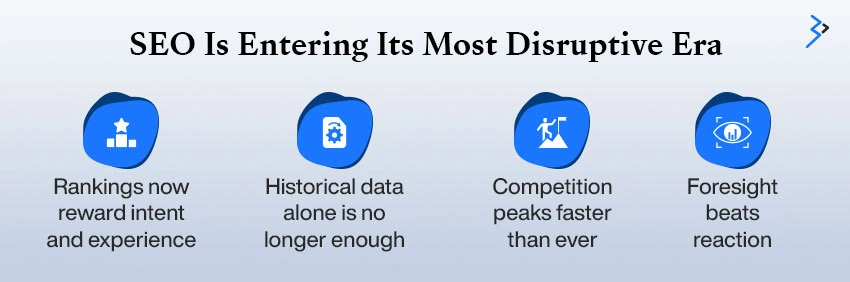
Predictive SEO is not simply an upgrade to existing optimization practices. It is a strategic shift that enables brands to prepare for emerging search behaviors, upcoming consumer needs and algorithmic direction long before demand reaches its peak. For companies targeting the United States market, where search behavior shifts quickly and competition remains fierce across nearly every industry, predictive SEO offers a decisive advantage.
This guide explores how predictive SEO works, why it is becoming essential in 2026 and how organizations can apply it to dominate future search demand in the US market.
Why Traditional SEO Is No Longer Enough
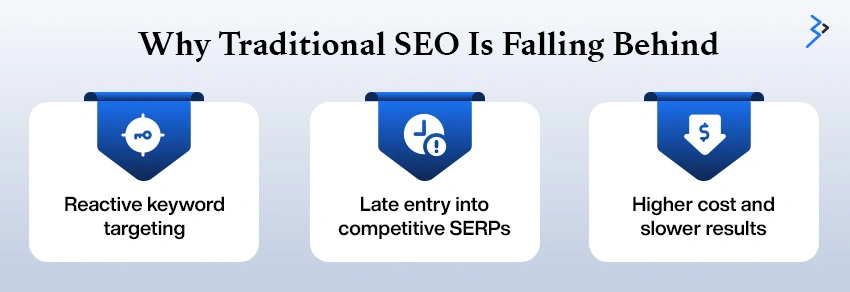
Historically, SEO relied on analyzing historical keyword performance, monitoring competitor rankings, and adjusting content after trends were already visible. While these methods still provide value, they are inherently reactive. By the time a keyword demonstrates strong search volume, thousands of competitors are already targeting it. Ranking becomes slower, more expensive, and less predictable.
Modern search systems now evaluate a wide range of signals including user satisfaction, topic authority, engagement behavior, and emerging relevance. They increasingly reward sites that demonstrate foresight, depth, and ongoing topical leadership.

This evolution means that waiting for traffic declines before making changes is no longer viable. Brands that succeed today prepare content and site architecture in anticipation of what users will search tomorrow.
What Predictive SEO Actually Means
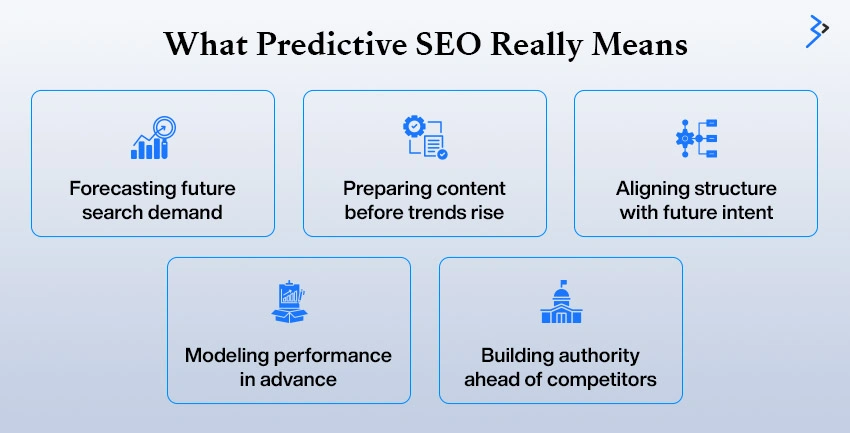
Predictive SEO is the practice of forecasting future search demand and aligning content, technical structure, and experience optimization with upcoming trends. Instead of relying only on past data, it combines forward-looking insights, emerging market behavior, and performance modeling to guide strategic decisions.
The objective is simple: ensure your content is already authoritative and visible when a topic begins to rise, rather than trying to catch up once competition has peaked.
For US markets in particular, where seasonal demand, consumer trends, regulatory changes, product cycles, and cultural shifts rapidly influence search behavior, predictive SEO provides a framework for sustainable growth.
How Search Is Changing in 2026
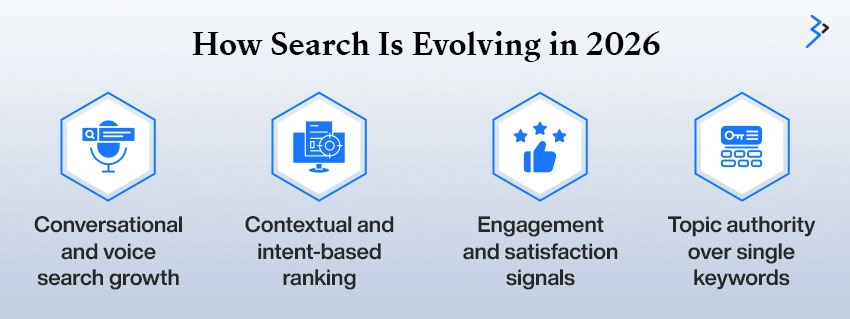
Search systems now operate with far greater contextual understanding. They interpret queries conversationally, prioritize topical completeness, and reward content that anticipates user needs across the entire decision journey. Rankings are influenced not only by keywords but also by how effectively content satisfies intent, solves problems, and maintains user engagement.
Several forces are driving this shift:
- Growing reliance on conversational search
- Expansion of voice and mobile queries
- Rising importance of experience signals and engagement quality
- Increasing evaluation of content authority across entire topics
- Preference for brands that consistently demonstrate subject matter leadership
This environment favors organizations that build deep content ecosystems and continuously refine them based on predicted demand.
The Core Pillars of Predictive SEO
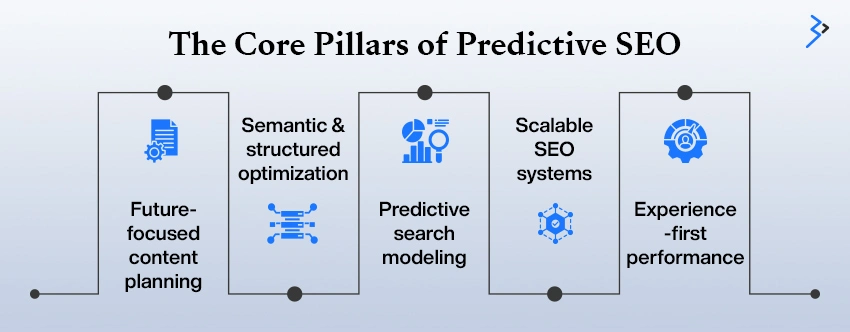
1. Future-Focused Content Development
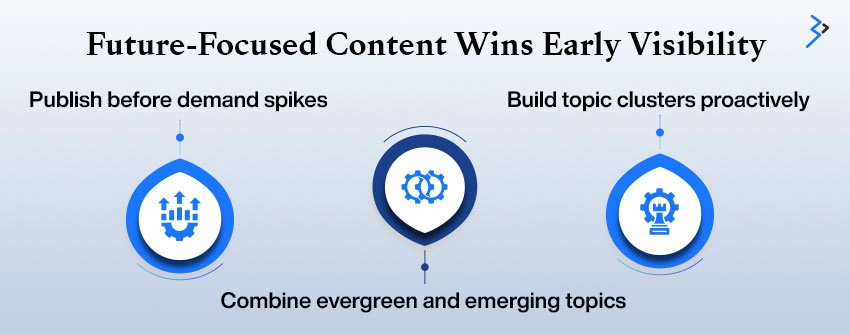
- Anticipate future user search behavior by tracking industry shifts, cultural trends, product release cycles, and regulatory changes.
- Build topic clusters that blend evergreen content with timely emerging subjects.
- Create editorial calendars that publish in advance of seasonal demand spikes.
2. Semantic and Structured Optimization
- Implement schema markup for product pages, how-to guides, local businesses, reviews, and FAQs.
- Ensure content reflects natural language, intent-driven phrasing, and comprehensive coverage.
- Strengthen internal linking to establish topical depth and site-wide relevance.
3. Predictive Search Modeling
- Monitor trend tools and rising keyword databases to identify breakout topics early.
- Explore online communities, Reddit threads, and discussion forums for authentic language patterns.
- Launch supporting content before competitors enter the space.
4. Scalable Optimization Systems
- Automate technical health checks, ranking monitoring, and core web vitals tracking.
- Use content analysis tools to assess topical depth, keyword coverage, and structural clarity.
- Integrate forecasting into content planning and reporting dashboards.
5. Experience and Performance Excellence
- Optimize for speed, mobile experience, and visual hierarchy.
- Design intuitive navigation, responsive layouts, and accessible content structures.
- Prioritize UX audits and continuous improvement of user pathways.
Why Predictive SEO Is Especially Powerful in the US Market
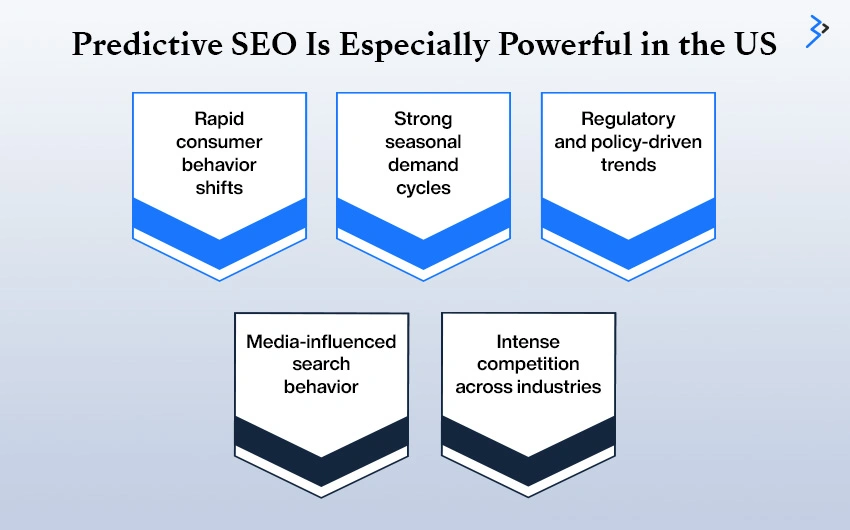
The United States represents one of the most dynamic and competitive digital ecosystems in the world. Consumer behavior changes rapidly due to economic conditions, regulatory shifts, technological adoption, and cultural movements.
Search demand in the US is heavily influenced by:
- Major retail cycles including holiday seasons and shopping events
- Technology launches and industry disruptions
- Healthcare and financial policy changes
- Regional economic trends
- Media influence and public sentiment
- Seasonal lifestyle shifts
Organizations that rely only on historical keyword data are consistently late to these shifts. Predictive SEO allows brands to prepare content and campaigns in advance, ensuring immediate visibility when trends emerge.
Key Predictive SEO Tactics for the US Market
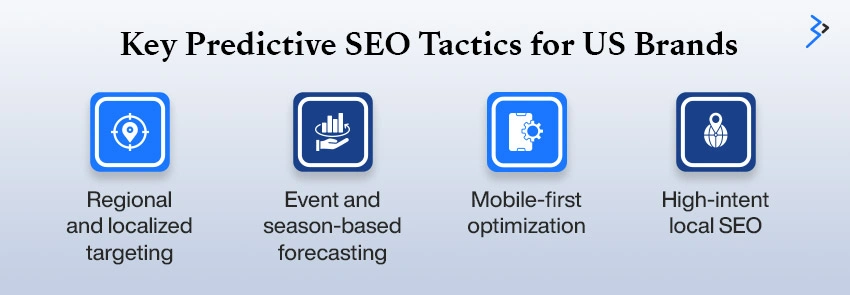
Localized and Audience-Specific Targeting
- Create region-specific content for the West Coast, East Coast, Midwest, and Southern markets.
- Address local terminology, cultural preferences, and state-level regulations.
- Use geo-targeted keywords and intent-based phrasing that reflects localized behavior.
Seasonal and Event-Driven Forecasting
- Align campaigns with peak retail events like Black Friday, Cyber Monday, and Super Bowl.
- Use year-over-year data to predict timing, product interest, and content themes.
- Publish resources early to benefit from indexing time and early authority.
Mobile and Experience-First Optimization
- Prioritize mobile performance across all US regions and device types.
- Optimize images, streamline scripts, and enhance interactivity.
- Conduct field-based Core Web Vitals audits to maintain superior rankings.
Local SEO with High-Intent Precision
- Develop local landing pages that align with city-specific search terms.
- Maintain accurate, keyword-rich Google Business Profiles.
- Use structured data for addresses, business hours, service areas, and customer reviews.
A Practical Framework for Implementing Predictive SEO
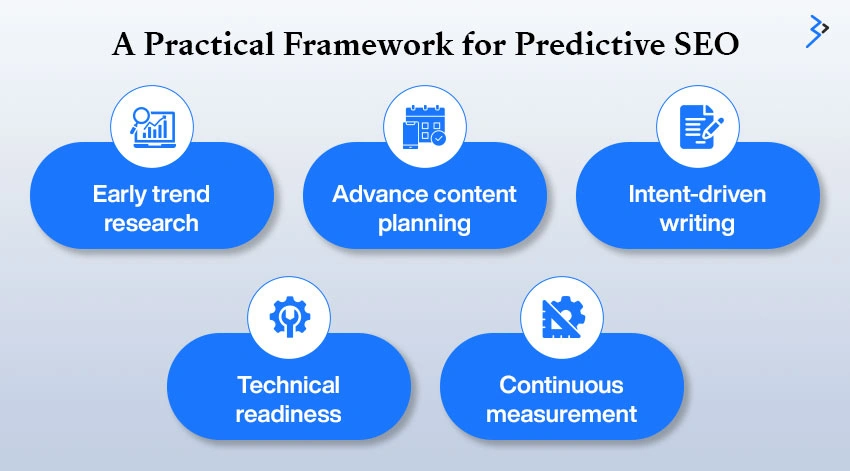
To get started with predictive SEO, follow a practical five-step framework:
1. Start Trend Research Early
- Use platforms like Google Trends, AnswerThePublic, and Exploding Topics.
- Track social signals, competitor behavior, and news cycles.
2. Plan Content in Advance
- Align content calendars with projected seasonal interest and industry forecasts.
- Create cornerstone pages that anchor future content clusters.
3. Write for Intent, Not Just Keywords
- Focus on answering questions, solving problems, and guiding decisions.
- Integrate long-form content, multimedia, and conversational tone.
4. Build Technical Strength
- Improve site speed, stability, and structured data coverage.
- Monitor crawl behavior and indexation issues regularly.
5. Measure, Learn, and Adjust
- Review predictive campaign performance quarterly.
- Analyze CTR, dwell time, and behavioral trends.
[ Read More: Unlocking Luxury: Geo Targeting and ROI Shaping Real Estate in the Middle East ]
Why Predictive SEO Creates a Sustainable Competitive Advantage
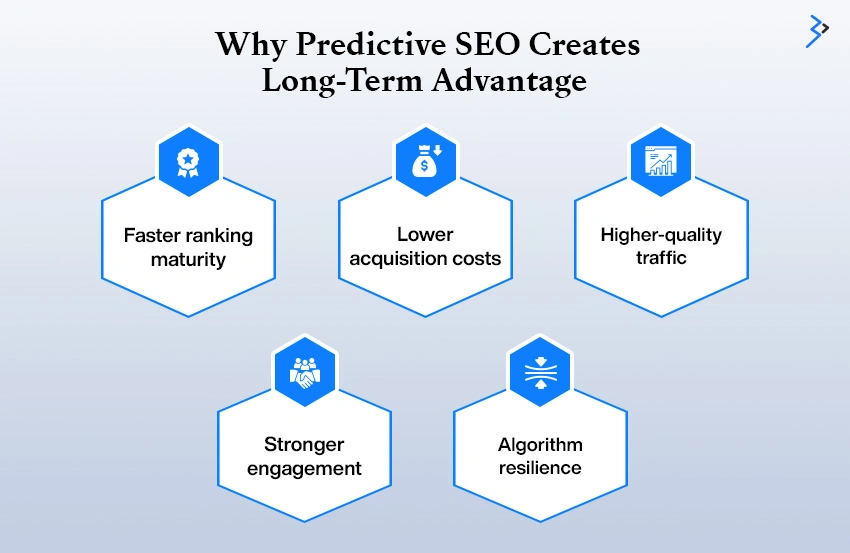
Predictive SEO transforms your organic search strategy from reactive to proactive, helping you secure visibility before competitors even realize a trend has emerged. This forward-thinking approach offers multiple long-term benefits, especially for brands operating in the fast-moving US digital landscape.
Key advantages include:
- Faster ranking maturity and index stability
- Lower acquisition costs due to early visibility
- Higher-quality traffic aligned with future demand
- Improved engagement and conversion rates
- Greater resilience during search algorithm updates
- Stronger trust signals from both users and search engines
Conclusion
Search behavior in the US is becoming more intent driven, dynamic and influenced by context than ever before. Predictive SEO is no longer just a competitive tactic. It is essential to stay visible and relevant in 2025 and beyond. By integrating forecasting, regional behavior analysis and content readiness into your SEO strategy, you prepare your business to meet your audience exactly when and where they are searching.
If you want to stay at the top of search results in the coming years, your strategy must begin long before the first keyword spike appears. Predictive SEO is the framework that ensures you are not just reacting to change but actively shaping demand.At Brainvire, our SEO specialists help brands turn predictive insights into measurable growth through data driven planning, content engineering and technical optimization. Explore how Brainvire’s SEO services can strengthen your future search performance and connect with our team.
FAQs
Predictive SEO is a future-focused approach to search optimization that emphasizes preparing content and infrastructure before demand for a topic reaches its peak. It enables brands to capture emerging trends and maintain long-term rankings.
The US market is highly dynamic, with search trends shifting rapidly due to seasonal events, policy changes, and consumer preferences. Predictive SEO enables businesses to anticipate these shifts and be visible when it matters most.
Use trend discovery platforms, analyze industry news cycles, monitor community discussions, and track rising search terms. Combine these insights with historical data to forecast upcoming content needs.
No. Predictive SEO builds on traditional SEO principles but shifts the focus from reacting to planning. It enhances keyword strategies, technical performance, and content depth with a forward-looking mindset.
Review trend forecasts and performance data at least quarterly. Update content plans, optimize technical elements, and refresh user experience design as user behavior and search algorithms evolve.

Related Articles
-
 Lucrative Transformation to a Used Machinery Business Through Digitization
Overview Brainvire helps a leading provider of used machinery increase revenue, generate keyword-targeted traffic, and double the conversion rate. About Client The client is a US-based used machinery provider. It
-
 Here’s Why Customer Retention Is So Important for ROI, Customer Loyalty, and Business Growth
For all possible reasons that is out there, we all know how tough it is to acquire new customers year after year, and especially in these uncertain times of COVID-19.
-
Core Web Vitals: Google’s New User Experience-Based SEO Ranking Factor
Great user experience equals better Search Engine Optimization (SEO). Undoubtedly, content is a major factor that rules the SEO space. Digital marketers work time and again to create unique content