Enterprise AEM Transformation
Transforming Texas’s Energy Utility Services with an AEM Migration

About Project
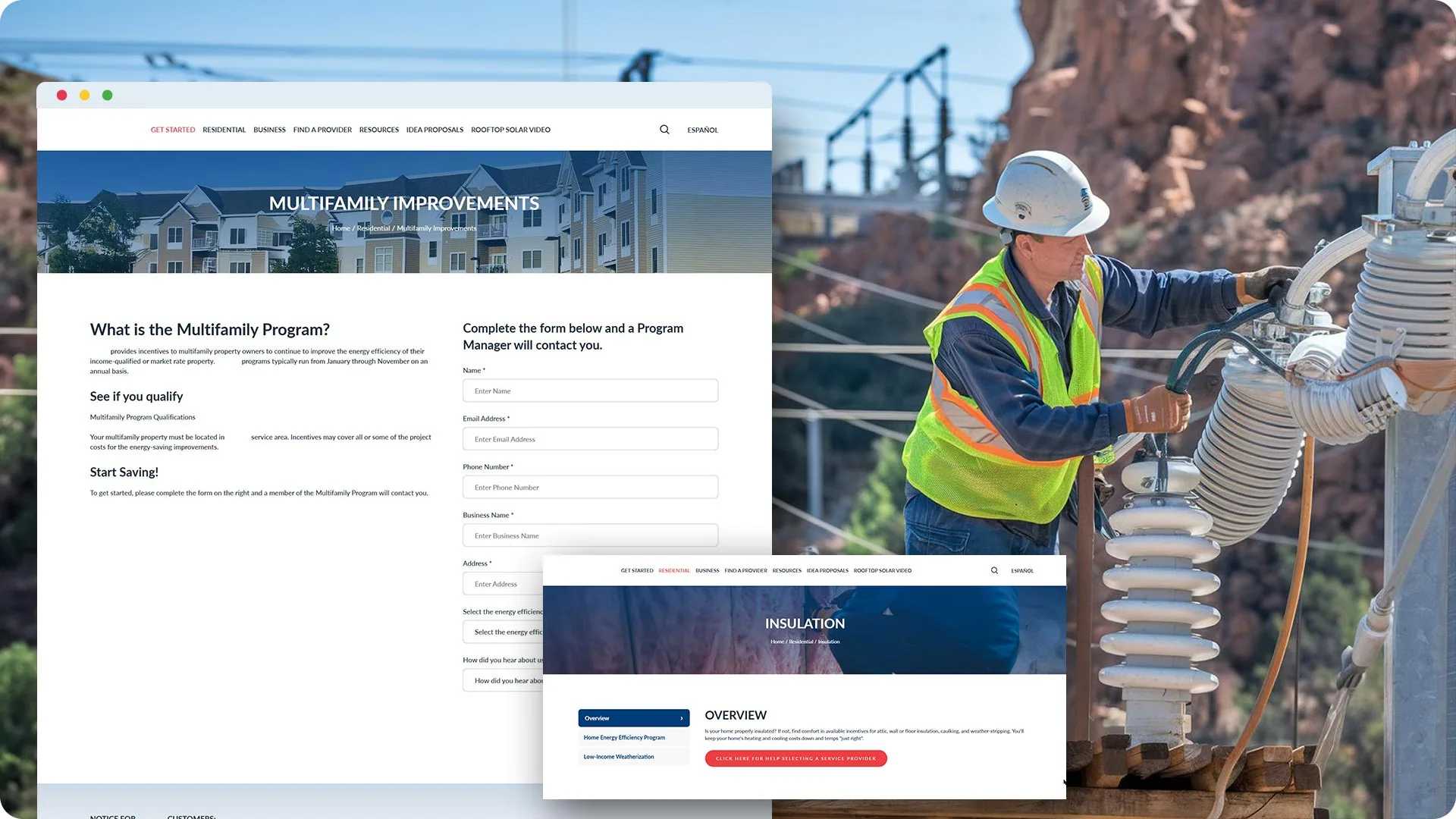
The initiative serves a diverse demographic, including residential customers, businesses, and nonprofits, across thousands of Texas communities. To support this expansive reach, we executed a comprehensive website migration to Adobe Experience Manager, replacing legacy constraints with a flexible Content Management System. The new platform features a modern, mobile-responsive design and full bilingual support in English and Spanish. By re-architecting the site with a full-stack development approach, we created a unified digital gateway where users can easily access rebates for high-efficiency HVAC systems and ENERGY STAR home programs.
Energy Delivery
BusinessNorth America
Location
Business Goal
The primary objective was to move beyond a static web presence toward a scalable, author-first digital ecosystem. The client’s vision focused on streamlining the journey from discovery to action, making it easier for users to find participating service providers and sign up for incentives. By implementing editable AEM templates and reusable components, we aimed to reduce technical overhead and enable content authors to manage dynamic layouts independently. This ensures the platform can rapidly evolve to reflect new Public Utility Commission approvals and seasonal energy-saving campaigns without ongoing developer intervention.
Project Highlights
- End-to-End AEM Website Migration
- Bilingual (English/Spanish) Content Architecture
- Custom Service Provider Directory Search
- Automated SharePoint Form Integration
- Advanced Adobe and Google Analytics Tracking
Enhanced Features


Key Challenges
Monolithic Codebase Constraints
The legacy JavaScript architecture tightly coupled content with logic, required full-stack development support for minor edits and slowed down essential marketing initiatives.
Developer Dependency Bottlenecks
Marketing teams lacked autonomy, relying on developers for basic text and banner updates. This created deployment delays and reduced overall operational agility.
Manual Update Inefficiencies
Managing disparate site sections required extensive manual effort, leading to time-consuming workflows, difficult approval tracking, and an increased risk of publishing errors.
Content Fragmentation Risks
The absence of a centralized system led to duplicate content and inconsistent branding. Manual updates across multiple locations resulted in outdated or conflicting information.
Our Solutions


Enterprise AEM Migration
Addressing the constraints of a rigid, legacy infrastructure required transitioning the platform to an enterprise-grade Adobe Experience Manager ecosystem. Decoupling content from the underlying code empowered non-technical teams to manage updates independently, effectively slashing turnaround times. This shift resulted in a highly agile architecture that minimizes development overhead while maximizing operational control and responsiveness.

Component-Driven Architecture
To overcome hard-coded limitations and developer dependency, we rebuilt the original JavaScript-based pages using editable AEM templates and a library of configurable components. This full-stack development strategy helps with instant UI adjustments without requiring code deployments. By shifting routine updates to business users, the technical team has been freed to focus on high-value feature innovation, accelerating overall release cycles.

Standardized Publishing Workflows
The risk of manual errors and inconsistent deployments was mitigated by engineering structured AEM workflows that automate content movement from authoring to live environments. Enforcing these standardized review and approval protocols eliminated the need for manual intervention. This streamlined approach ensures high-quality governance across all site sections, providing a reliable foundation that scales alongside the platform’s growth.

Centralized Content Governance
Solving the challenge of fragmented messaging and content duplication involved leveraging AEM Experience Fragments to modularize global elements like navigation. This “single source of truth” approach ensures absolute branding consistency across the entire digital ecosystem. By managing shared assets from a central location, the client can now roll out accurate, site-wide updates instantly, significantly improving governance and user experience quality.
Our Approach
Our strategy focused on a seamless website migration to AEM, prioritizing long-term maintainability and a high-performance Content Management System.


Transition

Modularization

Flexibility

Integration
Technology Stack
Frontend Technologies
Back-end Technologies
Server
Database
Cloud
Third-Party Tools
Project Management
Framework
SDK
Analytics and Monitoring Tools


HTML

CSS 3

JavaScript
Key Results
3x Faster Publishing
Content turnaround time improved by 3x as authors now publish directly through AEM, completely bypassing the need for developer intervention.100 Team Autonomy
Marketing teams gained full ownership of site content, letting developers shift focus toward high-value feature innovation and platform enhancements.Zero Content Duplication
Utilizing shared Experience Fragments eliminated manual duplication, enabling instant, accurate updates across the entire bilingual digital ecosystem from one source.Reduced Operational Overhead
Standardized workflows reduced publishing errors and improved maintenance speed, creating a robust, authoritative platform for all regional energy-saving communications.


Similar Projects!

Ready to transform your static site into a dynamic service engine?
Re-engineer your digital presence with our custom AEM architecture solutions.