Enterprise-Grade AEM Revitalization
Modernizing the Digital Infrastructure for the Largest Energy Provider in Texas
About Project
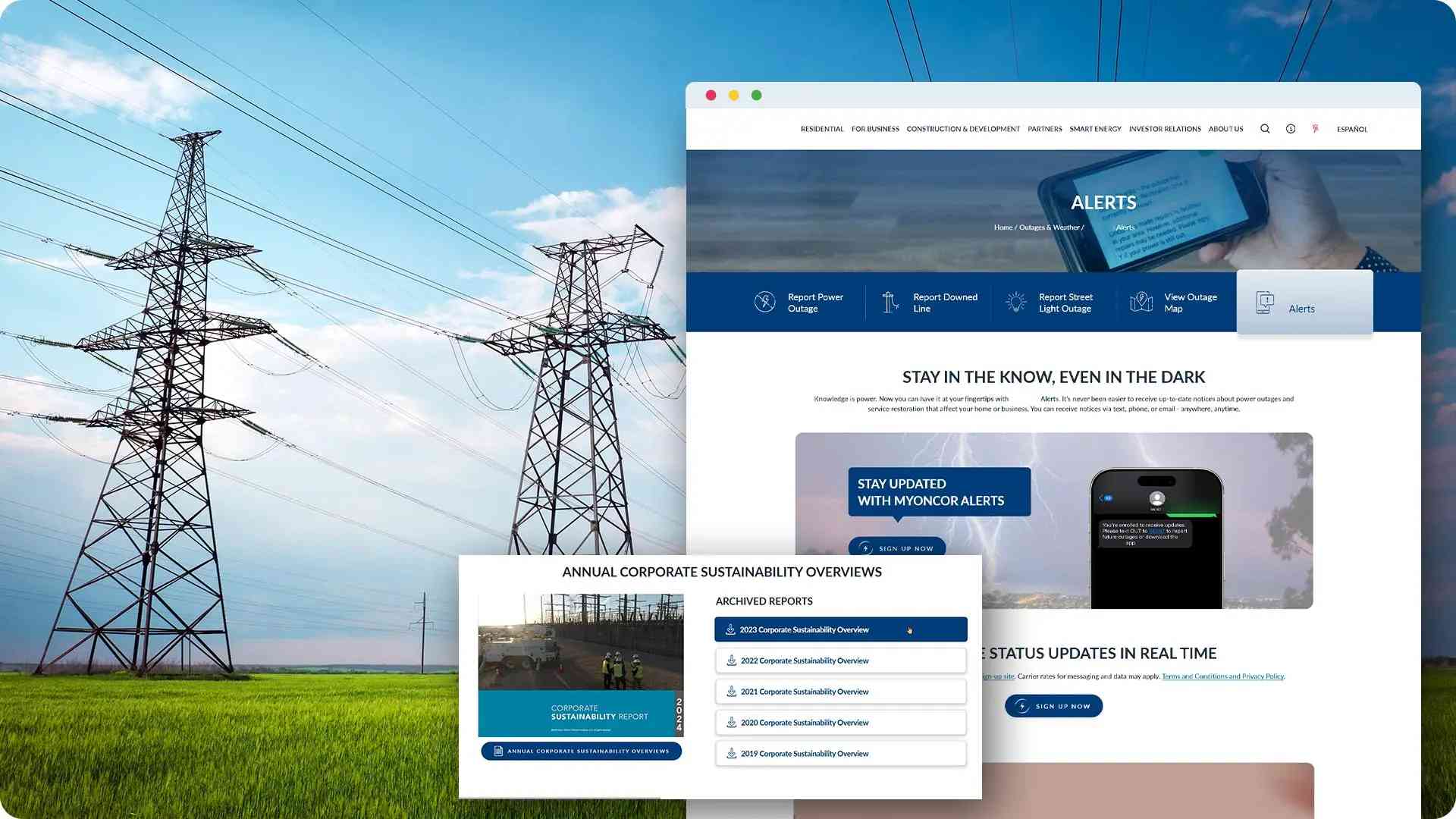
The energy delivery company serves over 144,000 communities with a massive workforce to keep Texas connected. Despite their extensive physical footprint, their existing AEM platform required a revitalization to meet modern usability standards and evolving business goals. To address this, we re-architected the site using AEM, Java, and modern web technologies, introducing a fresh visual identity and intuitive navigation. This hub now provides seamless access to critical services, including real-time outage reporting and essential safety resources for millions of users.
Energy Delivery
BusinessNorth America
Location
Business Goal
The vision was to create a scalable, maintainable, and “author-first” digital environment. The client aimed to deliver a modern, accessible experience for end-users while drastically reducing internal dependency on technical teams for routine updates. The goal was to build a future-ready platform where content authors could manage complex layouts and dynamic components with ease. By streamlining navigation and enhancing content presentation, we ensured the website functions as a reliable, high-performance bridge between the provider and its diverse customer base.
Project Highlights
- AEM Digital Revamp and Restructuring
- Custom Reusable Component Architecture
- GenAI Interface Enhancement
- Advanced FAQ Management Systems
- Streamlined Content Authoring Workflows
Enhanced Features


Key Challenges
Module Dependency Risks
The platform’s interconnected architecture meant that enhancements to specific modules risked causing regression issues or design inconsistencies across other critical internal components.
Form Validation Friction
A lack of UI-level validation led to data integrity issues, while the use of identical Form APIs across environments required risky manual URL configurations during deployment.
Component Flexibility Constraints
Reliance on generic, out-of-the-box components limited design versatility and forced content authors to manage multiple fragmented elements for even minor content variations.
Fragmented Script Management
External scripts were scattered across various configurations and environments without a central repository, making security reviews, troubleshooting, and maintenance highly inefficient.
Our Solutions


Isolated Modular Refactoring
To prevent cross-module interference, we restructured the codebase by isolating specific logic and refactoring shared dependencies. By introducing well-defined interfaces and improving dependency management, we ensured that enhancements to the primary module were delivered seamlessly. This approach successfully improved overall maintainability and scalability without affecting the existing design or behavior of other platform modules.

Automated Validation Logic
We implemented comprehensive UI validations for all critical form fields, including format checks and input constraints, to significantly reduce invalid submissions. To eliminate deployment errors, we introduced environment-specific API management that automatically switches base URLs between production and non-production tiers. This resulted in a more stable, scalable form system that improved both developer efficiency and the end-user submission experience.

Custom Component Library
We designed and developed a library of custom, reusable components tailored to specific business requirements. These high-performance components were built to be highly configurable, helping authors manage multiple use cases from a single interface rather than relying on disconnected generic elements. This simplified the authoring process, ensured visual consistency, and drastically reduced the time required to manage design variations across the site.

Centralized Script Governance
A thorough audit was conducted to identify and isolate all external script injection points, which were then migrated into the official project repository under strict version control. By establishing clear naming conventions and documentation, we improved code transparency and simplified the debugging process. This centralized governance model strengthened security oversight and significantly reduced future maintenance efforts by making all injected logic clearly visible.
Our Approach
Our methodology focused on re-engineering the digital experience to balance high-performance delivery with an intuitive, author-centric management system.


Modernization

Components

Empowerment

Optimization
Technology Stack
Frontend Technologies


HTML

CSS 3

JavaScript
Back-end Technologies
HTML
CSS 3
JavaScript
Server
HTML
CSS 3
JavaScript
Database
HTML
CSS 3
JavaScript
Cloud
HTML
CSS 3
JavaScript
Third-Party Tool
HTML
CSS 3
JavaScript
Project Management
HTML
CSS 3
JavaScript
Framework
HTML
CSS 3
JavaScript
SDK
HTML
CSS 3
JavaScript
Emerging Technologies
HTML
CSS 3
JavaScript
Analytics and Monitoring Tools
HTML
CSS 3
JavaScript
Key Results
Operational Autonomy
Simplified authoring reduced developer dependency for routine updates, helping teams publish content with greater speed and accuracy.Increased Engagement
An intuitive, user-centric interface reduced friction and accelerated task completion, leading to higher adoption rates and fewer support requests.Streamlined Administration
Optimized asset and site management improved organization and retrieval, significantly reducing manual duplication and maintenance effort.Scalable Performance
The re-architected platform provides a future-ready foundation with improved responsiveness, scaling seamlessly to meet the demands of a growing population.


Similar Projects!


Is your legacy system holding you back?
Modernize your digital infrastructure with Brainvire’s high-performance AEM services for enterprise-scale growth.