Is your business ready for a mobile future?

The future is “mobile” that’s out of question. But is your business ready for a mobile future? Is your business website mobile ready? If your answer to that question was yes – way to go! But if your answer to that question was “no” read on to find out the key considerations to make your website mobile ready. Considering that mobile traffic globally accounts for 15% of the Internet traffic and mobile based searches add up to one quarter of all searches and 61% of people have a better impression of the brand if they have a good mobile web experience of their business website it’s crucial that your business has a mobile site that provides a great user experience!
Well, here are the key factors you need to remember while you move towards a more mobile friendly website.
Keep your design simple
This is the golden rule for mobile website development. When you develop website for mobile device, keep it simple. Keep file sizes small and try to reduce load times as much as possible. Wireless networks used by mobiles have improved, yet are considerably slow when compared to wired. So, if you maintain a simple design, your site loads faster and your customers can in turn navigate (and probably buy your products) with ease.
Responsive web design
Considering the variations in the screen sizes presented to developers by different mobile devices and a brand, creating a standard website that responds and adjusts itself to display perfectly on all of them is a brilliant way to achieve user friendliness for your mobile website. A CSS3 media query is the answer to create a responsive web design. If your website is still designed only for desktops and laptops, make changes immediately! You are losing out on user experience on the mobile market for your business!
Single column layouts and Vertical hierarchy
Knowing that the portrait layout is what will probably be the default for all mobile sites to be displayed, a single column layout works best for such purposes. It helps you manage the limited space that you have on the mobile screen. So set up a collapsible structure for your layout so that you can fit in all the required information.
Test your website
Finally, testing of your final design is a good idea. Check with a few users and work on the feedback. If you are using responsive web design techniques, check it on a few different screens for the presentation.
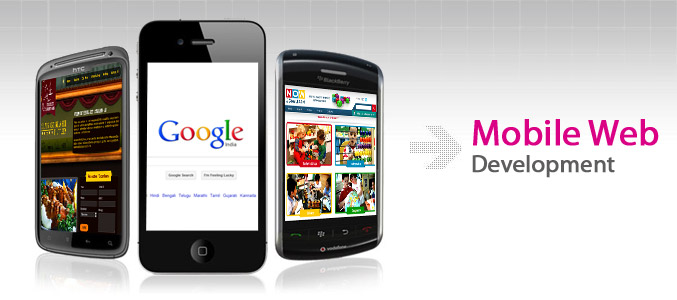
Finally, your website gives your users the first impression of your business. Considering that most of them are now browsing via a mobile, your best bet is to get your business mobile ready and develop website for mobile device, in turn giving your business the advantage of a host of mobile customers! So, is your business ready for a mobile future?
Related Articles
-
 How COVID-19 Pandemic Has Boosted The Delivery Business Worldwide
The ongoing Coronavirus pandemic has disrupted countless businesses around the world. But the only one to witness a spurt in the market is the delivery business. With countries under months
-
 Wearable Apps – The Revolutionary Tools for Finance Industry
The wearable devices like smart watch, smart glasses, wrist bands etc., the excellent tools with combination of technology and electronics have been around for a while from now, leveraging the
-
 The Must-Consider Factors To Develop A Marketplace Like Craigslist app
Thousands of users prefer Craigslist: an online marketplace app, but many have been asking questions about Craigslist’s future recently. Nevertheless, many people prefer using Craigslist instead of other similar marketplace