Top Mobile Commerce Trends of Today: Why 70% of Shoppers Prefer Buying on Mobile
-

Maharshi Pancholi
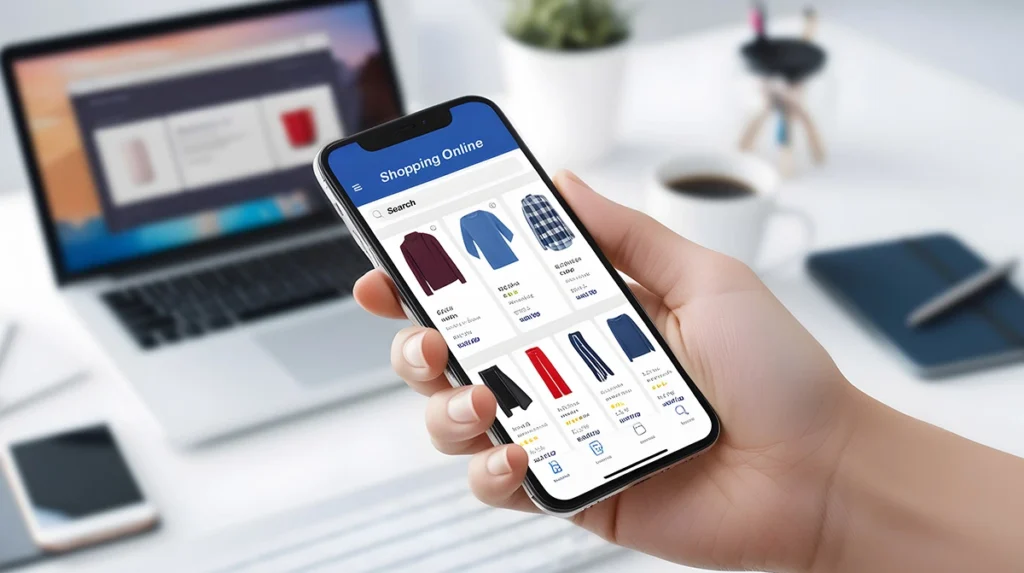
A profound shift is underway in global retail. What was once a device for communication has now become the primary gateway to commerce. The smartphone has evolved into a personalized shopping hub that never closes or slows down and keeps the consumer connected to brands anywhere, anytime.
For today’s digital-first consumer, convenience and immediacy define loyalty. Purchasing decisions now unfold within seconds, whether during a commute, between meetings, or from the comfort of home. This frictionless, always-on experience marks the rise of mobile commerce development services (M-Commerce), a transformation reshaping retail strategies and consumer expectations worldwide.
Statista shows that mobile devices now drive nearly 80% of all online shopping, signaling a clear priority for enterprises: the future of growth lies in optimizing the mobile experience.
Let’s explore the accelerating momentum behind M-Commerce, the technologies fueling its expansion, and the strategic imperatives for leaders aiming to stay ahead in an era where the customer journey begins, and often ends, in the palm of a hand.
The Power of the Pocket: Why Mobile Dominates
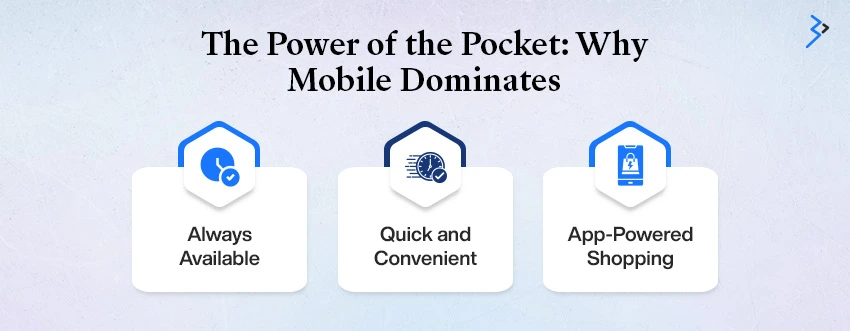
So, why are shoppers reaching for their phones instead of their laptops? The answer is simple: convenience and accessibility. Our phones are always with us, turn on instantly, and offer a level of personal connection that a desktop PC can’t match.
Capital One Shopping reported that worldwide mobile-commerce sales reached US $2.07 trillion in 2024, representing roughly 57% of all global eCommerce sales. This sheer scale underscores why M-Commerce is the present and the clear future of shopping.

01 | Always Available
You check your phone all day, from morning to night. Whether in line, on the train, or relaxing at home, your phone lets you shop anytime. Unlike a computer, you must use small moments to browse and buy.
02 | Quick and Convenient
Mobile shopping is fast and straightforward. Apps load quickly, remember your login, and offer easy payment options like Apple Pay and Google Pay. You can purchase items with a simple tap, eliminating the need to enter lengthy card information.
03 | App-Powered Shopping
While mobile-friendly websites are necessary, dedicated shopping apps offer a huge competitive edge. Multiple studies found that mobile shopping apps have higher conversion rates than mobile websites. Apps are faster, offer personalized alerts for sales, and save your preferences, making the purchasing journey seamless.
The New-Wave Trends That Make Mobile Shopping Easy
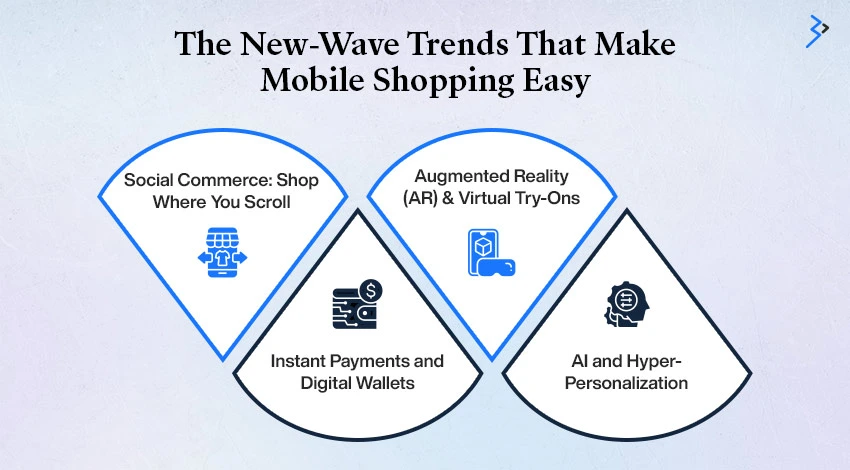
Mobile devices are popular because they leverage technologies that dramatically improve and personalize the shopping experience. For businesses, optimizing for these trends is a matter of survival, especially since 17% of users will walk away after a single bad experience, as reiterated by PwC.
01 | Social Commerce: Shop Where You Scroll
Social media platforms like Instagram, TikTok, and Facebook enable users to buy products directly from posts or videos.
If you see an outfit you love on an influencer, you can click a tag in the photo that takes you to the checkout page. This quick move from spotting an item to purchasing it makes social commerce powerful and mobile-friendly.
02 | Instant Payments and Digital Wallets
Speed is everything on a mobile device. Typing in all your information is slow and annoying. Several factors contribute to the growing popularity of mobile wallets.
- Google Pay, Apple Pay, PayPal: These systems securely store your payment details, so you don’t have to. A single tap on the screen is all it takes.
- Biometric Security: Confirming a purchase using your fingerprint or facial recognition makes the transaction feel secure and incredibly quick.
This instant, secure payment method removes one of the biggest reasons people used to abandon their shopping carts.
03 | Augmented Reality (AR) and Virtual Try-Ons
One of the last hurdles for online shopping was the inability to physically “try on” or “see” a product in person. Mobile technology is solving this with mind-blowing experiences.
- Makeup and Eyeglasses: You can use your phone’s camera to see how a new shade of lipstick looks on your face or how a new pair of glasses suits your features.
- Furniture and Decor: Apps let you place a virtual piece of furniture in your living room using your camera to see if the size and color work before you buy.
Eliminating uncertainty boosts customer confidence and makes the process enjoyable and interactive.
04 | AI and Hyper-Personalization
Your phone knows a lot about you, and M-Commerce apps use this data to their advantage. Artificial Intelligence (AI) tracks your browsing history, past purchases, and the time of day you usually shop. It then uses this information to:
- Show You Exactly What You Want: Instead of scrolling through thousands of irrelevant items, the app immediately highlights products most likely to appeal to you.
- Send Perfect Notifications: You might get a message saying, “The jacket you loved is now 15% off,” or “Here are three new items like the shirt you bought last month.” This personalized approach makes you feel valued and encourages you to buy.
Building for the Mobile Customer: A Business Blueprint
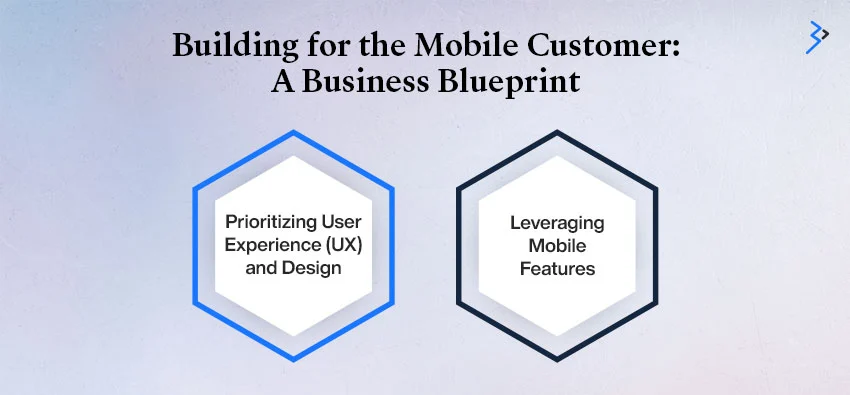
For businesses, it is important to recognize that many shoppers use mobile devices. However, simply making your desktop website smaller isn’t enough. To earn customers’ loyalty, you must focus on creating a mobile-friendly experience from the start.
Prioritizing User Experience (UX) and Design
A successful mobile design is all about clarity, speed, and simplicity.
- Simplify Navigation: A phone screen is small. Use clear, large icons and a simple menu structure. Shoppers should be able to find what they need in two or three taps, maximum. The main menu, search bar, and shopping cart should always be easy to see and tap.
- Fast Loading Times: Every second counts. Many customers will leave your page if it takes more than three seconds to load. Optimizing images and site code for speed is non-negotiable in M-Commerce.
- The Thumb Zone: Position essential buttons, like “Add to Cart,” within easy reach of users’ thumbs when they hold their phones in one hand.
- Clear Calls to Action (CTAs): Buttons should be large and brightly colored, and clear, action-oriented words like “Buy Now,” “Add to Cart,” or “Check Out” should be used.
- Minimalist Checkout: The checkout process needs to be as short as possible. Enable guest checkout, offer one-click payment options, and avoid asking for unnecessary information. The less typing required, the better.
Leveraging Mobile Features
M-Commerce is powerful because it taps into the native features of a smartphone.
- Push Notifications: Use these sparingly and wisely. Send alerts for an order status change, a special, time-sensitive deal, or a product back in stock, not just generic spam.
- Camera and Location Services: Use the camera for AR try-ons. Use location services to help customers find a nearby physical store or to offer highly relevant local deals.
- Voice Search: More people are searching with their voices. Ensure your app or website’s search function accurately understands spoken questions like, “Find me a blue running shoe size 10.”
The Future is Seamless: Omnichannel Shopping
The future of shopping on your phone (M-Commerce) is about creating a smooth experience that connects your phone, the website, and the physical store. This approach is called an omnichannel strategy.
Evolvear’s article about Nike suggests that its in-store mobile app lets customers scan products (barcodes) with their phones to see size, colour, and availability; the app then sends a staff notification to fulfil try-on or reserve requests.
This shopping experience lets you seamlessly switch from mobile to store, using your phone as a remote.
Conclusion: Building a Mobile-First Tomorrow
Shoppers today live on their phones, browsing, comparing, and buying with just a few taps. Mobile isn’t just another channel; it’s where every shopping journey begins. People now expect a smooth, fast, personalized experience from their screens.
Mobile shopping is undergoing an exciting transformation with features like fast payments and virtual try-ons enhancing the experience. Brainvire is seizing this opportunity by creating quick, user-friendly mobile platforms to capture a growing market. Businesses focusing on a seamless experience will thrive as shopping shifts to mobile. Get ready for a tailored, convenient shopping journey right at your fingertips.
Frequently Asked Questions
AI analyzes your browsing patterns, purchase history, and even time-of-day shopping habits to suggest products you’re most likely to buy. Over time, this hyper-personalization can make your mobile shopping experience feel almost psychic.
While M-Commerce is booming, physical stores will likely evolve rather than disappear. Stores may become experience hubs where mobile apps guide your visit, reserve items, or offer virtual try-ons, blending digital convenience with tactile experience.
AR enables you to virtually “try on” products like clothing, makeup, or furniture. Reducing uncertainty boosts purchase confidence, bridging online convenience with in-store assurance.
Yes. With AI-powered recommendations, push notifications for personalized offers, and easy payment options, M-Commerce converts impulse into thoughtful, convenient purchases rather than chaotic overspending.
Mobile-first loyalty programs will go beyond points. Using AI and geolocation, they can offer real-time personalized rewards, early product access, and seamless integration with in-store experiences, making loyalty truly interactive and dynamic.

Related Articles
-
 Mobile Application Development – Things To Know
Gone are the days when mobile phones were merely used for making calls or sending messages. But as time progressed mobile phones had a number of features integrated and this
-
 Enhance user engagement and customer loyalty using retail mobile application
If your retail store and business is still into the website mode, it is the right time for you to open t he doors of mobility; which will not only
-
The Most Effective Ways to Popularize Your Mobile Apps
Mobile applications, today, have become the most important need of every business in order to stay ahead of the competition. Yes, it’s the mobile apps that are quite popular among