
Adobe AI agents and the Experience Platform data they depend on
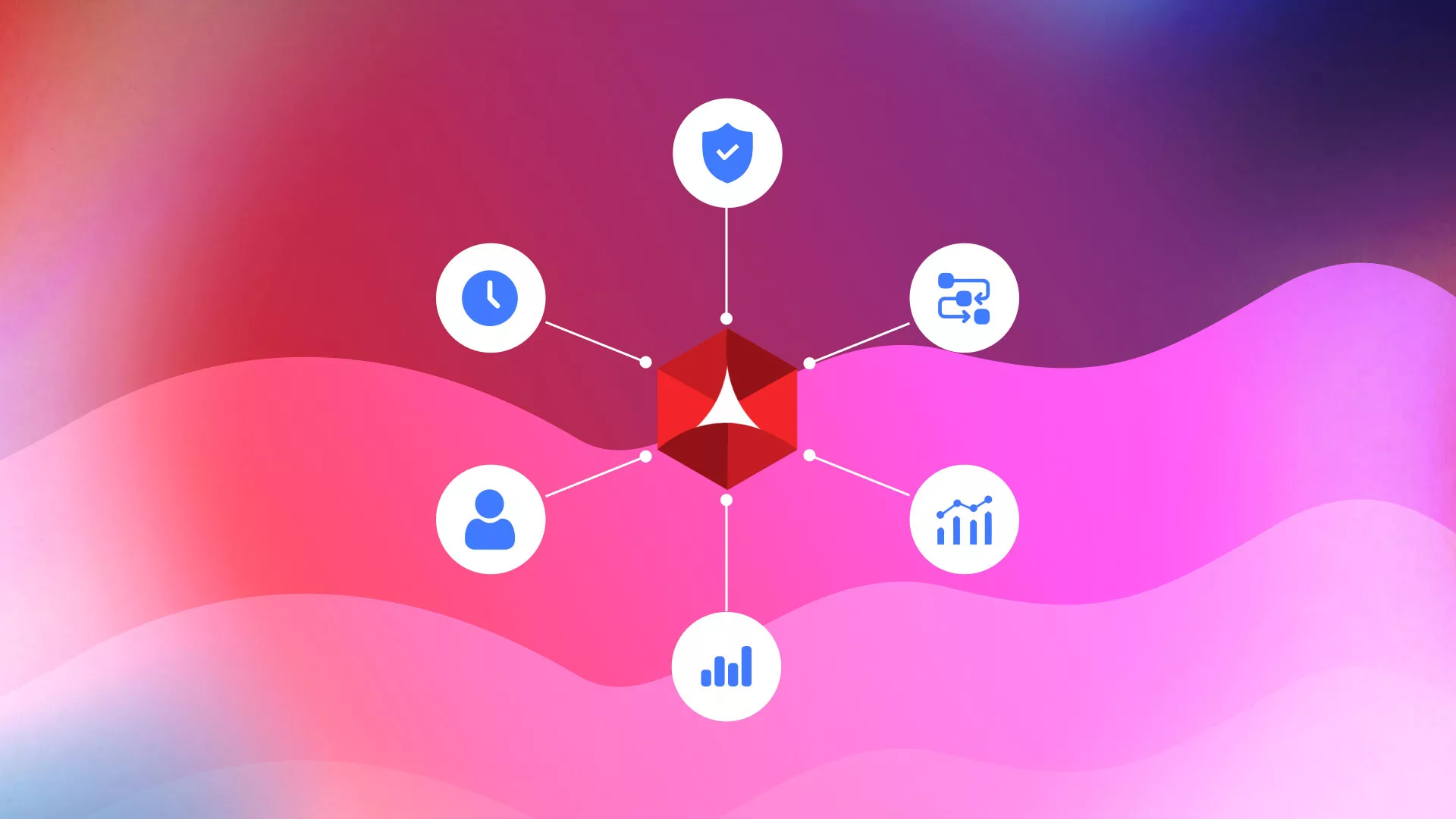
An Adobe AI agent is a purpose-built AI worker inside an Adobe enterprise app. It reads customer data held in Adobe Experience Platform (AEP), plans a task and acts on it once you approve.
Take one of Adobe's own example prompts for CX Enterprise Coworker, "tell me why this audience shrank last week". Coworker works out a plan, runs it, checks the result and hands the answer back for review. Nothing about that is magic. The audience, the profiles in it and the rules about who may see them all live in AEP. That kind of request used to wait in an analyst's queue.
Adobe has renamed this layer several times since 2025, and the documentation now mixes AI Assistant, Experience Platform Agents and Coworker. The data underneath hasn't moved. If you run Adobe Experience Cloud, plan around the platform the agents read from, not the label on this year's interface.
The role of Adobe Experience Platform in enterprise AI
AEP is the shared customer data layer that every Adobe AI agent borrows. Agents don't bring their own customer records. They read AEP's profiles, audiences, schemas and journeys, and they work under AEP's access rules. Adobe describes the platform as a way to centralize and standardize customer data and content from any system. Real-Time CDP, Adobe Journey Optimizer, Customer Journey Analytics and Adobe Mix Modeler are built on top. It's also why Adobe calls Agent Orchestrator the agentic layer of Adobe Experience Platform.
It helps to split what AEP gives an agent into three jobs.
| Job | What AEP provides | Why the agent needs it |
|---|---|---|
| Context | Customer data standardized with the Experience Data Model (XDM), unified profiles fed by real-time data, audiences | An agent can't suggest a better audience without knowing who's in the current one |
| Control | Sandboxes, access control policies, data usage labels that block activation | Agents can only run jobs or reach data you're already authorized to use |
| Action | Audiences, journeys and destinations in Real-Time CDP and Journey Optimizer | A recommendation only matters once it reaches a customer |
Adobe says AEP now drives over one trillion experiences per year (April 2026). The useful takeaway isn't the size. It's that the agents are built for the data model you already run, so there's no parallel AI dataset to stand up.
How an Adobe AI agent turns a prompt into work
You type a request in plain language. The Experience Platform Agent Orchestrator reasoning engine reads the intent, builds a step-by-step plan and calls the agents it needs. Adobe says it combines decision science and language models to do this. You can see the plan, adjust it and step in before anything runs. The orchestrator also remembers the conversation, so a follow-up builds on the last answer, and a knowledge base gives agents product documentation, business object metadata and analytics data.
Adobe didn't design this to stay inside its own apps. At Summit 2025 it named Acxiom, Amazon Web Services, Genesys, IBM, Microsoft, RainFocus, SAP, ServiceNow and Workday as partners for agents working together. Coworker is built on the Model Context Protocol (MCP) and Agent2Agent (A2A), so non-Adobe agents and AI platforms can connect to it.
The traffic runs the other way too. Adobe publishes MCP servers for Journey Optimizer, Customer Journey Analytics, Adobe Analytics and Adobe Experience Manager, among others. Real-Time CDP and Adobe Target servers are in public beta with read-only tools. Experience Platform itself, meaning dataset discovery, schema browsing and sandbox management, is reached only through Coworker. What you can call depends on your organization's entitlements and your own permissions.
One piece is still unclear. In September 2025 Adobe described Experience Platform Agent Composer, a place to customize and configure agents, as coming soon. Experience League showed no setup documentation for it when checked in October 2026, so confirm its status with your Adobe account team before you plan around it.
The Experience Platform agent ecosystem in October 2026
Adobe now groups Adobe Experience Platform agents by license. Some run inside CX Enterprise apps you may already own; others ship with what Adobe calls AI-first apps. This is how the agentic AI overview (updated May 2026) lists them.
| Agent | License group | What it does |
|---|---|---|
| Audience Agent | Existing apps | Audience insights, size-change alerts and duplicate detection; explores audience inventory in Real-Time CDP and Journey Optimizer |
| Journey Agent | Existing apps | Creates journeys and channel content, analyzes and simulates journeys in Adobe Journey Optimizer |
| Data Insights Agent | Existing apps | Answers data questions and builds visualizations in Analysis Workspace, inside Customer Journey Analytics |
| Product Support Agent | Existing apps | Troubleshoots features and lets support admins create tickets from the chat |
| Adobe Marketing Agent for Microsoft 365 Copilot | Existing apps | Retrieves marketing insights in Teams, Word, PowerPoint and Excel |
| Content Advisor, Brand Experience and Brand Governance agents | Existing apps | Listed by Adobe; see the per-agent docs for current scope |
| Experimentation Agent | AI-first apps | Analyzes experiment results, predicts impact and proposes new tests |
| Site Optimization Agent | AI-first apps | Flags site issues such as broken links and low-performing pages |
| LLM Optimization and Product Advisor agents | AI-first apps | Listed by Adobe; check the product docs for current scope |
| CX Enterprise Coworker | AI-first apps | Plans and runs multi-step work across apps |
Budget owners should read the small print. Agents in existing apps need an Experience Platform Agents AI Credits license, a usage-bound trial or a time-bound promo SKU. Every agent job then consumes AI credits, so usage becomes its own cost line.
Search results add one more source of confusion. On June 18, 2026, Adobe expanded its creative agent across Firefly and Creative Cloud. There, AI Assistant in Firefly chains tools such as Photoshop and Premiere to resize assets, sort clips or turn product photos into short videos. It's in public beta and it works on images, video and layouts, not customer profiles. The two meet in content production: creative teams make the variations, and AEP agents decide which audience sees which one.
What CX Enterprise Coworker adds
AI Assistant answers questions. Coworker is meant to finish work. Adobe describes Coworker Chat as a conversational interface for getting customer experience work done: you state a goal, and it plans, executes, validates and returns the result for your approval. The other example prompt Adobe gives, "build an audience for the spring yoga promotion," is a task rather than a diagnosis, and that's the shift.
Adobe's GA announcement on June 10, 2026 names three use cases: campaign creation, customer engagement and marketing operations. For campaigns, Coworker pulls the audience, generates creative and builds cross-channel journeys. For engagement, it monitors performance and adjusts workflows. It's sold as a standalone solution or as an add-on.
The guardrails are the part security teams will ask about. Permissions are inherited from your Adobe organization, every action leaves an audit trail, and approval gates run before anything executes. Data policies and consent rules carry over. For regulated industries, Adobe announced a partnership with NVIDIA to integrate the NVIDIA OpenShell secure runtime and Nemotron open models.
Coverage is still filling in. Coworker Chat works with the B2C editions of Real-Time CDP, Journey Optimizer and Customer Journey Analytics, plus Adobe Target, Adobe Experience Manager, Workfront and Marketo Engage. The B2B editions are listed as coming soon. So is Coworker Projects, while Coworker Campaigns is available now.
Sensei, agents, Coworker: how the names stacked up
Each step kept the earlier work and added a layer on top, which is why older names linger in vendor decks.
| Date | What Adobe announced | What it meant |
|---|---|---|
| November 2016 | Adobe Sensei | One brand for Adobe's machine learning across its clouds |
| March 2023 | Adobe Firefly, "part of a series of new Adobe Sensei generative AI services" | Generative models for images and text effects |
| March 18, 2025 | Experience Platform Agent Orchestrator and purpose-built agents | Agents managed across Adobe and third-party systems, for site optimization, content resizing, data cleansing and audience refinement |
| September 10, 2025 | General availability of AI agents and Agent Orchestrator | Six agents live inside Adobe enterprise apps |
| April 20, 2026 | CX Enterprise Coworker unveiled | Goal-driven agentic AI built on MCP and A2A |
| June 10, 2026 | CX Enterprise Coworker generally available | Sold standalone or as an add-on |
Adobe Intelligent Services: the predictive layer underneath
Agents get the attention, but a lot of Adobe's predictive work still runs through two quieter services. Adobe Intelligent Services let marketing analysts set up predictions with business-level settings, without a data science team. Customer AI produces individual-level propensity scores for churn, conversion or a custom goal, with explanations. Attribution AI scores how much each channel and touchpoint contributed to a conversion.
The link to agents is direct. Customer AI scores can enrich the Real-Time Customer Profile, where audiences and journeys use them, so a propensity score becomes one more attribute the Audience Agent can work with. Data volume sets the floor. Customer AI needs at least 500 qualifying and 500 non-qualifying events and 30 days of data before it can score anyone. The companion guide to AI audience activation in Adobe Experience Platform covers the activation steps.
Getting AEP ready before an agent touches it
Agents speed up whatever process you already have, including the broken parts. In practice, most of the readiness work sits in the data layer, not in the prompts.
Start with identity. Check identity stitching, schema consistency and the quality of your behavioral data before anyone writes a prompt. An Audience Agent that flags duplicate audiences is only useful if those audiences were built on clean identities, and bad merges produce confident, wrong answers.
Then look at roles. Agents respect product-level access controls, so the roles you already have become the agent's limits. Review them against the people who'll actually prompt. One timing trap: new attribute-based access policies can take up to 24 hours to apply to AI Assistant.
Money and sign-off come next. Agent jobs consume AI credits, so pick one or two workflows, estimate volume and name who manages the spend before usage spreads. Decide who approves audiences, journeys and content, and how fast. An approval queue nobody owns turns Coworker into an expensive suggestion box.
Good first workflows are repetitive and easy to check: audience size investigations, journey simulations before launch, or the weekly Customer Journey Analytics questions. Measure time saved and errors caught against the old way. If the tracking behind those numbers is shaky, our Adobe Analytics services team can start with an audit of your data collection, before any agent pilot.
Know the limits going in. Adobe says AI Assistant currently supports responses in English only and that language models occasionally make mistakes. Operational insight questions aren't available for Customer Journey Analytics yet. Product names, agent lists and license groups have also changed several times since 2025, so internal docs need a quarterly refresh.
Some stacks aren't ready at all. If you run Adobe Experience Manager and Adobe Analytics but no AEP-based app, most of the agent ecosystem has little to work with. Real-Time CDP, Journey Optimizer and Customer Journey Analytics are the apps that feed it. The better first project is the data foundation, and your Adobe Experience Manager content and analytics setup is the natural place to begin.
FAQ
Are Adobe Sensei AI agents a real product?
Not under that name. Adobe Sensei was Adobe's AI brand from 2016, and Firefly launched under it in 2023. Adobe's current agents are documented as Experience Platform Agents, run by Agent Orchestrator, with CX Enterprise Coworker as the newer interface. If a vendor deck still says "Sensei agents," ask which of today's products it means.
Will CX Enterprise Coworker replace AI Assistant and Experience Platform agents?
Adobe says eligible customers are gradually being transitioned from AI Assistant and Experience Platform Agents to Coworker Chat. AI Assistant capabilities stay available inside Coworker Chat, and the same permissions and data carry forward. Work you've set up on the older interface isn't wasted.
Is Adobe Data Science Workspace still available?
Not for new buyers. Adobe's documentation says Data Science Workspace is no longer available for purchase, and the docs remain for existing customers with prior entitlements. Adobe doesn't publish a shutdown date there. The practical route is to train custom models in your existing data science stack and bring the scores into AEP as data.
Do Adobe AI agents train on our customers' personal data?
Adobe's privacy page for AI Assistant (Legacy) says it's grounded in sandbox-specific data and uses no personal data, even for training. It also honors your existing access controls. For Coworker and newer agents, check the current product terms with your Adobe account team during your security review.
Where to start
Sensei, AI Assistant, Agent Orchestrator, Coworker: four names in a decade, all reading the same profiles, permissions and audiences. If you want that data layer checked before an agent pilot, talk to our Adobe team.
Related reading
 Databricks Cost Optimization: 10 Tips From a Partner's Playbook to Stop Burning DBUsOctober 20, 2026 · 8 min read
 Beyond the Add-to-Cart Button: A Builder's Guide to Commerce Agents on ClaudeOctober 12, 2026 · 8 min read
 Why Enterprises Need Databricks Consulting Partners to Navigate the Agentic AI EraOctober 12, 2026 · 8 min read