
Why hire an AWS partner: five things AWS won't do for you

An AWS partner is worth hiring when your bottleneck is judgment and delivery capacity, not access. You already have an AWS account and a corporate card on file. AWS will sell you every service you need. It won't sit in your sprint planning deciding which ones to use, and it won't own your tagging policy in year two.
So the real question isn't whether AWS is good enough on its own. It's who does the work between the console and a production workload your team can run on a Tuesday night. A partner brings five benefits, but two carry most of the weight for an enterprise buyer. You get skills you can check before you sign, and a team that stays accountable after go-live. The other three are real but conditional. They depend on your workload, the partner's standing and how your finance team likes to buy.
What an AWS partner badge tells you, and what it doesn't
An AWS partner is a company enrolled in the AWS Partner Network (APN) to build, sell or deliver work on AWS. AWS says the network includes thousands of software and services partners across 198 countries. Each partner sits on one of 5 Partner Paths: Software, Hardware, Services, Training and Distribution. When buyers look for an AWS consulting partner, they usually mean a Services Path firm that designs, migrates, builds and runs workloads.
Joining the network costs nothing, so a logo on a proposal tells you very little. The signal sits in two places: the tier and the specializations.
Tiers measure the size and track record of a partner's AWS practice. AWS uses them to recognize "proven technical expertise and demonstrated customer experience," per its services tiers page. As of October 2026, the requirements look like this:
| Requirement | Select | Advanced | Premier |
|---|---|---|---|
| Annual APN fee | $2,500 | $2,500 | $2,500 |
| AWS technical certified people | 2 | 6 (3 Professional or Specialty) | 25 (10 Professional or Specialty) |
| AWS Foundational certified people | 2 | 4 | 10 |
| Launched customer opportunities | 3 (at least $1,500 total MRR) | 20 (at least $10,000 total MRR) | 50 (at least $50,000 total MRR) |
| Partner business plan | Not required | Required | Required |
| Competencies, MSP or Well-Architected | Not required | Not required | 3, including MSP, DevOps or CloudOps |
Two details matter. The fee is the same at every tier, so nobody buys their way to Premier. And the thresholds are counts, not quality scores. Twenty-five certified engineers is a deep bench, but only a handful of them will ever touch your account.
Specializations are the better filter for a specific project. AWS lists more than 120 of them, and earning one means passing "rigorous technical assessments including reviews of multiple customer success examples," according to the AWS Specializations page. The strictest is the AWS Managed Service Provider (MSP) Program, which requires "a rigorous third-party audit" of technical skills and business health. If a partner will run production for you, MSP is the badge to ask about.
One date matters if you're signing a contract now. AWS says its Service Delivery and Service Ready specializations "will be deprecated on June 1, 2027," and new applications are closed. Treat them as history rather than a long-term proof point. AWS Competency badges and MSP remain.
The two benefits that justify the fee
1. Skills you can check before you sign
Hiring cloud architects is slow, and you judge each one on an interview. With a partner, AWS has already checked certifications and customer launches, and for specializations, customer examples too. You can confirm it yourself in AWS Partner Solutions Finder. AWS says you can filter there by industry, use case, workload, specialization and certification, by region.
That swaps a hiring bet for a vendor check, but only if you hold the partner to it. The certified people behind the tier aren't necessarily the people on your project. Ask to meet the ones who will be, and write their names into the statement of work.
2. A team accountable after go-live
Launch is rarely where cloud programs go wrong. Year two is, when instances multiply, costs drift and nobody owns tagging. An MSP-validated partner runs the environment for you, and AWS describes those partners as delivering automated operations with 24/7 expert support.
Some partners go a step further with Partner-Led Support, where the partner becomes your first line of AWS technical support. Whichever model you choose, get the runbook and the escalation path before you sign. Finding out who answers the phone during the first incident is the expensive way to learn it.
Three benefits that depend on your situation
3. Access to AWS programs that run through partners
Some of AWS's most useful programs reach customers through partners. The Migration Acceleration Program (MAP) is the clearest case. It runs in three phases (assess, mobilize, then migrate and modernize) and brings in "AWS Migration Competency Partners" alongside AWS Professional Services. The mobilize phase includes guidance on migration strategies, and AWS says MAP provides tools, training and financial investment to help "offset initial migration costs."
On the partner side, AWS's funding page mentions funds to "explore proof of concepts" and accelerate migrations. Partners get access to the funding portal as they progress through the program.
The conditions are the point here. Eligibility depends on the workload and the partner's standing, and AWS doesn't publish amounts on these pages. Ask early which programs your project qualifies for, and get the answer in writing before it shapes your budget.
4. An architecture review against AWS's own standard
The AWS Well-Architected Framework has six pillars: operational excellence, security, reliability, performance efficiency, cost optimization and sustainability. Partners in the Well-Architected Partner Program run reviews to "identify and remove high-risk issues in workloads," then hand customers "fact-based improvement plans."
In practice, the value is an outside read before something breaks, like an open storage bucket or a database whose backup nobody has tested. It's also where a strong DevOps practice shows, because the fixes land as code rather than as a PDF. If your engineers already hold AWS Professional-level certifications and have the time, a one-off review may be all the outside help you need.
5. Buying through a route finance already uses
Procurement is a quiet cost in any cloud program. Many partners sell their services in AWS Marketplace. According to the AWS Marketplace buyer guide, you request a private offer, agree on terms and buy through your AWS account. Payments can be upfront, in installments or as variable payment requests you approve.
Partners in the AWS Solution Provider Program can also resell AWS and directly manage customer billing, as AWS puts it. For a new vendor, coming in through a purchasing route your finance team already uses can save weeks of supplier onboarding.
AWS partner vs going direct
Going direct isn't one option. It's two: run it yourself on an AWS Support plan, or hire AWS Professional Services. AWS itself says that pairing its consultants with partners gives customers "more choice and flexibility."
| Your team + AWS Support | AWS Professional Services | AWS consulting partner | |
|---|---|---|---|
| Who does the work | Your engineers | AWS consultants | Partner engineers |
| Typical strength | Full control, lowest outside spend | Deep AWS service knowledge | Delivery capacity plus industry and app context |
| Non-AWS systems (ERP, Azure, SaaS) | Your team's skills | AWS-focused | Depends on the partner |
| Ongoing operations | Your team | Agreed per engagement | Can run it as a managed service |
| What to verify | Your team's certifications and hours | Scope and handover plan | Tier, specializations, named staff |
For a reference point on the first route, AWS's support pricing page lists Business Support+ from $29 a month per account. Enterprise Support starts at $5,000 a month, or a percentage of monthly AWS charges if that's higher (checked October 2026). Support answers questions and cases. It doesn't build your landing zone.
Going direct is often the right call. A static website or a single app on managed services rarely needs outside architects, and a partner adds cost plus another party to manage. The same goes when your bottleneck isn't on AWS at all. If the hard part is an ERP integration or a mixed estate with Microsoft Azure, an AWS-only partner may be the wrong shape for the job.
Why partners want your workload on AWS
Some people searching for AWS partner program benefits are firms weighing whether to join. The rest are buyers wondering why partners are so keen to win the deal. The answer is the same for both.
AWS's funding page lists what partners can draw on: training discounts and credits, APN Innovation Sandbox credits, marketing development funds, MAP and an AWS Marketplace private offer promotion program. AWS's partner programs page also lists APN Customer Engagements (ACE) for AWS referrals. And as the tier table shows, moving up depends on launched customer opportunities, measured in monthly recurring revenue on AWS.
None of that is sinister, but it shapes advice. A partner's incentives favor getting your workloads live on AWS, which usually matches what you want. Where it may not match is the earlier question of whether a given workload belongs on AWS at all. Ask how the partner is paid, by you and by AWS, and weigh its recommendations with that in mind.
Where to start
Write down the one outcome you need in the next 6 months: a data center exit, a cost cut or a new product on AWS. Then shortlist only partners holding the specialization that matches it. The companion guide on how to choose an AWS partner covers the evaluation questions and red flags in detail.
Brainvire is an AWS Partner and a Microsoft Solutions Partner, which matters when the workloads you're moving still talk to Azure cloud services. Our AWS consulting team would start by mapping that one outcome to the workloads it touches. Amazon Web Services consulting and wider cloud services then cover the systems around them. When you have the outcome written down, send it to us and we'll come back with a scope.
FAQ
Is an AWS consulting partner cheaper than AWS Professional Services?
It depends on the scope, and neither side publishes standard rates. Partners may be able to bring AWS program funding such as MAP to eligible projects, which can change the math. Get written quotes from both for the same scope before comparing.
Will working with an AWS partner affect my AWS Support?
Only if your contract moves support to the partner, as Partner-Led Support does. Under that model, AWS's support FAQs say customers "will not have direct access to AWS Support," including access to a Technical Account Manager. If a direct line to AWS matters to you, keep your own support plan and scope the partner for build work only.
How does a company become an AWS partner?
Registration happens in AWS Partner Central, where firms join the AWS Partner Network at no cost and enroll in a path. From there, a new partner adds certified people, logs customer launches and applies for specializations as it grows. The services tiers in the table above mark that progress.
Related reading
 How to choose a cloud ecommerce model your team can actually runMay 4, 2023 · 9 min read
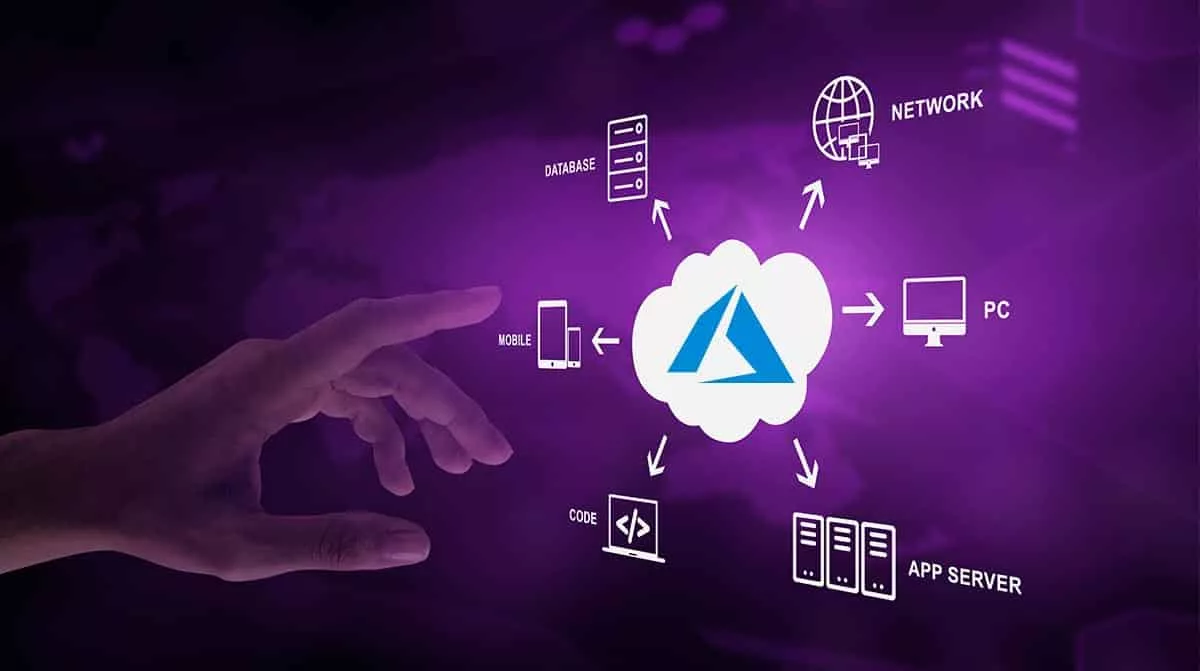 How to build Azure cloud solutions that still make sense in year threeMay 6, 2025 · 12 min read
 Headless Shopify vs. Traditional Shopify: Which Architecture Is Right for Your Growth Stage?May 25, 2026 · 10 min read