
Customer journey digital marketing, stage by stage: a US party-rental store's climb from 123 to over 6,000 daily visitors

A US party-rental business rented out tables, tents, chairs and bounce houses. Its own website got almost no search traffic, and its CEO put the problem in one line: "Our search engine position on Google and other search engines are really bad. Please make sure you improve it as soon as possible."
That reads like an SEO ticket. It wasn't one. Customer journey digital marketing starts from a simple position: find the stage where buyers leave, fix that stage, then move to the next. More channels on top of a leaking journey just make the leak more expensive. This store was losing shoppers at every stage at once. They couldn't find it, the pages they reached weren't built to sell, and nothing brought them back. Below is how Brainvire's digital marketing team worked through it, what the case record reports, and what to change if you borrow the approach today.
A store that left Amazon without a plan for search
The client is Party Tables, a US online store for party table and tent rentals. It rented tableware, serving ware and event essentials, and carried a large stock of disposable tableware and dinner sets for weddings, birthdays and baby showers. A sister company, Pogo Bounce, rented inflatable jumping castles and climbing walls for all ages. The founder also started another company in the same niche, selling custom tables for weddings, parties and other events.
The business began on Amazon and later moved to its own website. That move is where the trouble started, because the new site had no real digital marketing strategy behind it. Organic traffic was almost absent, and most visitors still came from Facebook and Amazon. Google Analytics often showed zero traffic on certain important product pages. Conversions were low, and email campaign results weren't encouraging either.
Competitors made it worse. Rival sites had stronger backlink profiles, so they ranked higher on Google and could spend more on paid search. Meanwhile the client was paying for every lead or sale its website produced, and traffic quality stayed poor. The site itself sat on cheap shared hosting, a plan costing a couple of dollars a month, and the design was poor.
Earlier SEO fixes had followed standard practice and moved nothing, and nobody could see why. After digging, the answer pointed at the foundation: the hosting and the site itself.
Where customer journey digital marketing starts: the stage that leaks
In Salesforce's definition, "the complete series of experiences and touchpoints a person has with a company" is the customer journey. A customer journey map is the visual representation of every step a customer takes with your brand, per Harvard Business School Online. Its five stages are awareness, consideration, purchase, retention and advocacy. People discover you, compare you, buy, come back and then recommend you.
Applying that map to marketing means asking which stage is leaking before choosing a channel. That runs against a common habit, which is buying more ads whenever the dashboard looks quiet. For Party Tables, the map made the problem visible in one view:
| Stage | What was broken | What the team changed | What the record shows |
|---|---|---|---|
| Awareness | Almost no organic search traffic; competitors ranked higher | Hosting move, technical SEO, link acquisition, keyword research | 123 → over 6,000 unique daily visitors in three months |
| Consideration | Key product pages showed zero traffic; poor design | On-page fixes, content strategy, blog content | #1 rankings for five product keywords |
| Purchase | Low conversions; costly paid leads | Google Ads with keyword targeting and sales tracking | $10 return per $1 spent, rising to $20 |
| Retention | Weak email results | Newsletter with one-click sign-up | Owned channel to reach past and potential customers |
| Advocacy | No social presence | Facebook, Twitter and Instagram profiles; a Pogo Bounce community on Facebook | Regular publishing and a community around the brand |
Awareness was the stage to fix first. No email program can win back customers who never found the site.
Awareness started with the server, not with keywords
The first decision wasn't about keywords at all. The site moved off cheap shared hosting onto a fully managed dedicated server provided by the same team. Search work on a weak foundation is like repainting a house with a cracked slab.
Technical clean-up followed on the new site. The team checked pages for 404 errors and fixed broken redirects. They created sitemaps so Google could index the site properly, and added 301 redirects from the old website to the new one. That last step still matches Google's guidance. For a site move, Google recommends server-side permanent redirects from old URLs to new ones, plus an updated sitemap in Search Console. It says to keep those redirects "for as long as possible, generally at least 1 year."
Keyword research came next, built around rentals, because a rental shopper searches differently from a buyer. For the slides product page, keywords were selected with the Google Ads Keyword Tool. Today that tool is Google Keyword Planner. Google calls it "a free resource to help advertisers build keyword lists for search campaigns." You need a Google Ads account to use it.
Links were the real gap, since competitors outranked the client mainly on backlinks. The team analyzed competitor websites, found link acquisition opportunities and built links the client could use, including broken link building. The case record says this significantly improved the site's overall domain authority in about six months. That set the base for higher rankings, and conversion rates improved over time as more traffic came from organic search instead of paid channels. Keep one thing in mind if you track the same score: Domain Authority is a Moz metric, and Moz itself says it "is not a Google ranking factor". It's a useful comparison against competitors, nothing more.
The record also lists guest posting, article submission, directory submission and social bookmarking. Don't copy those today. Google's spam policies (updated August 2026) name "low-quality directory or bookmark site links" as link spam. They also cover article and guest-post campaigns that use optimized anchor text to pass ranking credit. Links you pay for must carry rel="sponsored" or rel="nofollow". Safe link acquisition now means earning links through useful content, original data, digital PR and broken links that already point at your topic.
Product pages, paid search and the data behind both
Traffic that lands on a weak page is wasted. The on-page work covered what you control on your own domain: title tags, meta descriptions, URLs, internal linking and H1/H2 structure. If you're auditing your own store, this ecommerce SEO checklist breaks the same work down by homepage, category and product page.
Content did the rest of the consideration work. The content team built blog content, managed it across social platforms and promoted posts on Facebook and Twitter to drive visits back to the site. The client team described it like this:
"Brainvire's Content Strategy team has been instrumental in laying the successful groundwork required for our website. In addition, the highly trained and skilled Content Marketing team has been instrumental in creating and managing our blog content across various social media platforms and advertising the same."
Organic search takes time, so paid search covered the purchase stage while it built. The team ran Google Ads campaigns, plus Facebook and Google Plus ads, with keyword targeting and sales tracking behind them. According to the case record, each $1 spent on Google Ads returned $10 at the start. After two months that rose to $12–$13, and it eventually reached $20.
Those returns came from tying spend to sales rather than clicks. The team pulled real-time sales data from tools like Google Analytics and Adobe Analytics to decide where campaign money went. The same data helped the client understand customer behavior and market trends, so daily sales and marketing decisions rested on numbers. Two of those tools have since changed. Google moved the consumer Google+ shutdown to April 2019, so Google Plus ads are gone. Standard Universal Analytics properties stopped processing new hits on July 1, 2023, and Google Analytics 4 replaced them.
Retention and advocacy for an occasional purchase
Party rentals are occasional purchases. Without an owned channel, you pay to win even satisfied customers back every time.
The team set up a newsletter system on an open-source platform with one-click sign-up. Subscribers have already shown interest, which makes them one of the easiest audiences to reach again. Newsletters and content writing then carried regular campaigns to existing and potential customers.
Advocacy ran through social. The team set up profiles on Facebook, Twitter and Instagram and kept them publishing. For Pogo Bounce, the organic social media marketing focus was building a community on Facebook, which is the advocacy stage doing its job.
What the case record reports
Every result below is as the published record states it:
| Measure | Before | After | Timeframe |
|---|---|---|---|
| Daily website traffic | 123 visitors a day | Over 6,000 unique visitors a day (described in the record as a roughly 1,800% increase) | 3 months |
| Revenue | Not stated | $150k | Within those 3 months |
| Monthly profit (at the time of the record) | Not stated | $200k per month | Ongoing |
| Google Ads return per $1 spent | $10 | $12–$13, then $20 | 2 months, then later |
| Domain authority | Not stated | Significantly improved | About 6 months |
| Google rankings | Not stated | #1 for "party supplies," "disposable tableware," "plastic tableware," "disposable glasses" and "plastic glasses" | At the time of the record |
Organic traffic improved substantially within six months, and the client grew its staff to manage its digital marketing campaigns. The growth rate was still rising when the case was first published in January 2022.
Treat these as one store's numbers, in one niche, at one point in time. A store with strong organic traffic and a weak checkout would need a very different plan.
Customer journey digital transformation doesn't need a big program
The phrase "customer journey digital transformation" usually gets attached to multi-year programs. This one was small and practical. The client moved from Amazon to its own store, then rebuilt every customer touchpoint around that store. The technology changed less than the customer experience did.
Three things carry over to most ecommerce businesses. Fix the foundation before the funnel, because marketing can't rescue a site Google can't crawl properly. Diagnose by stage rather than by channel: the CEO asked for rankings, but the real gaps were awareness, product-page quality and retention. And tie every channel to sales data, since paid search improved here only because spend followed sales. If your store's problem looks more like a platform problem than a marketing one, that's an ecommerce development question first.
Map your own journey before you spend more
You don't need a two-day workshop. You need a clear picture of where buyers drop out and the discipline to fix that stage first.
- Pick one customer segment and one business goal, such as first-time event planners and more repeat bookings. A map that covers every segment at once ends up describing none of them well.
- Write the current state from the customer's side, from initial awareness to the last touchpoint after the event. Ask sales, support and fulfillment where customers get stuck, because each team hears different complaints.
- Find the pain points in data, not opinions. Combine analytics with what customers say in support tickets, reviews and surveys. Here, zero traffic on key product pages pointed straight at search visibility. Where a stage has too little data, mark it rather than guess.
- Rank the gaps by their effect on sales and fix the biggest first. For Party Tables that was search. For your business it might be checkout, delivery or after-sales service.
- Give each stage one or two signals and review them quarterly. Conversion rate fits the purchase stage, repeat orders show loyalty, and a satisfaction or customer effort score shows how service feels.
FAQ
What is a digital customer journey?
A digital customer journey is the set of online touchpoints a customer has with your brand. That includes search results, your website, social profiles, ads and email. Salesforce defines a touchpoint as "any point of interaction between a customer and a business."
Is link building against Google's guidelines?
Earning links isn't against Google's guidelines; manipulating rankings with links is. Google's spam policies prohibit buying or selling links that pass ranking credit, excessive link exchanges and low-quality directory or bookmark links. Paid placements, such as ads, are fine only when their links are marked rel="sponsored" or rel="nofollow".
How long does SEO take to show results?
It varies by change and by site. Google's SEO starter guide says some changes take effect in a few hours, while others could take several months. In this case, traffic rose within three months and domain authority improved over about six.
Rankings were the request
The CEO asked for better positions on Google. The rankings followed once every stage, from search result to repeat order, had something worth finding.
Does your store get visits but few sales, or almost no visits at all? Our ecommerce SEO team would start where this project did: in your analytics, finding the product pages nobody reaches. More client stories are in the case studies library, or you can start a conversation.
Related reading
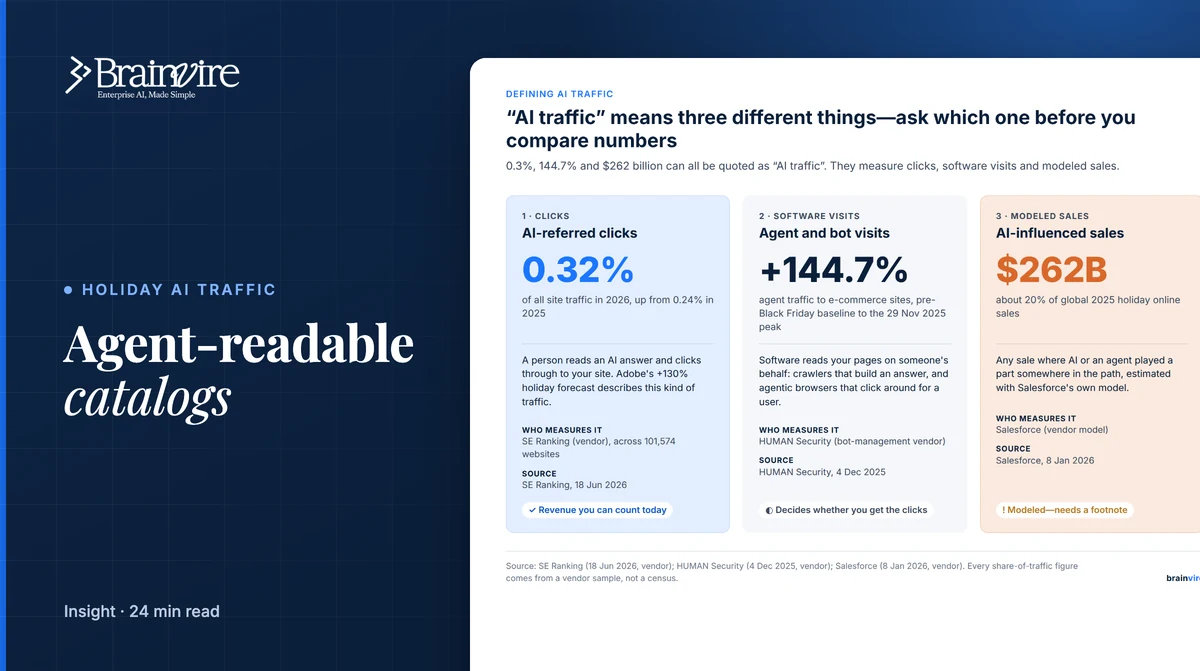 AI-referred traffic is up 130% this holiday. Can an agent actually read your catalog?October 16, 2026 · 24 min read
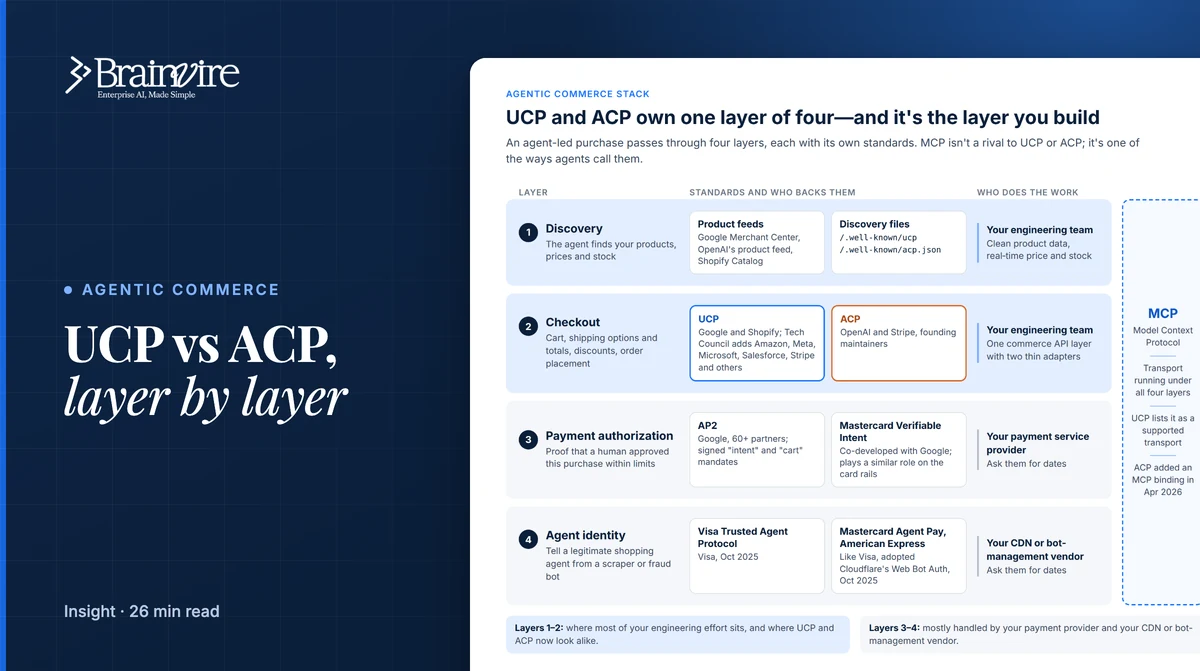 Two checkouts are coming to your store: UCP vs ACP, explained for commerce leadersOctober 16, 2026 · 26 min read
 Ecommerce business models: who buys and how the money comes inJuly 1, 2022 · 12 min read
More on this topic: Top 8 Ways To Supercharge Your Alt Text SEO.