Mobile App Development New York Product Teams Can Ship On a Schedule
We build iOS and Android products for New York operators and we ship them: discovery that ends in a scoped backlog, an honest call between native and cross platform, store submission and review handled by us, and analytics wired in before launch rather than after the first bad week. New York builds are delivered remotely from our US headquarters in Plano, Texas.
What Mobile App Development in New York Has to Survive
New York City's gross city product passed $1.28 trillion in 2023, and the apps commissioned inside that number are not evenly distributed. Health care is the city's largest employment sector and education and health services alone added 95,000+ jobs in 2024, which is why patient and clinician apps are a constant brief here. Securities profits have run near all time highs, so the Financial District keeps commissioning advisor tools and onboarding flows that must satisfy a compliance officer before they satisfy a designer. Technology has added roughly 8,000 jobs a year for a decade and the city now hosts 2,000+ AI startups, clustered where the engineers already are: DUMBO, which holds more tech companies than any other Brooklyn neighborhood, and Long Island City across the river.
That concentration is what makes a New York app build hard, and it has almost nothing to do with taste. You are hiring iOS engineers against Etsy and Kickstarter in DUMBO and the platform teams in Long Island City, so a squad that looked fundable in January can still be two hires short in June. Meanwhile the calendar does not wait. In a media and retail city, marketing dates are set months out and treated as immovable, so a build either has a release train that can hit them or it does not.
So this page is written for whoever has to answer for the ship date. Every number below traces to a published case study, a review platform, or a public source, and where a case study publishes no numbers, we say so instead of inventing one.
Three Apps We Shipped, and the Numbers Their Case Studies Publish
None of these clients are headquartered in New York and we will not pretend otherwise. Two are international, labeled as such. Each card carries only the metrics its own case study publishes, which is also why our Under Armour mobile commerce build appears nowhere on this page with a number attached to it.
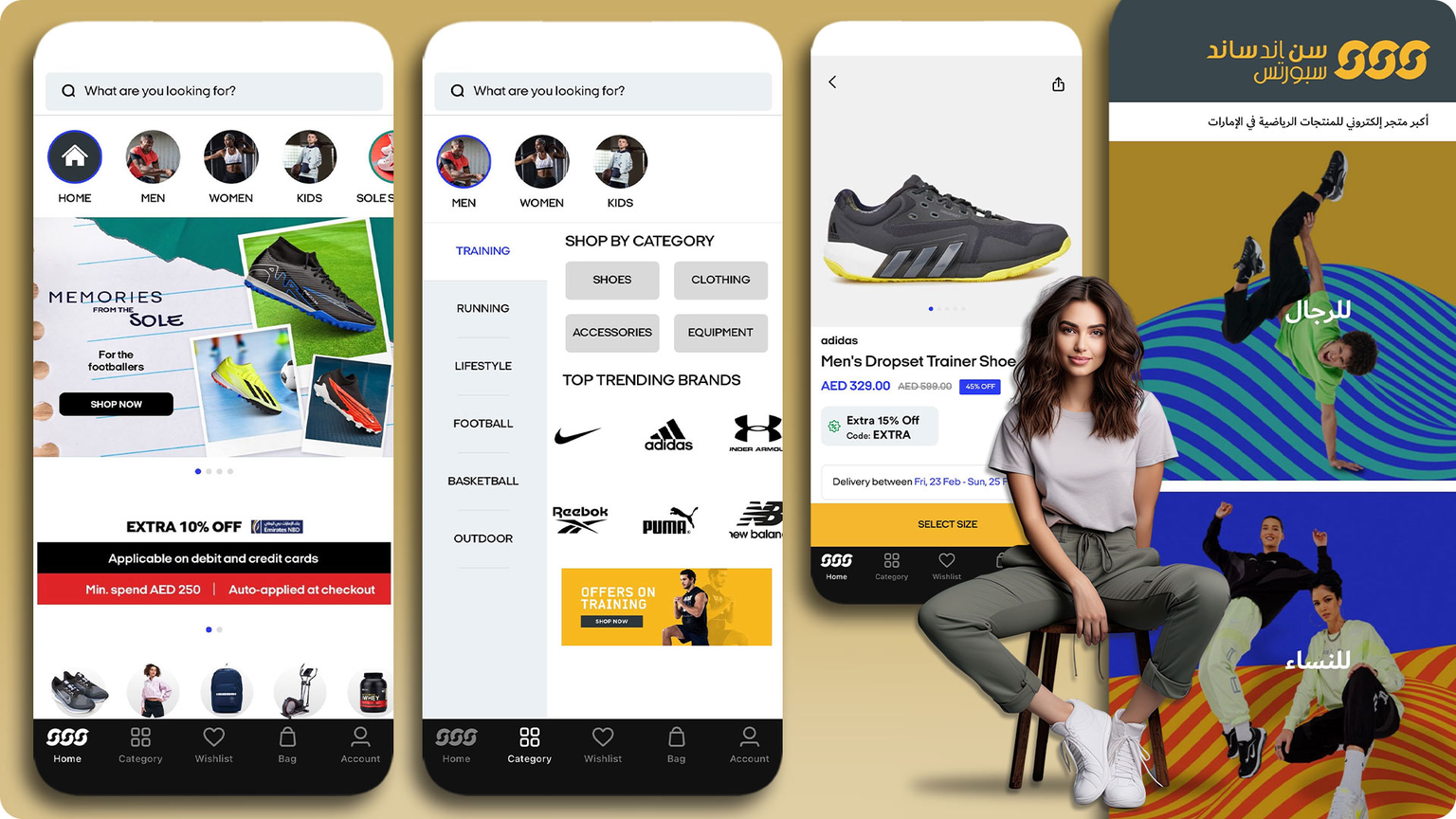
A commerce app for a Middle East sportswear group, built around catalog depth, a checkout that survives a sale event, and repeat ordering. The engineering that mattered was search, cart state, and release cadence.
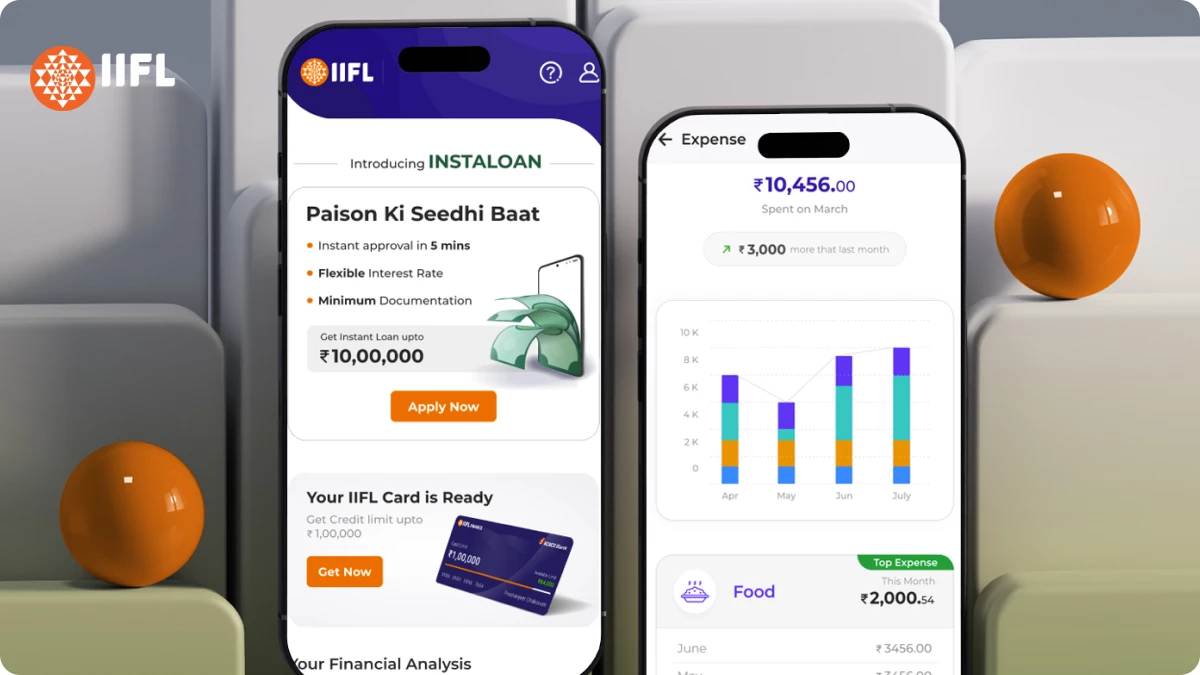
An AI assisted wealth product used by advisors and investors, carrying the audit trails, identity, and data handling a regulated finance app needs. The closest analogue we publish to a Financial District brief.
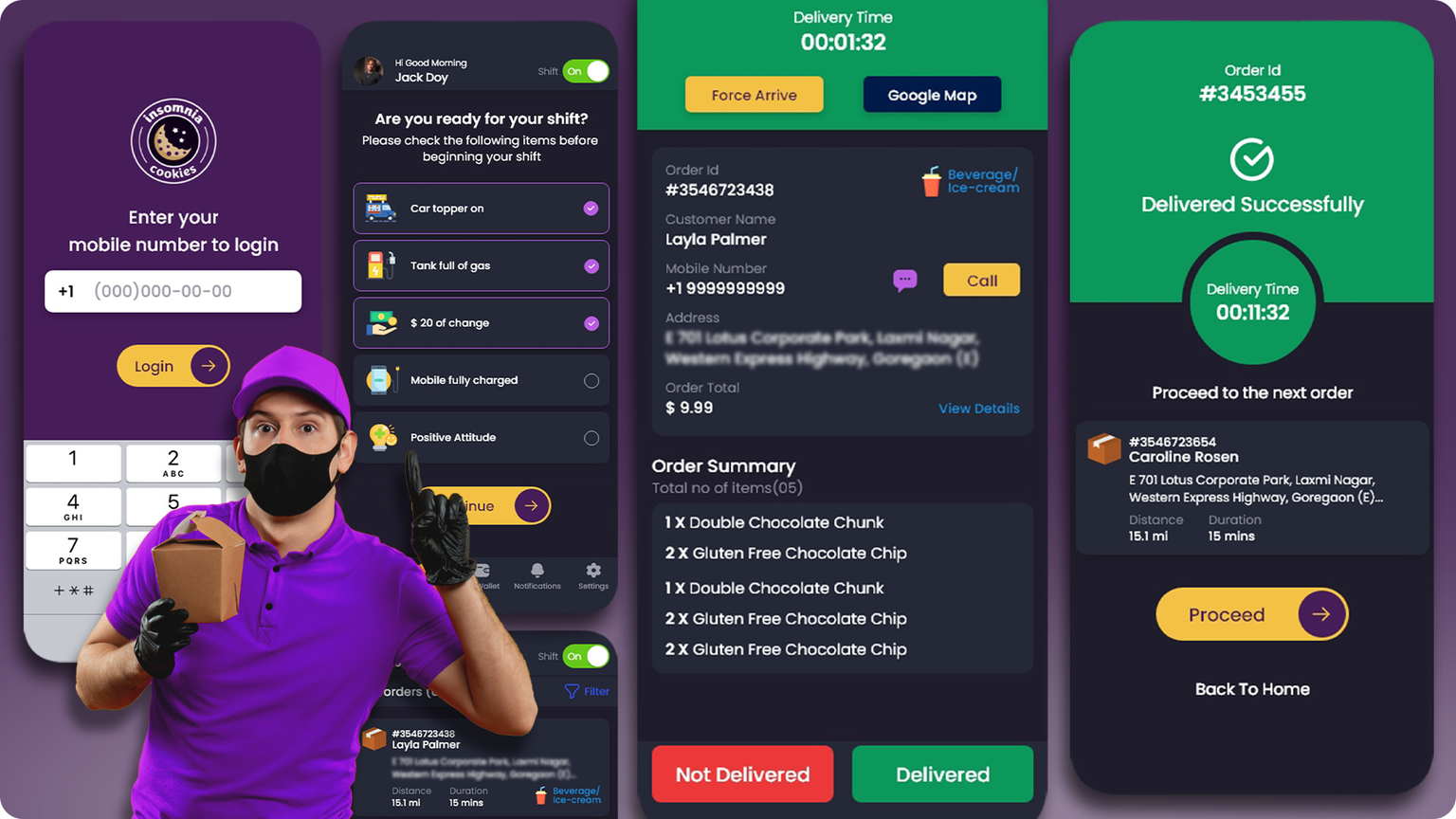
A late night retail chain app and the driver tooling behind it, which is where most delivery products quietly fail. Store operations, dispatch, and the customer app had to agree in real time.
Mobile App Development New York Roadmaps Actually Need
A short definition phase ending in a prioritized backlog, a clickable prototype, and a dated release plan. It is written so it could be handed to another firm, and you keep all of it either way.
Scope this with us →Native iOS and AndroidSwift and Kotlin when the product leans on camera, sensors, background location, offline state, wallet, or health integrations, which cross platform layers wrap awkwardly and expensively.
Scope this with us →Cross platform buildsReact Native and Flutter when one codebase and one release train beat squeezing the last frame of animation out of each platform. We write native modules only where the framework runs out.
Scope this with us →Backend, APIs, and integrationsThe half of an app users never see: identity and single sign on, payments, order and policy systems, and the legacy endpoints a New York enterprise still runs because replacing them was never funded.
Scope this with us →Release management and store submissionSigning, provisioning, phased rollouts, review responses, and the privacy labels and data safety forms that hold up more launches than code ever does. We run it, and we flag the risk before you commit to a date.
Scope this with us →Instrumentation and post launch iterationAnalytics events, crash reporting, and funnels defined during design and live at launch, so week one is argued with data rather than opinion and the first patch ships in days.
Scope this with us →Native or Cross Platform: How We Decide, Build by Build
There is no universal answer, and a firm that gives you one before seeing your product is selling its bench rather than your build. This is the comparison we run in week one, in front of you.
| Native iOS and Android | Cross platform, React Native or Flutter | |
|---|---|---|
| Best fit | Camera, sensors, background location, offline first, wallet and health integrations, heavy motion | Commerce, content, booking, marketplaces, and internal tools that must stay in step on both platforms |
| Team shape | Two codebases, two skill sets, two release trains | One codebase and one team, with native modules only where the framework runs out |
| Time to a store build | Slower to parity, faster to platform specific polish | Faster to a testable build on both stores, slower at a native edge |
| Where it hurts later | Feature drift between iOS and Android the moment a budget tightens | Framework upgrades and native module maintenance you must budget for |
| What we usually recommend | Regulated finance, health, and field products with hardware in the loop | Retail, media, and marketplace products shipping against a fixed calendar |
How a New York App Development Engagement Runs, Sprint by Sprint
Workshops with your operators, not only your executives. We map the jobs the app must do, the edge cases that will embarrass you, and every system it has to talk to, then cut scope to a first release that can reach a store.
You get: a backlog, a clickable prototype, and a dated release plan you own
We settle native versus cross platform, the API contract, offline behavior, the analytics event schema, and who owns the store accounts, before anyone builds a screen.
You get: a written technical decision record, including the options we ruled out and why
Every sprint ends with a TestFlight build and an internal track build on Play, not a status deck. Your team taps the real product while change is still cheap.
You get: a shippable build every two weeks and a demo you can forward
We submit, answer review, stage the rollout, watch crash free sessions and funnel drop off, and ship the first patch fast. Launch day starts the work, it does not end the contract.
You get: release notes, a live crash and analytics dashboard, and a named engineer on call
Why Product Owners Keep Our Mobile App Developers on the Next Release
Every line below is something you can verify without calling us first.
- We have no office in New York. New York builds run from our US headquarters in Plano, Texas, and we would rather say so than imply a ZIP code we do not have.
- 1,000+ specialists sit behind the mobile team, so backend, data, and commerce work is not quietly subcontracted halfway through your build.
- The mobile practice is led by a named executive, Maharshi Pancholi, our VP of Mobility Solutions, rather than an account rotation.
- 262 reviews on Clutch at a 4.8 average, plus 33 verified GoodFirms reviews at the same rating, all readable before you speak to anyone here.
- Our commercials are already public: a $25,000+ minimum project and a $25 to $49 hourly range, listed on Clutch.
- 14+ years and 2,500+ delivered projects, which mostly means we have already met the integration about to surprise your team.
 Maharshi PancholiVP, Mobility Solutions
Leads the mobile practice: the platform call, the release cadence, and the engineers who put your build in front of App Store review.
 Chintan ShahCEO and Founder
Serial entrepreneur and an EY Entrepreneur Of The Year 2024 Southwest finalist, with 14+ years building Brainvire into a 2,000 brand portfolio.
 Bharat PatelVP of Digital Marketing
Runs the growth side an app needs after it ships: store listing work, install campaigns, and the search demand that feeds both. 14+ years.
What Clients Say on the Record
Not only have they delivered what they said they would as per the timeline but they're easy to communicate with. The project was completed according to the initial time frame.
Their design team is top-notch and ahead of the curve; they understand customer behavior. Their solutions helped to convert the vision and achieve what we were looking for.
They are trustworthy and dependable. Because of the team's consistent and reliable honesty, the client is able to trust in their growing relationship with them.
What Mobile App Development Costs in New York
Our commercials are already published on Clutch, so here they are without a discovery call: a $25,000+ minimum project, a $25 to $49 hourly range, and ongoing product teams from $3,000 a month with no lock-in.
Month to month. No lock-in contracts.
- A named product lead and engineers you meet, not a bench you never see
- A shippable build every two weeks on TestFlight and Play internal testing
- Store submission, review responses, and staged rollouts run by us
- Analytics and crash reporting wired in before the first release
- Your repositories, your CI, your store accounts, from day one
- No lock-in, so the engagement has to keep earning itself every month
New York App Questions Worth Answering Before You Sign
Which New York industries commission the hardest apps?
Finance and health care, and not because the screens are complicated. Both are regulated, so the work that decides your timeline happens in audit logging, consent capture, identity, and access review, none of it visible in a design file. A wealth or advisory app in the Financial District spends real weeks on entitlements and reconciliation. A patient or member app, in a city where health care is the largest employment sector and education and health services added 95,000+ jobs in 2024, spends them on records integration and consent. Media and retail apps are technically gentler and calendar brutal instead: the date is set by a campaign, not by engineering, so the release train has to be real from sprint one.
The pattern across all of them is the same. New York teams under estimate integration and over estimate design, and it is the undocumented internal endpoint, not the design phase, that blows the schedule.
How long does a first release take, and what actually slows it down here?
For a focused first release we work in two week sprints and put a real build in your hands at the end of every one, on TestFlight and an internal track on Play. That cadence matters more than any total quoted up front, because it lets you cut scope with information rather than hope. What slows a New York build is rarely code. It is a legacy system nobody currently employed fully understands, a compliance sign off that was never on the plan, and a store submission scheduled the same week as the launch event.
We plan around all three. Integrations get a spike in the first sprints so the ugly parts surface early, compliance reviews go on the schedule as named dependencies with owners, and we submit well ahead of any fixed date, because review turnaround is usually quick and occasionally is not.
What should a New York team do in the ninety days after launch?
Treat launch as the start of the product. In the first weeks the questions are narrow: what is the crash free session rate, where does the funnel break, which permission prompt is being declined, and which onboarding step loses the most people. Those need instrumentation defined before launch, which is why our analytics event schema is settled during architecture rather than bolted on afterwards. A phased rollout gives you a stop button while you find out.
The second half is growth and hygiene together. Store listing work, screenshots, and a ratings prompt timed to a real success moment move installs and rating averages more than most paid budgets do, and that is where Bharat Patel's team picks up. In parallel, plan for the operating system releases that arrive every autumn and keep a patch cadence. Apps rarely decay because they were built badly. They decay because nobody owned them in quarter two.
Mobile App Development New York, Asked and Answered
How much does mobile app development cost in New York?
Our numbers are public rather than gated behind a call: our Clutch profile lists a $25,000+ minimum project and a $25 to $49 hourly range, and ongoing product teams start at $3,000 a month with no lock-in. New York rates commonly run higher, and part of that gap is Manhattan overhead priced into your invoice. Our engineers work from our Plano, Texas headquarters and our global delivery centers, so you pay for the build rather than the address.
Do you actually have an office in New York?
No. Our only US office is our headquarters in Plano, Texas, and New York builds are delivered remotely from there with our global delivery teams. We do not claim a New York address. In practice that means ceremonies are scheduled in your working hours, with Plano on Central time, an hour behind yours. The phone number, +1 631 897 7276, is answered by a human during US business hours.
Should a New York product go native or cross platform?
It depends on what the product touches, and the table above is the decision we actually run. Broadly: regulated finance and health products, and anything leaning on camera, sensors, background location, or wallet, go native. Retail, media, marketplace, and internal operations products shipping frequently against a fixed campaign calendar are usually better served by one cross platform codebase. We write the recommendation down with what we rejected, so the choice is auditable when someone new asks why.
How do you handle App Store and Play Store review?
We own it: signing and provisioning, the privacy nutrition label and data safety form, age ratings, reviewer demo accounts, phased rollouts, and the reply if something is rejected. Review turnaround is usually short but never guaranteed, so we submit well ahead of a fixed date and keep a rollback plan. Most rejections we see are not code problems. They are metadata, reviewer access, or a permission whose purpose string says too little.
Which industries have you actually built apps for?
Financial services, with an AI assisted wealth product managing $100M+ in assets and facilitating 1M+ transactions. Retail commerce, with an international sportswear app past 1M+ downloads and 3X daily orders. US retail and delivery, with the Insomnia Cookies chain app and its driver tooling. Automotive retail, with a dealer app for an international Honda distributor reporting a +24% rise in repeat business. We also built mobile commerce for Under Armour, whose case study publishes no metrics, so we quote none. None of these clients are headquartered in New York, and we would rather say so than borrow a local logo.
Can you work alongside our in house New York product team?
Yes, in three shapes. We staff a squad inside your process and your board, we take one workstream such as Android, the backend, or release engineering, or we own the whole build and hand it over. Your product owner keeps the roadmap either way. Given the hiring competition for mobile engineers in this city, the squad model is the one New York teams ask us for most, usually to unblock a release rather than to replace anyone.
Who owns the code and the store accounts, and what happens if we leave?
You own everything from the first commit. Repositories, CI pipelines, infrastructure, and the Apple Developer and Google Play accounts are set up in your organization's name rather than ours, so the app is published by you and stays yours. If you move on, you get a documented handover: architecture notes, the analytics event schema, a release runbook, and access to all of it. We would rather you leave able to run the product than stay because you cannot.
Where Else We Can Take You
Nearby markets
Scope Your New York App Build
One click takes you to our Lets Talk page. Tell us the product, the platforms you think you need, and the date you are working toward. An engineer reads it, not a salesperson.
You get a written scope read back within one business day: a platform recommendation with reasoning, the integrations we expect to hurt, and a realistic first release window. It is yours to keep either way. The phone number is real and a human answers during US business hours.
Brainvire also serves mobile app development clients in other US markets — see our Website Development New York, Digital Marketing New York, Mobile App Development California, Mobile App Developer in Austin.